

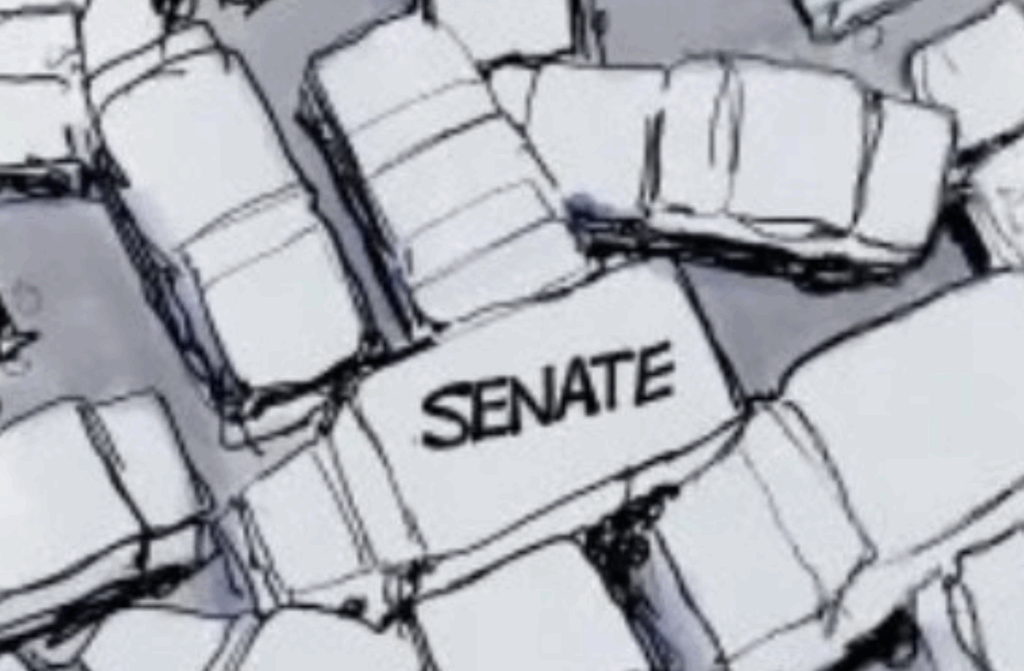
Members of Congress are leaving their jobs at a historically high rate. Fifty-one House members and nine senators have already decided not to seek reelection, the most combined departures this century. Many explanations are offered. Some cite age. Others mention health, family strain, or the relentlessness of modern politics. These explanations are not false, but they are incomplete. They describe symptoms while ignoring the underlying disease. The deeper cause is institutional. Congress is ceasing to function as a deliberative body, and lawmakers are responding rationally by leaving a job that no longer allows them to do legislative work.
To see why, one must focus on the Senate. The House has its own problems, but the Senate is where legislation, confirmations, and agenda-setting ultimately succeed or fail. Under Senate Leader John Thune, the chamber has abandoned normal order. Bills are no longer brought to the floor for debate, amendment, and eventual passage by simple majority. Instead, the leadership insists on moving directly to cloture votes, effectively attempting to close debate before it begins, and requiring 60 votes in a Senate that is closely divided. The predictable result is paralysis. Nothing moves. Nothing passes. Senators are reduced to spectators in an institution designed for participation.
Normal order is not an abstraction. It is the practical mechanism by which senators do their jobs. A bill is introduced. It is debated on the floor. Senators offer amendments. Votes are taken. Some measures fail. Others pass narrowly. That process allows legislators to represent their constituents, shape outcomes, and see tangible results from their work. When that process is replaced by a permanent supermajority requirement, the Senate becomes inert. Even members of the majority discover that their votes do not matter.
One might ask why this procedural shift matters so much. After all, gridlock has existed before. The answer is that today’s gridlock is not merely the product of partisan disagreement. It is engineered by leadership choices. A Senate that allows debate can still fail to pass bills, but it remains a living institution. A Senate that preemptively demands 60 votes for everything is functionally dead. For senators who expected to legislate, that distinction matters.
This institutional failure helps explain the wave of retirements. Lawmakers rarely say outright that they are leaving because the Senate no longer works. Instead, they speak of family time, health, or exhaustion. These reasons are sincere. But they are downstream effects. A demanding job that produces results can justify long hours and personal sacrifice. A demanding job that produces nothing cannot. When senators and representatives realize that two more years will consist largely of fundraising, messaging, and procedural stalemate, the opportunity cost becomes intolerable.
The historical comparison is instructive. The last time retirements approached current levels was 2018, a year that ended with Republicans losing the House. Then, as now, members sensed that the institution offered diminishing returns. Today, the danger is greater because the dysfunction is concentrated in the Senate, the chamber that controls confirmations and long-term governance.
The consequences for President Trump’s second term are severe. Because the Senate refuses to operate under normal order, Trump’s U.S. attorneys remain largely unconfirmed. Dozens of judicial nominees are stalled. Executive branch staffing lags. Agencies lack leadership. The president’s agenda is frozen not because it lacks majority support, but because the Senate leadership has chosen a procedural posture that makes majority rule impossible.
This bottleneck is especially damaging because confirmations are not symbolic. U.S. attorneys shape federal law enforcement priorities. Judges determine the interpretation of statutes and constitutional rights for decades. When these positions remain vacant or filled by acting officials, the executive branch is weakened and accountability erodes. A Senate that blocks confirmations by procedural design is not exercising restraint. It is abdicating responsibility.
Legislation suffers the same fate. Signature priorities of the Trump administration cannot advance because they are never debated. The SAVE Act is the clearest example. Election integrity, beginning with voter ID, is overwhelmingly popular nationally, with more than 80% of voters supporting it. Even at least one Democratic senator, John Fetterman, has publicly signaled that he would vote for the SAVE Act. Yet under the current Senate regime, the bill is unlikely even to reach the floor, much less pass. The most the public can hope for is a cloture vote that is predetermined to fail. This is not because a majority opposes the policy. It is because debate itself is being treated as a threat.
— @amuse (@amuse) February 5, 2026
This point deserves emphasis. The refusal to allow floor debate is more alarming than any single failed vote. Debate is where weaknesses are exposed, amendments are refined, and compromises are forged. When debate is eliminated, legislation does not become more responsible. It becomes impossible. For lawmakers who came to Washington to shape policy, this is demoralizing in the extreme.
Some observers attribute the exodus from Congress to partisan toxicity. Others blame Trump himself. These explanations are politically convenient but analytically thin. Polarization has existed before. Contentious presidents have governed before. What is new is a Senate leadership strategy that treats normal legislative procedure as optional. That strategy guarantees frustration regardless of ideology.
Importantly, this frustration is bipartisan. Democrats and Republicans alike are leaving. But the political costs will not be evenly distributed. Republicans hold narrow majorities. They therefore bear responsibility for governance in the eyes of voters. If Congress cannot function under Republican control, voters will not blame procedure. They will blame the party in power.
The risk is twofold. First, retirements will continue, and over time, the problem will compound. As Congress proves incapable of doing real work, it will become increasingly difficult to recruit high-quality legislators willing to uproot their lives to serve. The very best people, those with successful careers, sound judgment, and real alternatives, will not waste their time in an institution that cannot legislate. Second, Republicans will lose seats. Open races are harder to defend, and a degraded institution attracts worse incentives. Those most willing to endure a nonfunctioning Congress will often be those seeking status, access, or personal gain at the expense of taxpayers rather than genuine public service. Institutional malaise depresses enthusiasm, corrodes talent, and ultimately degrades governance itself. History suggests that voters punish perceived incompetence more reliably than ideological disagreement.
The House is especially vulnerable. With margins this tight, the loss of a handful of seats could flip control. The Senate, though structurally favorable to Republicans, is not immune. If voters conclude that the chamber exists only to block itself, calls for reform or realignment will intensify.
None of this is inevitable. The solution is procedural, not ideological. Senate leadership can restore normal order tomorrow. Bills can be brought to the floor. Debate can occur. Amendments can be offered. Votes can be taken. Some measures will fail. Others will pass narrowly. That is how legislatures function.
Critics might worry that abandoning the cloture first approach risks embarrassment or legislative losses. That fear misunderstands politics. Voters are more forgiving of contested outcomes than of paralysis. A Senate that debates and votes demonstrates effort and accountability. A Senate that refuses to act demonstrates contempt for its own role.
For members of Congress, the choice is stark. Serve in an institution that allows you to legislate, or endure a performative cycle of fundraising and gridlock. For many, the latter is no longer worth the cost. Their departure is not cowardice. It is a rational response to structural decay.
If Senate Leader Thune continues on the current path, the consequences are predictable. Retirements will accelerate. Trump’s agenda will remain stalled. Judicial and prosecutorial vacancies will persist. Election integrity reforms will languish. And Republicans will enter the midterms defending not a record of governance, but a record of inaction.
Restoring normal order will not solve every problem. It will not eliminate polarization or guarantee legislative success. But it will revive the basic function of Congress. Without that restoration, the slow hollowing out of the institution will continue, one retirement announcement at a time.
If you enjoy my work, please subscribe: https://x.com/amuse.
Sponsored by the John Milton Freedom Foundation, a nonprofit dedicated to helping independent journalists overcome formidable challenges in today’s media landscape and bring crucial stories to you.
READ NEXT: The Foreign Corruption Report Washington Preferred To Ignore





















It appears that The Love Of Money wins again. Demonocrats are determined to destroy our country…ANY WAY THEY CAN !