

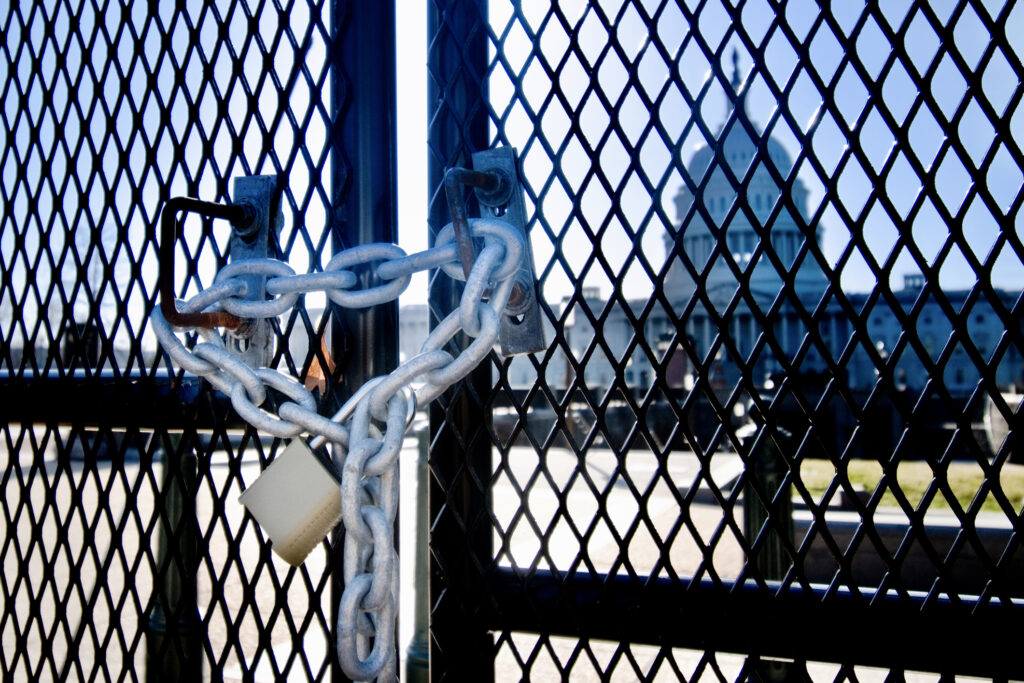
In the United States, prior to January 6th, 2021, financial surveillance operated within a limited legal framework designed specifically to combat money laundering and terrorism. Back then, judicial oversight and established legal protocols operated as essential checks, ensuring that any government intrusion into citizens’ financial lives followed the rule of law. However, the Capitol protests altered this delicate balance. Under the Biden administration, surveillance has shifted from a necessary tool for national security to a blunt instrument wielded against political dissent, particularly targeting those associated with Donald Trump and the broader “MAGA” movement. For example, individuals who attended rallies or donated to conservative causes have found themselves subjected to increased scrutiny, with their financial transactions, travel history and even personal communications coming under intense examination.
The recent revelations from the U.S. House Committee on the Judiciary reveal an unsettling new direction for financial scrutiny. According to their interim report, federal law enforcement agencies combed through records using politically charged keywords like “MAGA” and “TRUMP.” Activities once considered benign, such as booking a hotel, purchasing a firearm or even owning certain religious texts, suddenly transformed into reasons for suspicion. Bank of America, notably, handed over the names of individuals present in Washington, D.C. during January 6th—not in response to a valid court warrant, but seemingly under vague government pressure. Every single person who was visiting Washington, D.C. on January 6th is now effectively on a federal terror watch list. Their every purchase—including guns, ammunition or even Bibles—their travel by plane, train or automobile, and their communications are all under scrutiny by powerful AI monitoring tools in what has become the largest and longest-lasting mass surveillance effort targeting a single political group in the history of our republic. This campaign of surveillance is not limited to ordinary citizens; Army veteran, former member of Congress and former presidential candidate Tulsi Gabbard was reportedly placed on the TSA’s terror watch list called the Quiet Skies program after she joined the Trump campaign and endorsed him. Such overreach blurs the critical line between legitimate law enforcement and political surveillance, a distinction vital for any functioning republic. The consequences of this erosion are profound, as history has repeatedly shown. During the McCarthy era, for instance, unfounded accusations and overzealous investigations into perceived communist sympathizers led to widespread fear and ruined lives. Similarly, the abuses under the FBI’s COINTELPRO program in the 1960s and 70s targeted political dissidents and civil rights leaders, fostering mistrust and violating fundamental civil liberties. When government surveillance extends beyond its rightful bounds, it not only threatens individual freedoms but also erodes public confidence in law enforcement institutions.
Historically, the American people have demonstrated a justified caution toward sweeping surveillance measures. The passage of the Patriot Act in the wake of 9/11, which greatly expanded the federal government’s capacity to monitor both financial transactions and private communications, was seen by many as a dangerous concession—one made with the understanding that such powers would be tightly controlled and only deployed to combat genuine threats. The transformation of these tools into political instruments, as we are witnessing today, marks a disturbing departure from that agreement. For instance, financial data gathered under the pretext of combating terrorism has been used to flag and scrutinize individuals purely for their association with conservative causes or events, such as those who attended political rallies in support of Donald Trump. Instead of maintaining a careful focus on violent actors or credible threats, the Biden administration seems content to turn the lens of suspicion towards political beliefs.
Legitimate aims in law enforcement—such as preventing actual extremist threats—are worthy of support. But indiscriminately flagging “MAGA” or “TRUMP” as signals of extremism undermines the very foundation of political liberty. The breadth of this intrusion is staggering, with over 25,000 federal employees reportedly able to access such financial data without meaningful oversight. According to a report by the U.S. House Committee on the Judiciary, these employees can access sensitive financial information without adequate checks, such as judicial review or independent oversight mechanisms, which raises serious concerns about the potential for abuse. One might argue that the partisan composition of the federal bureaucracy—which is said to be more than 90% Democrat—is not enough to conclude systematic bias. However, when key decisions about whom to scrutinize are informed by political terms, the potential for abuse becomes not only possible but certain.
This scenario echoes one of the darker chapters in American history: the FBI’s COINTELPRO program of the 1960s and 70s, which targeted civil rights activists and political dissidents. The outcomes of COINTELPRO were devastating, leading to the harassment, intimidation, and in some cases, the destruction of lives and careers of prominent figures like Martin Luther King Jr. and other leaders of the civil rights movement. The public backlash and subsequent revelations about COINTELPRO’s abuses resulted in widespread mistrust of government agencies, emphasizing the dangers of unchecked surveillance powers. Though the context has changed, the underlying danger remains unchanged—unchecked surveillance powers that risk shifting from defending national security to policing political thought. The pretext may have shifted from foreign threats to domestic “extremism,” but the outcome is the same: an overreaching government that loses sight of its constitutional limits.
Reversing this trajectory will require both courage and an unflinching commitment to the principles of limited government. Should Donald Trump or any future president seek to correct this course, they must focus on reducing the surveillance authority of the federal government. This includes appointing leaders to federal agencies who are staunch defenders of constitutional liberties, strengthening warrant requirements for accessing financial or digital information, and ensuring independent oversight mechanisms to review past abuses. It is imperative that Congress also does its part—enacting clear legislation to curb the scope of the Bank Secrecy Act and eliminate broad and politically motivated searches.
Such reforms are not only prudent but necessary to uphold a government accountable to its citizens, not one that views dissent as inherently suspicious. Today, it is those aligned with the “America First” agenda who are in the crosshairs; tomorrow, it could be labor activists, environmentalists or anyone else challenging the establishment. This chilling effect erodes free speech and undermines civic engagement, striking at the heart of what it means to be a free people.
James Madison famously warned that tyranny could come disguised as a defense against foreign enemies, a sentiment he expressed in the context of the debates over the Alien and Sedition Acts, which allowed the federal government to suppress dissent under the guise of national security. His warning is especially relevant today as we see similar justifications being used to target political opponents and curtail individual freedoms. In our current age, the perceived threat comes not from abroad but from within—from fellow citizens who hold different political views. The stakes go beyond electoral victories or partisan gains; they strike at the soul of our republic. Only by restoring accountability, proper oversight, and respect for due process can we reaffirm that American liberties are not contingent on whether the government approves of one’s beliefs. At this critical juncture, we must opt for liberty over fear, constitutional integrity over arbitrary power and a defense of individual rights over the fleeting expediency of partisan dominance.
In the end, a government expansive enough to root through your financial records based on your political preferences is one expansive enough to stifle any freedom it chooses. Just as we saw with the abuses under the FBI’s COINTELPRO program, unchecked surveillance powers inevitably lead to the targeting of political opponents, the erosion of civil liberties, and the destruction of public trust. Such power is antithetical to the American spirit, which champions individual rights, due process, and freedom from government overreach. The Founding Fathers feared a government unrestrained by checks and balances, and we are now seeing why. A nation that places political enemies under surveillance without cause is a nation abandoning the principles that made it great. It is up to us—those who still value liberty—to demand that our leaders stop using the tools of state against its own citizens and to insist upon a government that respects the rights it was formed to protect.
Sponsored by the John Milton Freedom Foundation, a nonprofit dedicated to helping independent journalists overcome formidable challenges in today’s media landscape and bring crucial stories to you.
READ NEXT: Historic Defense Agreement Between US Enemies Is Now Active




















“…People with different political views…”
Look how easily Communism is referred to now? Just a different opinion!
Are we hypnotized? Can we not identify a completely foreign ideology that’s gained a hold on our government? They want you to believe they’re just a bunch of Americans with different ideas, not representing the most tyrannical and bloodthirsty social order ever devised.
Did AmericanLiberty.news originate this piece? If so, youre repeating back enemy ideas, by using THEIR wording and terminology.
We’re supposed to see them as no threat at all.
End this abuse Now