

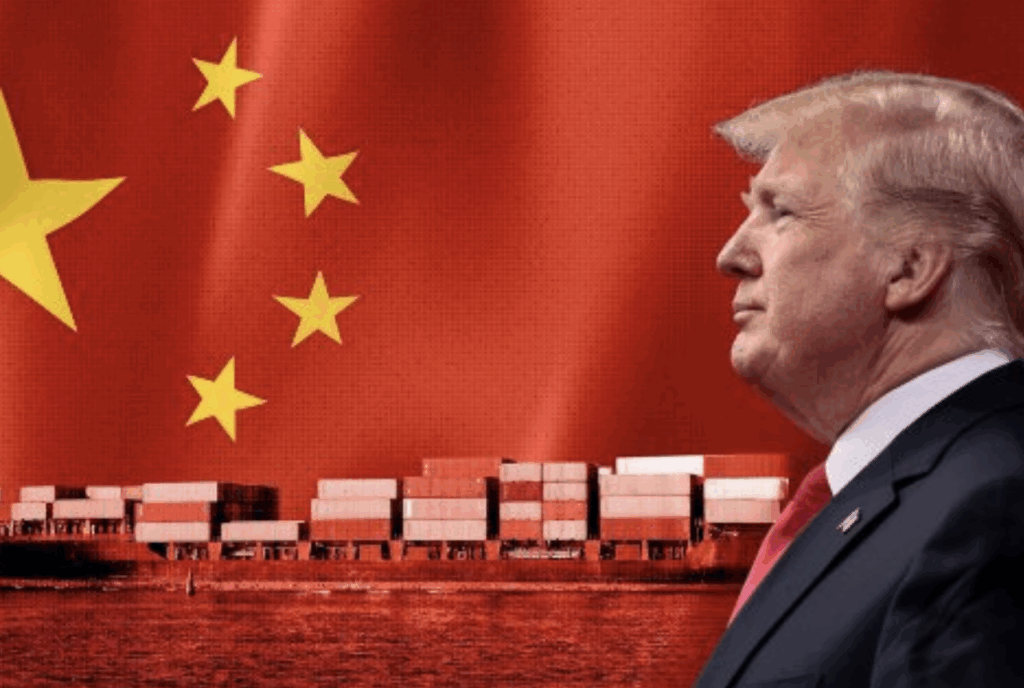
For decades, a confident consensus governed American trade policy. Open markets, economists insisted, would raise total output, lower prices, and leave the nation richer. Some workers might lose, but adjustment would follow. New jobs would appear. People would move. Skills would reallocate. The gains would outweigh the losses, and the losses would be temporary. This belief was not marginal. It sat at the center of elite economic thinking and guided bipartisan policy from the 1990s through China’s accession to the World Trade Organization in 2001.
The belief turned out to be deeply mistaken. Not because trade theory is false in the abstract, but because its application ignored how people actually live, work, and age. The economists who pushed free trade with China did not merely underestimate the costs. They misunderstood their nature. The result was one of the most severe and geographically concentrated labor market shocks in modern U.S. history, a shock whose scars remain visible decades later.
To see why the consensus failed, it helps to begin with what economists thought they knew. Classical trade theory promises aggregate gains. Comparative advantage allows each country to specialize, raising total production. Prices fall. Consumers benefit. These results are mathematically elegant and, in a narrow sense, correct. But they rely on assumptions that quietly do the real work. Labor is mobile. Workers shift industries with modest friction. Regions recover as capital flows to new uses. Employment remains high, even if wages adjust. Losses are shallow and transitory.
Those assumptions were treated not as simplifying tools, but as approximations of reality. And so when China entered global markets at unprecedented scale and speed, policymakers believed the U.S. economy would absorb the shock. A million jobs lost here or there seemed trivial in a labor market of over 150M workers. What mattered, they thought, was the national balance sheet. GDP would rise. Cheap imports would raise living standards. Any local pain would fade.
David Autor’s research demonstrated why this reasoning collapsed on contact with the real world. Together with David Dorn and Gordon Hanson, Autor examined what actually happened after Chinese imports surged. They did not look at national averages. They looked at places. Specifically, they examined commuting zones, clusters of counties where people live and work, and measured how exposed each zone was to Chinese import competition based on its preexisting industrial structure.
The results were stark. Well over a million manufacturing jobs disappeared. These losses were not evenly distributed. They were concentrated in specific regions, furniture towns, textile hubs, tool and assembly corridors, places whose economic identity rested on a narrow industrial base. In those communities, the shock was not a gentle reallocation. It was a collapse. Employment fell sharply. Labor force participation among less educated men declined. Unemployment rose. Disability claims increased. Social transfer usage expanded. These were not temporary disruptions. They persisted for years, often decades.
The key insight was not merely that jobs were lost, but that adjustment failed. Workers did not smoothly transition to new sectors. They did not relocate in large numbers to booming regions. Instead, many stayed put, aged in place, and endured long-term economic and psychological harm. Mortality rose. Depression increased. Job loss, Autor noted, ranks alongside divorce as one of the most damaging life events a person can experience. To model it as a brief inconvenience was not just inaccurate. It was inhumane.
The profession’s error ran deeper than a bad forecast. Economists were asking the wrong questions. Much of the earlier trade literature focused on prices and wages under the assumption of full employment. If everyone who wants to work can work, then trade shocks manifest primarily as wage changes. But that is not what happened. The China shock operated through employment. Entire jobs vanished. New ones did not appear at comparable pay or status. The labor market did not clear. It fractured.
Consider a manufacturing worker in a small southern town producing commodity furniture. His skills were specific. His social ties were local. His mortgage, his children’s schools, his aging parents, all anchored him in place. When Chinese imports halved the price of the goods he made, his skills did not become slightly less valuable. They became obsolete. The alternative jobs available to him were often in retail, food service, or low-end health care, lower-paying, lower-status, and offering little prospect of advancement. Moving was costly. Retraining was risky. Waiting, even as prospects dimmed, was rational.
Later research deepened the picture. Autor and his co-authors revisited the China shock with better data and a longer time horizon, extending through 2019. They distinguished between outcomes for places and outcomes for people. This distinction matters. From the outside, many affected regions appear to have recovered. Employment returned. New industries emerged. Populations stabilized or even grew. But the recovery was uneven. The new jobs disproportionately went to different people, immigrants, women, younger workers, and the college-educated. The original manufacturing workers did not share in the rebound. The place healed. The people did not.
This finding exposes another flaw in the old consensus. Policymakers implicitly assumed that saving a place was equivalent to saving its people. If a town regains employment, the story goes, the problem is solved. But labor markets do not work that way. A community can look healthy on paper while a cohort of its longtime residents remains permanently displaced. Aggregates conceal human loss.
Some defenders of the old view argue that manufacturing decline was inevitable. Low-value, labor-intensive industries were not going to survive forever in a high-income country. There is truth here. But inevitability does not excuse speed or scale. Economic change that unfolds over a generation allows adaptation. Skills shift. Children choose different paths. Capital redeploys gradually. What happened after 2001 was different. The shock was rapid and concentrated. It overwhelmed local adjustment mechanisms. Policies existed that could have slowed the transition or cushioned its impact. They were largely ignored.
Trade agreements included safeguards to decelerate import surges. They were not used. Adjustment programs existed in name but were thinly funded and poorly designed. Only later experiments, such as wage insurance that temporarily supplemented earnings for displaced workers who took new jobs, showed promise. By then, the damage was done.
The profession’s blindness was not purely technical. It was ideological. The belief that free trade could not seriously harm anyone discouraged preparation for harm. Why build adjustment policies for a problem that supposedly does not exist? Why slow a process assumed to be benign? Critics warned of industrial hollowing and community collapse. They were dismissed as protectionists or economic illiterates. In retrospect, they were often describing realities that theory had trained elites not to see.
This misjudgment helps explain the political consequences that followed. Communities hit hardest by the China shock experienced rising anger, distrust of institutions, and support for populist movements. This was not irrational backlash. It was a response to lived experience. People who were told globalization would make them better off watched their livelihoods disappear while experts insisted the gains outweighed the losses. Eventually, they stopped listening.
It is fashionable to pretend that this recognition arrived only after the fact, as if the country awakened all at once. In truth, some leaders called it early and paid a price for doing so. President Trump, long before it became respectable, argued that the U.S. was trading away its industrial base, its bargaining power, and the dignity that comes with productive work. You can dispute tone. The substance was hard to refute, because it matched what millions of workers could see in their own towns.
That early recognition matters because it separates diagnosis from remedy. Diagnosis says the old consensus was wrong in practice, because the adjustment was not frictionless and the costs were not temporary. Remedy requires a governing coalition willing to treat production, not just consumption, as a national interest. In Trump’s second term, that coalition is now acting as if it has learned the lesson. Secretaries Bessent and Lutnick, working within an administration that no longer worships the blackboard model, are treating trade, investment, and industrial capacity as linked parts of one strategy rather than separate silos.

The point is not that any single instrument, tariffs included, can magically restore what vanished. The point is speed and direction. A government can decide to stop rewarding offshoring, to shorten supply chains in sectors that matter, and to make it rational for firms to build in the U.S. again. It can align permitting, taxation, procurement, and capital formation with the goal of rebuilding the tradable sectors that support high-wage work for non-college Americans. It can treat worker training and rapid reemployment as objectives, not consolation prizes. If the China shock teaches anything, it is that policy indifference is itself a policy choice, and it is usually the worst one.
None of this implies that the answer is blanket protectionism or economic isolation. Autor himself has been clear that tariffs alone cannot reverse the damage. The industries that vanished are not coming back. But the lesson is not that trade must be rejected. It is that trade policy must take distribution seriously. It must recognize that speed matters, geography matters, and that workers are not frictionless inputs.
Here, too, the emerging approach in Washington is best understood as a correction, not a repudiation. The goal should not be to relitigate the past by trying to resurrect every legacy product line. The goal should be to ensure that the next wave of global competition does not repeat the same error by pairing any barriers that are used with investment that raises domestic capacity, technology, and productivity. A serious industrial strategy picks frontiers, semiconductors, advanced manufacturing, energy technology, telecommunications, and it makes the U.S. a place where those industries scale. It also builds credible adjustment systems for workers who are displaced, so that the country does not again tell people, in effect, to absorb the losses for the sake of a spreadsheet.
A more responsible approach would have paired openness with deliberate investment in future industries, advanced manufacturing, semiconductors, energy technology, and telecommunications. It would have treated labor adjustment as a central policy objective rather than an afterthought. It would have acknowledged that markets do not automatically produce just outcomes, even when they produce efficient ones.
The economists who pushed free trade with China believed they were following the science. In a narrow sense, they were. But science that abstracts away from crucial human constraints ceases to guide. It misleads. By treating workers as infinitely mobile and communities as interchangeable, the consensus missed what mattered most. The cost was not only lost jobs. It was lost faith in the institutions that made the bet.
The China shock stands as a cautionary tale. Not about trade per se, but about the danger of elevating elegant models over empirical reality. The gains from globalization were real. So were the losses. The failure was insisting that one canceled out the other. History has rendered its verdict. The question now is whether policymakers and economists have learned the right lesson. The right lesson is not that markets are evil. It is that models can be blind, and that governments cannot outsource moral responsibility to an equation. When a policy predictably concentrates losses in specific places, it owes those places more than sympathy.
If the current turn in economic policy succeeds, it will be because it begins from that premise. It takes seriously the difference between a nation that merely buys cheaply and a nation that also makes competitively. It treats productive work as a civic good, not a nostalgic luxury. It recognizes, as President Trump argued early and as Secretaries Bessent and Lutnick are now operationalizing, that national strength depends on the capacity to build, to innovate, and to employ. The profession once promised that the gains would wash away the costs. The better promise is this: we can pursue growth without requiring the same communities to pay the bill again.
If you enjoy my work, please subscribe: https://x.com/amuse.
Sponsored by the John Milton Freedom Foundation, a nonprofit dedicated to helping independent journalists overcome formidable challenges in today’s media landscape and bring crucial stories to you.
READ NEXT: Scrutiny Grows Around Top Dem’s Stunning Family Claim



















Open trade is fine and will work. But we’ve never had that. From the end of WWII the trade rules have allowed the rest of the world one sided advantages in trading with the U.S Yes, there will be short term disruptions as we adjust the system back to actual open trade. In order to do that we have to impose tariffs equal to what others are imposing on us until they will lower their barriers. There has been a great outcry from Democrats that “Trump has failed” because the tariffs he has imposed have indeed failed to correct 80 years of biased trade in 6 months. These are the same Democrats who claim to support american workers, but refuse to do so in actual fact. As they take massive campaign contributions from Japan, Korea, and China.