

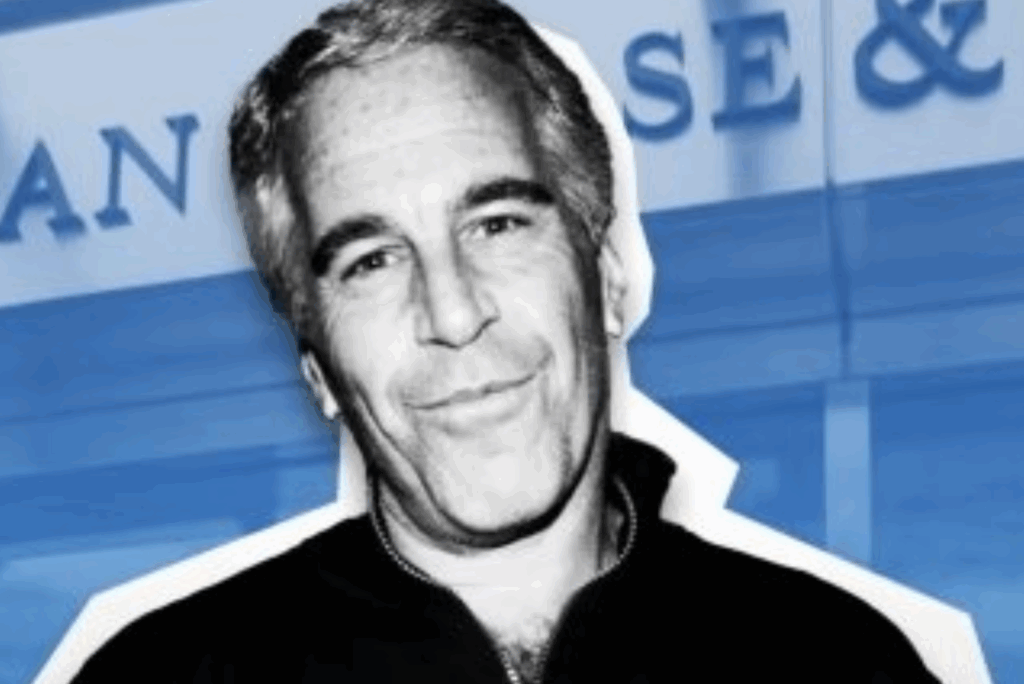
The claim is simple, and the evidence is public. America’s largest bank signaled that conservative speech and association could be a reputational hazard worth severing, while a registered sex offender who generated fees and introductions was treated as a valuable customer for years after his conviction. This contrast, between political debanking and the indulgence shown to Jeffrey Epstein, is not a social media illusion. It is the record that regulators, state attorneys general, shareholders, and victims have forced into daylight. The conclusion is not that every account closure at JPMorgan is ideological. The conclusion is that the bank’s internal risk calculus repeatedly tolerated known criminality while showing a willingness to sever lawful clients over viewpoint linked reputational risk. That pattern warrants congressional intervention.
Start with definitions. Debanking is the withdrawal of basic financial services, often without a clear explanation, sometimes framed as risk management, sometimes as policy enforcement by a payments subsidiary, sometimes as a compliance review that never resolves. In the last decade and a half conservatives have produced concrete cases. The Family Council in Arkansas had its Chase owned processor shut off mid workday, donations halted at once, with a one minute termination notice and a vague high risk label that did not match any of the listed categories. The National Committee for Religious Freedom, chaired by former Senator Sam Brownback, had a new Chase account closed within weeks, funds returned, and, according to Brownback, was told the bank would reconsider if the group disclosed its donors and its criteria for endorsing candidates. WePay, the JPMorgan payment arm, initially barred a Missouri event called Defense of Liberty that featured Donald Trump Jr., invoking a boilerplate policy against hate or violence, then reversed under state pressure and conceded that the event did not violate its terms. In each case, the first move was exclusion, the explanation was thin, and the correction, when it came, followed public scrutiny.
Add the individual cases that reveal how the system treats reputational risk. A Chase letter to a member of the Flynn family in 2021 cited reputational risk as the reason to close credit card accounts, the bank later called it an error, then reinstated service. JPMorgan terminated Yeezy’s relationship in 2022, providing no reason in the notice, during a period when Ye’s speech was controversial and widely condemned. Former President Trump has alleged that JPMorgan and other large banks asked him to move funds in 2021, which the bank denies. Taken together, these episodes show an internal practice, sometimes explicit, sometimes implicit, of treating political and reputational controversy as a banking risk that can justify exit even without allegations of fraud or insolvency.
Bombshell story here: https://t.co/CrBGTwphAt
— Steve Guest (@SteveGuest) September 8, 2025
Now set that practice beside the Epstein record. Jeffrey Epstein pleaded guilty in 2008, he became a registered sex offender, and yet JPMorgan continued to service him until 2013. The bank opened scores of accounts for Epstein linked entities, processed more than a billion dollars in wires and withdrawals, and did so while internal compliance officers were warning about large cash movements that matched the profile of payments to victims. One internal email flagged a transfer to an eighteen year old with the note Sugar Daddy. Senior lawyers and compliance heads urged exit. They were overruled while Epstein remained lucrative and well connected. The bank has since paid hundreds of millions of dollars to settle claims brought by victims and by the US Virgin Islands. No senior executive was sanctioned by regulators over that relationship.
The contrast invites a plain question. If a bank can drop a nonprofit over amorphous risk or policy language, and reverse only under political heat, why was it so slow to cut off a convicted sex offender whose transactions drew repeated internal fire? The answer is not complicated. Profit and prestige insulated Epstein. Ideological and reputational friction did not insulate conservative clients. The reputational risk standard, as used, proved elastic, it stretched to capture disfavored speech and association, and it snapped when applied to the powerful client who fed the bank deals and fees.
Skeptics will object. They will say these conservative cases are overblown, that the numbers are small, that many closures are honest compliance calls. They will add that private firms have rights of association, and that banks must manage BSA and AML exposure aggressively. Much of that is true in the abstract. It is not responsive to the pattern. When a bank owned processor mislabels a mainstream conservative event as hateful, when a faith based nonprofit is asked for donor lists as a condition of service, when a national figure receives a letter that cites reputational risk, the message is clear. Viewpoint can trigger exit. When the same institution retains Epstein for five post conviction years over the documented objections of its own compliance team, the message is clearer. Profit can excuse even known criminality when reputational risk is downgraded.
Some will say there is no written policy that orders the debanking of conservatives. That misses how culture works. You do not need a written ban to achieve a practical result. All you need is a set of soft law tools, reputational risk memos, hate speech filters in payment processors, high risk merchant codes, and compliance escalations that move quickly for the unfashionable and slowly for the well connected. Operation Choke Point habituated that muscle memory. Regulators labeled entire legal sectors as risky and banks learned to avoid them. That lesson, once learned, migrated from payday lenders and gun sellers to religious conservatives and political nonprofits. The bank will deny intent. Intent is not the only thing that matters. Effect matters. The effect has been viewpoint skews that track the politics of elite institutions.
Others will argue that JPMorgan has fixed the issue. In 2025, under shareholder pressure, the bank amended its code of conduct to forbid discrimination based on political or religious views. That is welcome and it proves the point. If there was never a problem, there would be no need to change the code. Internal policy is a start. It is not a substitute for law when the underlying incentives, public pressures, and regulatory ambiguities remain intact. The next reputational wave will test those internal promises, and absent legal constraints the pattern will repeat.
The remedy should be legislative and structural. Congress should enact a clear federal prohibition on viewpoint discrimination in core financial services, including deposits, payment processing, merchant acquiring, and credit access. The standard should be simple. Banks may deny or end service for objective, content neutral reasons, fraud, sanctions, insolvency, true AML red flags, but not for lawful speech, association, or advocacy. The prohibition should include bank owned and bank controlled subsidiaries and partners, because much of the practical discrimination occurs at the processor and platform layer where policy terms are vague and enforcement is opaque.
Next, Congress should revive and clarify a fair access rule consistent with the banking agencies’ mandates. Banks that enjoy federal charters, insured deposits, payment system access, and lender of last resort protections are not ordinary private clubs. They are public utilities in everything but name when they supply transaction accounts and clearing. With privilege comes duty. That duty is to serve lawful businesses and lawful speakers without viewpoint litmus tests. The law should require documented, individualized risk assessments for adverse actions and prohibit categorical exclusions based on sector, belief, or political activity where the activity is lawful. Regulators should audit those assessments and publish anonymized statistics so the public can see patterns rather than anecdotes.
Third, require due process. If a bank intends to terminate a customer for reasons other than objective and documented fraud or nonpayment, it should provide notice, a specific reason, and a right to cure. Emergency freezes can be brief for safety, but they must be followed by prompt explanation. Secret blacklists and unexplained closures do not belong in a constitutional republic that values civil society. The federal credit reporting framework can supply a model, where adverse actions require disclosure and consumers have rights to dispute errors. Apply a comparable structure to account terminations and processor bans.
Fourth, align AML incentives with civil liberty. Banks too often cite BSA and AML as talismans to justify debanking when the underlying conduct is lawful. Congress should create a safe harbor for banks that continue relationships while filing suspicious activity reports and monitoring, so long as the client’s activity is legal. That safe harbor should shield banks from regulatory second guessing when the decision is to maintain service under enhanced monitoring, which would reduce the incentive to exit first and ask questions later.
Fifth, create teeth. A private right of action, fee shifting for prevailing customers, civil penalties for willful viewpoint discrimination, and charter consequences for repeat offenders would change behavior. Congress should condition participation in federal programs, for example public underwriting of municipal bonds or custodial work for federal agencies, on certification of viewpoint neutrality with independent audits. States have already experimented with financial consequences for banks that boycott gun industries. Federal policy should impose a uniform standard that protects speech and association for all lawful clients.
Sixth, enhance portability and redundancy. If a bank refuses to serve a lawful client, the client should have rapid recourse to an alternative. Account portability, similar in spirit to number portability in telecom, would let individuals and organizations shift transaction accounts and payment credentials with minimal friction. The Federal Reserve’s real time rails provide further options for public payment access. Congress need not create a state bank. It can require that access points exist for lawful users who are denied service by private institutions for reasons that would violate a viewpoint neutrality standard.
Finally, investigate with subpoena power. Congress should examine why JPMorgan retained Epstein after 2008, who approved the overrides, what warnings were provided to senior leadership, and how profit and introductions influenced the decision. It should examine how reputational risk is defined and operationalized inside large banks, how hate or intolerance clauses are applied by processors, and whether donor disclosure demands are being used as informal speech tests. The point is not to manage banks from Washington. The point is to ensure that public privileges are not used to impose a private speech code while criminals receive indulgence because they are profitable.
A critic may worry about unintended consequences. Will a viewpoint neutrality law force banks to serve true extremists or violent groups. The answer is that the law should track existing lines in First Amendment and criminal law. Banks should not be required to serve illegal activity or material support for violence. They should be required to serve lawful speakers and lawful civic groups whether progressive or conservative. That may result in banks serving clients that many citizens dislike. That is the price of a neutral infrastructure in a pluralist nation. It is the same price we pay when the phone company connects calls we find objectionable and when the post office delivers magazines we would not read.
The conservative case for action is therefore not a plea for special treatment. It is a plea for equal treatment. When a bank can be nimble in cutting off a Christian nonprofit or a right leaning event, and lethargic in cutting off a convicted predator whose cash withdrawals match a sexual exploitation pattern, the bank has inverted its priorities. The proper inversion is to be strict with crime and neutral with viewpoints. That is what rule of law requires. That is what Congress can demand of institutions that profit from public privileges.
There is a broader political lesson. Elite institutions drift toward the cultural consensus of elite cities. They believe that policing speech on the right is a service to the public while their own circles deserve indulgence. The Epstein affair shows where indulgence leads. The debanking cases show where speech policing leads. Both are abuses of entrusted power. The first hurt vulnerable women. The second degrades civil society by excluding disfavored citizens from economic life. Both can be corrected by law that insists on neutral rules and visible reasons.
In the end, banks are special. They are the custodians of the payment system, the holders of insured deposits, the beneficiaries of government backstops. With that special status comes a duty that is different from the duty of a private newspaper or a private club. The duty is to serve lawful customers without importing the fashionable politics of the moment. JPMorgan’s record with Epstein and with debanking allegations demonstrates why Congress must give that duty the force of law. Do it clearly. Do it soon. The next reputational panic is already on the way.
If you enjoy my work, please consider subscribing: https://x.com/amuse.
Sponsored by the John Milton Freedom Foundation, a nonprofit dedicated to helping independent journalists overcome formidable challenges in today’s media landscape and bring crucial stories to you.
READ NEXT: Good Deed Backfires: American Burned By Soft-On-Crime Europe


















Disgusting biased betrayal!