

In 2023, the Texas Education Agency did something bold. It took control of Houston Independent School District, the nation’s eighth largest, after years of academic failure, corruption, and disregard for state law. Critics cried tyranny, the teachers’ unions howled about “state overreach,” and Democratic board members called it a coup. Two years later, the results speak for themselves. Houston’s schools are not only passing but excelling. The turnaround has been so dramatic that state leaders are now preparing to apply the same model to rescue another struggling district, Fort Worth ISD. If conservatives are looking for proof that reform through accountability can work, they need only look at Houston.
The story began with one school, Phillis Wheatley High. For seven straight years, it earned failing grades from the state. Under Texas law, after five years of failure, the state must act. The law was designed to prevent local boards from endlessly protecting their own power while students languish. By 2019, Wheatley’s record had triggered that law. But the problem wasn’t just one school. The Houston ISD board itself had violated the Texas Open Meetings Act, broken procurement laws, and ignored years of warnings from state conservators. It was, by any measure, a system that had stopped governing in the public interest.
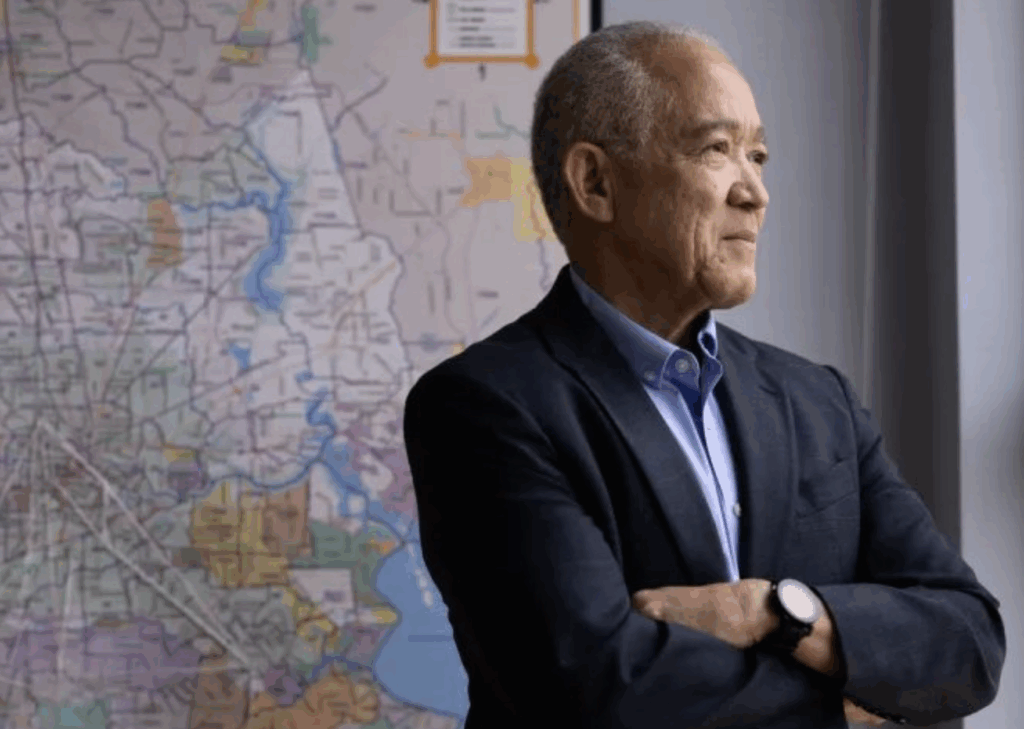
After a lengthy court fight, the state acted. On June 1, 2023, the elected board and superintendent were removed. In their place, Commissioner Mike Morath appointed a nine-member Board of Managers composed of local parents, business leaders, and educators. The new superintendent, Mike Miles, was no stranger to reform. As the former head of Dallas ISD, he had proven willing to take on entrenched interests to improve outcomes. His appointment marked a clean break from the old political patronage machine that had dominated Houston’s schools. Mike Miles, a West Point graduate and former Army Ranger, brought a soldier’s discipline and strategic precision to public education. After serving in the US State Department and leading several school districts across the country, he was uniquely prepared to take command of Houston ISD when the state intervened to rescue it from years of failure. Miles created and implemented the New Education System (NES), a bold, data-driven model that overhauled staffing, introduced performance-based pay, and emphasized classroom excellence through intensive teacher training and accountability. Under his leadership, NES schools have shown rapid improvement in academic outcomes and teacher morale. It’s the kind of sweeping reform only someone with Miles’s courage and operational mindset could attempt. His background as a Ranger, trained to lead from the front and take decisive action in the face of risk, proved essential to turning around a district once written off as hopeless. Now, thanks to his success, the NES model stands ready to be replicated statewide and beyond.
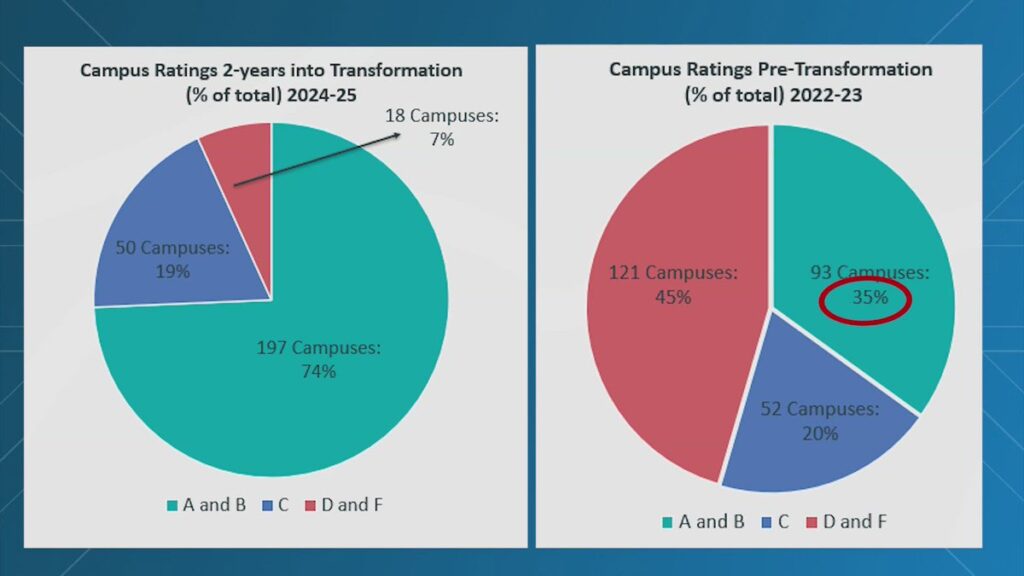
What followed was the kind of decisive leadership that bureaucracies rarely produce. Miles and the Board of Managers replaced dozens of principals and underperforming teachers, revamped special education programs, and imposed rigorous accountability measures across the system. One-third of the district’s schools were reclassified as “New Education System” campuses, where teachers received intensive training, performance-based pay, and new curricula focused on measurable student achievement. Within a year, the number of D- and F-rated schools plummeted from 121 to just 18. In 2025, for the first time in decades, Houston reported zero failing schools. The district’s overall grade rose from a C to a B, with 75% of campuses now rated A or B, compared to only one-third before the takeover. These are not small improvements, they are historic.
Critics claim these results came at the expense of community input, but the old system of “local control” had long since devolved into a closed shop run by Democrat trustees and their union allies. Those trustees held meetings in secret, routinely violated state transparency laws, and presided over years of academic collapse. Their definition of local control meant protecting bad administrators and failing teachers from accountability. The takeover ended that cycle. The ability to fire underperformers and reward excellence broke the unions’ stranglehold over staffing decisions. That, more than anything else, explains why the teachers’ associations are furious: they lost the power to veto reform.
The results extend beyond test scores. Special education compliance, once a chronic weakness, has improved dramatically. Financial controls have been tightened. Procurement is now transparent. Governance meetings are public and policy-focused. The board now measures success by student outcomes, not by political patronage. In every respect, Houston ISD is operating like a professionally managed organization rather than a political machine. This is what conservative governance looks like: accountability, transparency, and measurable progress.
Unions and left-leaning activists, unable to refute the data, now argue that the turnaround is “unsustainable.” They point to teacher turnover and budget cuts, but these are the predictable growing pains of reform. When a system rewards mediocrity for decades, excellence feels disruptive. In truth, the turnover has allowed the district to replace complacency with energy. Novice teachers, backed by better training and higher standards, are performing at levels unseen in years. The shift may be uncomfortable, but it is necessary.
The success of Houston’s model is now shaping the future of Fort Worth ISD. In October 2025, Commissioner Morath announced that Fort Worth will follow Houston’s path. The district has 20 chronically failing campuses and only 34% of students performing at grade level. Its problems mirror Houston’s before the takeover: persistent academic decline, low expectations, and administrative inertia. TEA’s plan is straightforward. The elected board will be replaced with a locally appointed Board of Managers, and a new superintendent will be selected based on merit, not political affiliation. Applications for board service are open to community members, ensuring that those who step forward are motivated by student outcomes, not by power.
The same critics who opposed the Houston takeover are already attacking Fort Worth’s. But if the state ignored its duty to intervene, it would be complicit in failure. The law is clear: when a district cannot or will not correct multi-year academic collapse, the state must act. For years, local trustees promised reform and delivered excuses. Now the state is doing what they refused to do: put children before politics.
The Houston experience also offers a crucial lesson in governance. Reform is not about ideology; it is about competence. For decades, urban school boards across the country have been captured by unions, consultants, and politicians who see education budgets as patronage pools. The results, low literacy, high dropout rates, and social decline, are predictable. Texas has shown that it doesn’t have to be that way. When leaders are freed from union coercion and political interference, schools improve quickly. The correlation between accountability and excellence is no longer theoretical. Houston proved it.
The contrast between pre-2023 and today could not be clearer. Before the takeover, Houston ISD’s leadership defied the state, ignored parents, and allowed failing schools to persist year after year. Today, the district is compliant, transparent, and improving. Even Wheatley High, once the symbol of failure, now meets state standards and is on track for a second consecutive acceptable rating. This progress was not achieved through slogans or workshops; it was achieved through firm management and merit-based reform.
Opponents of state intervention often invoke democracy, but what they mean is protection for incumbents. Democracy without accountability is dysfunction. In Houston, the old board’s version of democracy was closed-door deals and legal violations. The new board’s version is open meetings, data transparency, and results that parents can measure. The difference is moral as well as practical. Every year a child spends in a failing school is a year stolen from his future. The state’s duty to intervene when local governance fails is not just legal—it is ethical.
Commissioner Morath has extended Houston’s state management through 2027, ensuring that these gains will endure. This cautious approach is wise. Reform must take root before it is handed back to elected trustees. The goal is not perpetual state control but permanent local competence. When Houston’s elected board eventually returns, it will inherit a district transformed. The same will be true for Fort Worth if it follows this model faithfully.
In an era when too many conservatives shy away from governing boldly, the Texas Education Agency has demonstrated the opposite: conservative reform that works. The Houston takeover has vindicated the principle that when government acts with discipline, accountability, and moral clarity, it can fix what local politics broke. The unions will continue to protest, but parents and students see the truth in report cards, not rhetoric. Houston’s success is measurable, visible, and repeatable. It is the new standard for education reform in America.
If you enjoy my work, please share my work and subscribe: https://x.com/amuse.
Sponsored by the John Milton Freedom Foundation, a nonprofit dedicated to helping independent journalists overcome formidable challenges in today’s media landscape and bring crucial stories to you.
READ NEXT: Trump Reveals Huge Economic News, Shaking Multiple Continents
Sponsored






















Apply Nationwide Now
It was a very interested article / where could a person get more information about how they did this in Texas / would like to see more of it around the country
Send this to ALL THOSE FAILING SCHOOLS IN CALIFORNIA!!!!