

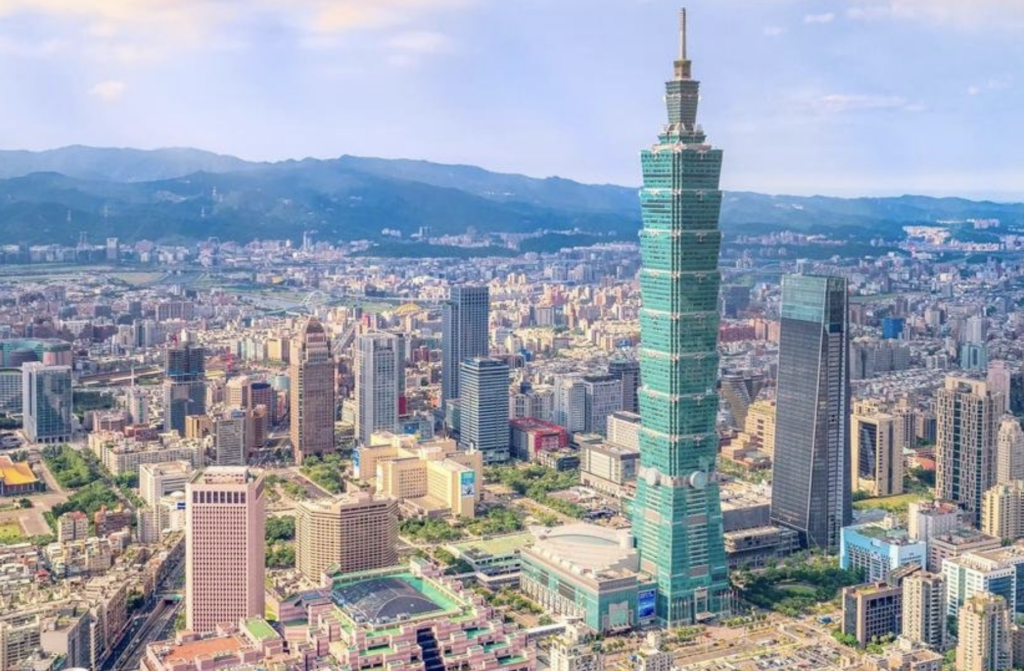
In 1951, the San Francisco Peace Treaty formally ended Japan’s sovereignty over Taiwan. Yet, it did not transfer the island to China. Rather, Japan renounced its claim without designating a new sovereign. The United States, as the “principal occupying power” named in the treaty, retained de facto control. This fact, ignored or conveniently overlooked by many, is the linchpin of Taiwan’s unresolved legal status. Contrary to Beijing’s assertions, the historical and legal record demonstrates that Taiwan has never been rightfully part of the People’s Republic of China (PRC). More provocatively, the United States has a stronger legal claim to Taiwan than the PRC does—a claim it has never formally relinquished.
Legal sovereignty is not a matter of rhetorical proclamations but of binding treaties. In the immediate aftermath of World War II, General Douglas MacArthur’s General Order No. 1 placed Taiwan under the temporary administration of the Republic of China (ROC), but this was a military occupation under Allied command, not a transfer of sovereignty. The ROC’s presence in Taiwan was derivative, entirely dependent on Allied (specifically American) authorization. At no point did the U.S. or any of the Allied powers formally cede Taiwan to the ROC. This distinction is crucial. Under international law, military occupation does not transfer sovereignty; a formal peace treaty must ratify such a change. That never happened.
The San Francisco Peace Treaty of 1951 codified this ambiguity. It dictated that Japan relinquish Taiwan but deliberately left its final status undecided. American officials, particularly John Foster Dulles, were explicit about this: Taiwan was ceded “to no one.” The omission was intentional, ensuring that Taiwan’s future remained a matter for future determination. This choice was not mere diplomatic oversight but a calculated legal maneuver. By keeping Taiwan’s status open-ended, the United States maintained a controlling stake in its disposition. Moreover, the treaty recognized the U.S. as the principal occupying power, reinforcing its authority over Taiwan’s fate.
The implications of this are profound. If Taiwan was never formally transferred to the ROC and remains in a state of legal limbo, then China’s claim—premised on the idea that Taiwan was “returned” to Chinese sovereignty in 1945—is fundamentally flawed. The ROC’s initial administration of Taiwan was never a legal transfer of ownership but a temporary assignment under Allied authority. When the ROC government retreated to Taiwan in 1949 after losing the Chinese Civil War, it did not thereby become Taiwan’s sovereign. It simply relocated its government-in-exile to a territory it was already occupying under Allied auspices.
The situation became more complicated when the United States, recognizing the geopolitical stakes of the Cold War, signed the 1954 Mutual Defense Treaty with the ROC. Though the U.S. publicly affirmed its commitment to defending Taiwan, it never recognized the ROC’s sovereignty over the island. In a sense, Taiwan remained in a suspended state: defended by the U.S., governed by the ROC, but not legally transferred to any state. In subsequent decades, American policymakers deliberately maintained what came to be known as “strategic ambiguity”—an approach that continues to this day.
The legal record thus reveals a striking reality: the U.S. has never formally relinquished its claim to Taiwan. The framework of post-war treaties and the nature of Taiwan’s legal limbo mean that the U.S. remains the decisive authority in determining Taiwan’s ultimate status. Even U.S. courts have implicitly acknowledged this fact. In the 2006 case of Roger C. S. Lin v. United States, Taiwanese plaintiffs argued that because Taiwan’s status remained undetermined after the San Francisco Peace Treaty, Taiwan was still under U.S. military governance. The U.S. Court of Appeals did not reject this argument outright; rather, it ruled that the question of Taiwan’s sovereignty was a “political question” beyond judicial review. The court’s reasoning was clear: Taiwan’s status had not been legally settled, and any decision about its sovereignty rested with the U.S. government.
China, of course, rejects this legal history in favor of a narrative rooted in wartime declarations. It points to the Cairo and Potsdam Declarations, which stated that Taiwan should be “restored” to China. But these were not binding treaties. They were wartime proclamations, political statements of intent that lacked the force of law. As every first-year law student learns, declarations are not treaties. The actual treaty that ended Japan’s sovereignty—the San Francisco Peace Treaty—did not recognize Chinese sovereignty over Taiwan. If it had, the matter would be legally closed. Instead, the omission left Taiwan’s status unresolved, which is precisely why Beijing’s claim remains debatable.
Even today, Taiwan’s ambiguous status continues to be shaped by U.S. policy. The 1979 Taiwan Relations Act (TRA) effectively replaced the U.S.-ROC defense treaty while maintaining a quasi-protective role over Taiwan. The TRA does not recognize Taiwan as a state but also does not recognize it as part of China. This ambiguous stance echoes the post-war treaties: Taiwan remains neither fully independent nor a recognized part of China. Instead, it exists in a liminal state—one where the United States retains the decisive role in its fate.
For decades, this legal limbo has been dismissed as mere diplomatic maneuvering. But a closer reading of history suggests otherwise. The legal foundation for American control of Taiwan remains intact. If sovereignty is determined by treaties rather than rhetoric, then Taiwan’s status is still, at its core, a matter for the United States. The PRC’s claim, based on historical assertions rather than binding legal instruments, is weaker by comparison. Beijing may insist that Taiwan “belongs” to China, but under the principles of international law, a claim without a treaty is no claim at all.
The implications of this argument are not merely theoretical. If the legal groundwork for U.S. control remains in place, then Taiwan’s future is still an open question—one in which the United States has the strongest say. China’s rhetoric does not change the fact that no legitimate legal transfer of Taiwan ever occurred. What follows is an unsettling but necessary conclusion: the U.S. never truly relinquished control of Taiwan. Whether Washington chooses to exercise that authority more explicitly is a separate matter, but the legal and historical evidence suggests that if any country has a rightful claim to Taiwan’s disposition, it is the United States—not China.
Sponsored by the John Milton Freedom Foundation, a nonprofit dedicated to helping independent journalists overcome formidable challenges in today’s media landscape and bring crucial stories to you.
READ NEXT: Technological Crisis Potentially Risks Lives, Prompts Musk To Propose Futuristic Solution













So Taiwan is more similar to a US Territory, akin to GUAM, rather than a Sovereign Nation?
More provocatively, the United States has a stronger legal claim to Taiwan than the PRC does—a claim it has never formally relinquished.
While that may be true, it is entirely meaningless in practical terms.
Victory for Taiwan
What’s law go to do with territorial claims? Has anyone been watching Ukraine?
VERY enlightening !!! Thank you for this information !
Very interesting view of the complexities of Taiwan. What this doesn’t discuss is what are our responsibilities if Taiwan is attacked? Are we legally responsible to come to the islands aid?
This has tremendous potential for hilariously jerking China’s chain. Watch and learn!!!