

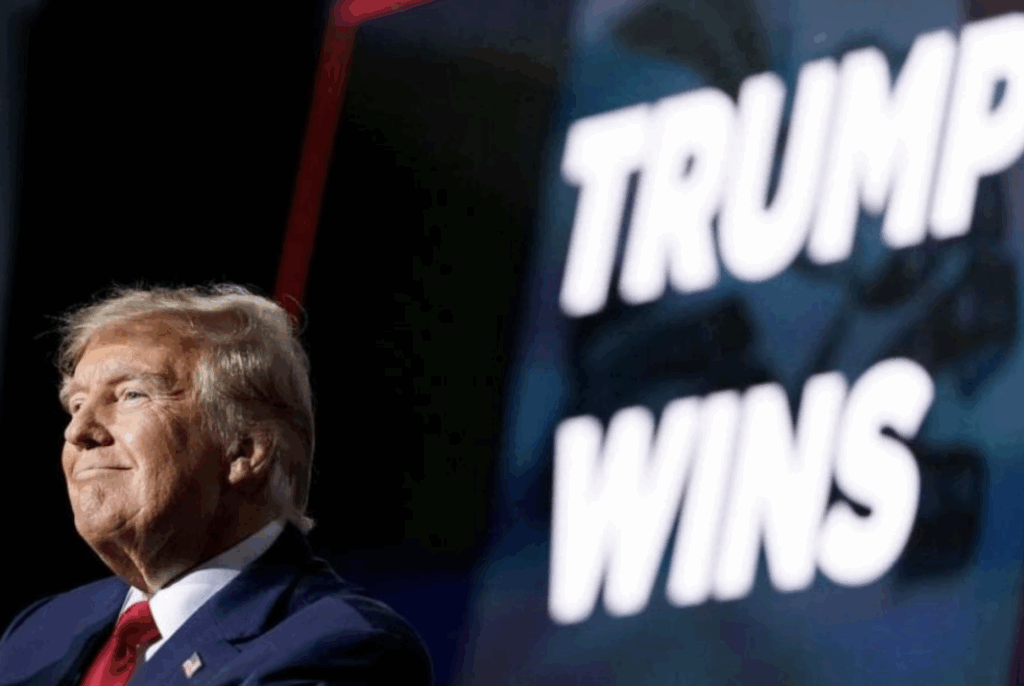
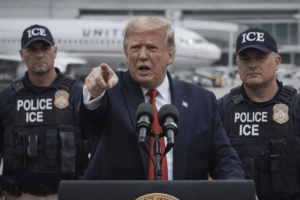
Crime and illegal immigration are plummeting across the United States, and the evidence suggests that President Trump’s policies are working exactly as intended. What distinguishes Trump’s approach is not merely the enforcement itself, but the visible, unrelenting nature of it. By making deportations public, confrontational, and impossible to ignore, Trump has turned the media’s animosity toward him into an asset. Every viral clip of ICE officers arresting illegal aliens on the street becomes a warning that reverberates across borders. The result is a surge in voluntary self-deportations, a collapse in illegal crossings, and a sharp decline in violent crime. Trump’s success is built on deterrence through visibility, a principle long recognized in criminal justice theory but rarely executed with this level of clarity and resolve.
The data confirms a national transformation. According to The Trace’s Gun Violence Data Hub, gun crime has dropped in over three-quarters of the cities with the highest rates of shootings. In more than half of those, the rate of decline is greater than last year’s record-setting drop. Early 2025 FBI data shows violent crime has fallen by 5% and property crime 9%. The nation is on pace to record the fewest gun deaths since 2015, with 32 states and the District of Columbia reporting at least a 10% decline. In cities like Detroit, Philadelphia, and Baltimore, long synonymous with violence, gun homicides are at decades-long lows. This is not coincidence. It is the direct outcome of a federal government that finally means what it says about law and order.
Trump’s crime strategy rests on three interlocking elements: the use of federal authority, the psychological power of deterrence, and the activation of local enforcement through political pressure. Nowhere is this clearer than in Washington, D.C. In August 2025, Trump deployed federal law enforcement and National Guard troops to restore order in the capital. Within weeks, violent crime dropped by nearly 50%. Burglaries and car thefts also plummeted. Police arrested more than a thousand offenders, seized 115 illegal firearms, and dismantled multiple gang cells, including MS-13 affiliates. Even critics admitted that the visible presence of uniformed troops deterred violence. It was a demonstration of what Trump calls “restoring the peace by restoring the fear of consequences.”
The power of threat has extended far beyond D.C. Trump’s repeated warnings that he would invoke the Insurrection Act to restore order in uncooperative cities have altered local policy behavior nationwide. Governors and mayors who once embraced lax enforcement have moved quickly to avoid federal intervention. The Broadview, Illinois, ICE facility provides a vivid example. After weeks of antifa-led riots at the facility, Trump announced he was prepared to send federal troops. Within hours, Illinois Governor J.B. Pritzker ordered state and local police to form a unified command to secure the site. The same officials who once denounced Trump’s immigration policies suddenly found themselves executing them, albeit under their own banner. Trump’s threat worked. Law enforcement cooperation replaced political posturing, and attacks on the facility and federal workers have declined. This pattern has repeated itself from Memphis to Portland: local authorities intensify enforcement to preempt additional federal involvement. Trump’s political leverage is transforming public safety policy without a single new law.
The border, long a symbol of Washington’s failure, has become a measure of Trump’s success. Illegal crossings have collapsed to levels unseen since the early 1970s. Homeland Security reports show just 237,000 apprehensions in fiscal year 2025, compared to 2.2 million in 2022 under President Biden. By March 2025, illegal crossings had fallen to fewer than 7,000 per month, a decline of over 90% from the height of the crisis. Trump achieved this by ending catch-and-release, mobilizing 10,000 troops for border assistance, and publicizing deportations aggressively. While critics focused on the optics, Trump understood that optics were the point. His administration flooded social media and nightly news with footage of ICE raids, creating an environment where would-be migrants saw their odds of success as vanishingly small. The result is an estimated two million self-deportations since February 2025. Migrants are choosing to return home rather than risk detention. The lesson is simple: deterrence works when it is credible and visible.
It is worth noting that President Obama and President Biden deported more people on paper than Trump has, but they did so in silence. Their enforcement was bureaucratic, not behavioral. They hid it from the cameras, seeking to appease both sides of the political spectrum while satisfying neither. Trump took the opposite approach. He made every arrest a spectacle, every raid a symbol. He invited the media to witness what others had concealed. Secretary of War Pete Hegseth has reinforced this visibility strategy by releasing previously classified videos of traffickers speeding north in swift boats and of the military intercepting and destroying those vessels with missiles, drones, and naval fire. The dramatic footage is a clear signal to the cartels that their operations are exposed and vulnerable. The message is unmistakable, and it is working, with trafficking incidents dropping sharply. In doing so, Trump has weaponized the media’s contempt, forcing them to broadcast the very images that dissuade future migrants. For the first time in decades, the world sees America as serious about its borders. The effect is measurable not just at the border but in the crime statistics of the interior.
The relationship between illegal immigration and violent crime is complex but undeniable. Federal data show that a significant share of gang activity and firearms trafficking is driven by transnational groups operating across the border. By choking off this pipeline, Trump has reduced both the supply of illegal weapons and the replenishment of criminal networks. In D.C., nearly 40 of the suspects arrested during the August crackdown were illegal aliens with prior criminal histories and MS-13 or TdA gang affiliations. The same pattern holds in Chicago and Los Angeles. With fewer new arrivals and more removals of repeat offenders, urban violence naturally declines. The decline in shootings coincides precisely with the reduction in illegal entries, a correlation that would be difficult to dismiss as coincidence.
Even more remarkable is how Trump’s rhetoric alone is driving policy compliance at the local level. Cities once proud of their sanctuary status are now quietly cooperating with federal agencies. The mere threat of losing federal funding or facing troop deployment has forced progressive jurisdictions to act. Illinois’s cooperation with ICE, after years of defiance, is perhaps the most striking reversal. Local and state leaders know that public safety failures will no longer be tolerated as political statements. In Trump’s America, the moral high ground belongs to those who enforce the law.
The decline in crime is not limited to border-related offenses. Across the nation, violent crime has fallen in tandem with Trump’s reassertion of federal authority. Analysts call this a “national synchronization effect.” When the federal government signals seriousness about enforcement, local agencies feel emboldened to act. Officers report greater morale, prosecutors file more charges, and courts face less political interference. The message is clear: enforcement is back. For years, law enforcement endured hostility from politicians who treated policing as a problem rather than a public service. Under Trump, that narrative has reversed. Police are again viewed as defenders of the public order, not instruments of oppression. That shift in tone has measurable consequences in community behavior. When criminals believe they will be caught, they offend less. When officers believe they will be supported, they enforce more. Trump has restored both sides of that equation.
Trump’s detractors accuse him of fearmongering. But fear, properly directed, is not tyranny, it is discipline. The fear of law replaces the chaos of lawlessness. By reintroducing consequence, Trump has revived the idea that freedom requires order. The moral logic is as old as civilization itself: peace is secured not by appeasement but by strength. The President has applied this principle beyond domestic borders as well, using tariffs and trade leverage to deter foreign aggression, increasing foreign investment, and open new markets for American companies and workers. His approach is consistent. Whether confronting cartels, gangs, or hostile states, Trump leads through credible threats and visible resolve. The world, like a city street, respects what it fears.
America’s cities are safer today not because crime mysteriously receded but because deterrence returned. The numbers tell the story, but the psychology explains it. Trump’s method combines showmanship with statecraft, fear with fairness, visibility with resolve. He has turned the bully pulpit into a shield for public safety. By confronting illegality in public view, he has achieved what decades of quiet diplomacy and bureaucratic half-measures could not: a cultural shift toward order. The country has learned again that safety is not an accident, it is a policy.
If you enjoy my work, please subscribe: https://x.com/amuse.
Sponsored by the John Milton Freedom Foundation, a nonprofit dedicated to helping independent journalists overcome formidable challenges in today’s media landscape and bring crucial stories to you.
READ NEXT: Report: Trump Readies Covert Strategy Targeting Foreign Leaders












Actions speak louder than words all the democrats do is offer platitudes
Imagine how much more crime would disappear if the leftist judges in these cities stopped releasing these criminals as fast as they are being arrested?