



From the first day of Donald Trump’s second term, it was clear that peace in Ukraine would be pursued with the full weight of American diplomacy. The goal was neither to vindicate Putin nor to excuse Russian aggression, but to end a grinding war that had consumed lives, treasure, and strategic clarity for years. Yet in a pattern both perplexing and consistent, Ukrainian President Volodymyr Zelensky actively undermine nearly every major step the Trump administration took to broker peace. I’m exposing this pattern not to exonerate Moscow, but to confront a more uncomfortable question: why has America’s most subsidized wartime ally chosen to impede rather than enable its benefactor’s peace efforts?
When President Trump called for an immediate ceasefire just days after his January 2025 inauguration, it marked a radical shift from the Biden administration’s entrenchment strategy. Trump sought leverage by signaling openness to direct talks with Moscow, something prior administrations treated as taboo. Yet rather than embrace this opening, Zelensky dismissed it as “very dangerous,” warning that the US was ignoring Kyiv’s voice. His refrain, “nothing about Ukraine without Ukraine,” while superficially reasonable, became a rhetorical cudgel used to rebuke every bilateral attempt at de-escalation between the US and Russia. Zelensky seemed less concerned with results than with optics, namely, maintaining his seat at the head table, regardless of what that meant for peace.
This pattern repeated itself in February. After Trump spoke with Vladimir Putin before calling Zelensky, the Ukrainian president pouted publicly, accusing Trump of treating him as an afterthought. The content of the call, a proposed ceasefire framework, was not debated on its merits. Zelensky rejected it out of hand, branding it an ultimatum and suggesting Trump had been manipulated by Russian propaganda. This rejection culminated in an explosive Oval Office meeting on February 28, where Trump, flanked by Vice President J.D. Vance, dressed down Zelensky in front of cameras. Their mineral resources agreement, once billed as a symbol of US-Ukraine partnership, was left unsigned. The world saw not a grateful partner, but a stubborn one, unwilling to take yes for an answer.
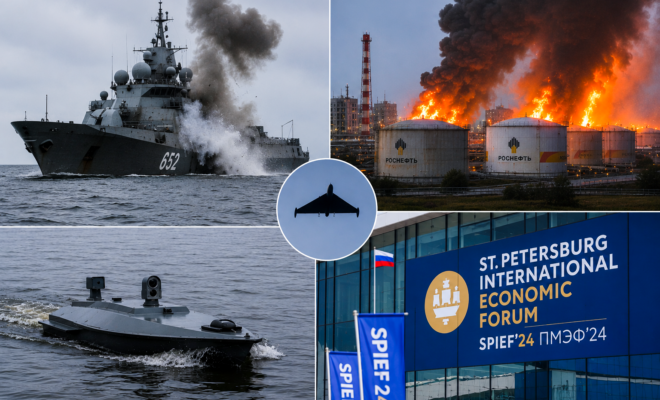
March brought more of the same. Even as Trump pushed hard for a ceasefire, Zelensky continued launching long-range drone strikes deep into Russian territory. These actions did not merely complicate diplomacy, they seemed tailor-made to derail it. On March 15, for instance, the same day Russia paused strikes on Ukraine’s energy infrastructure, Kyiv responded by bombing a Russian oil depot. It was a tit-for-tat escalation that signaled Ukraine’s disinterest in any negotiated pause. Zelensky’s rhetoric hardened. He declared that any peace without security guarantees was worthless, yet he rejected every draft proposal containing such guarantees on the grounds they were insufficient. In effect, Zelensky’s red lines grew sharper even as the battlefield deteriorated.
By April, the tension had reached a crescendo. Trump unveiled what he called a “final offer” to both sides, one that included American recognition of Crimea as Russian territory in exchange for a halt to Russian offensives and a deferral on NATO membership. Zelensky immediately rejected it, invoking Ukraine’s constitution as a legal bar to any such recognition. But the constitution can be amended, and has been before. The deeper truth was political: Zelensky could not afford peace. Like so many wartime leaders, his relevance depends on the conflict’s continuation. A man hailed as Churchillian in 2022 risked becoming politically obsolete in peacetime.
The days that followed saw Trump accuse Zelensky of sabotage. In this, Trump was not alone. Vice President Vance and Secretary of State Marco Rubio both warned publicly that the US could not support Ukraine indefinitely if it rejected every path to peace. Behind closed doors, White House officials considered freezing aid, a tactic that had already proven effective in early March. Even after Trump extended an olive branch at Pope Francis’s funeral in Rome, Zelensky remained cagey. When Trump later claimed Zelensky was ready to give up Crimea, Kyiv flatly denied it. The optics, again, were of a petulant recipient biting the hand that armed it.
Perhaps the most egregious example came on June 1st, when Ukraine launched a massive drone offensive inside Russian territory the day before scheduled peace talks in Istanbul. Codenamed “Operation Spiderweb,” the strikes reached as far as Murmansk and Irkutsk. The attack was unprecedented in scope and plainly provocative. Zelensky lauded it as a strategic success. Putin, unsurprisingly, used it to justify continued assaults on Ukraine. Trump, meanwhile, was left blindsided. The operation handed Moscow an excuse to stall, while making the US look either complicit or incapable of restraining its client.
Supporters of Zelensky argue that his recalcitrance is principled. They say he is defending national sovereignty, honoring democratic mandates, and resisting pressure to accept territorial losses. But these high-minded defenses ignore a simple reality: Ukraine is only able to fight this war because of American largesse. It is not simply a matter of funding. The US has provided targeting intelligence, long-range weapons, real-time battlefield analytics, and strategic cover at the United Nations. Ukraine is a proxy, not a peer. And proxies do not dictate terms to patrons.
More importantly, if Zelensky’s position is morally pure, why has he repeatedly timed military escalations to coincide with diplomatic overtures? If peace is truly the goal, why does Ukraine sabotage it at every turn? The timing is too consistent to be accidental. Drone strikes before talks. Public rebukes after calls. Canceled agreements after minor disagreements. There is a pattern, and it suggests Zelensky is playing a different game.
One might ask, is it wrong for a national leader to put his country first? In isolation, no. But when that leader depends entirely on another nation’s support, that calculus changes. Zelensky is not an independent actor. He is the beneficiary of tens of billions of American dollars, arms, and political capital. And yet he behaves as if Trump, the democratically elected head of that benefactor nation, is an inconvenient meddler rather than a partner.
To be clear, none of this excuses Putin. Russia’s invasion was unlawful. Its conduct in the war has been brutal. But realism, not moralism, guides foreign policy. Trump was elected on a promise to end endless wars, to bring a negotiated peace to a stalemated front. If Zelensky cannot or will not assist in that mission, then the US must reconsider the terms of its support. Allies are not sacred. They are useful, until they are not.
In the end, the most damning evidence against Zelensky is not rhetorical but structural. His presidency is a wartime dicatorship. His power, visibility, and international standing are products of conflict. Peace would end all that. It would return Ukraine to normalcy, and Zelensky to domestic scrutiny. In such a scenario, a failed minerals deal or a mishandled economy would matter far more than stirring speeches before foreign parliaments. The incentives are misaligned. Peace threatens Zelensky more than war does.
It is a cruel irony that Ukraine, the supposed victim, has become the impediment. Trump wants peace. Putin, under the right terms, appears open to it. The obstacle, again and again, is the man we have given every reason to cooperate. Zelensky was offered security, investment, and sovereignty. He chose grievance, escalation, and delay.
That is not the behavior of a partner. It is the posture of a problem.
If you enjoy my work, please consider subscribing: https://x.com/amuse.
Sponsored by the John Milton Freedom Foundation, a nonprofit dedicated to helping independent journalists overcome formidable challenges in today’s media landscape and bring crucial stories to you.
READ NEXT: Israel Responds As Left-Wing Celebrity Heads To Gaza Hot Zone












Maybe President Trump should simply step back, stop the money, and let them fight it out? Ulterior motives (and possible common ones) may be at work here?
WTF do you call Ukraine a US ally? What have they EVER
WTF do you call Ukraine a US ally? What have they EVER done for us? All they have ever done is suck up US support enriching their oligarchs and laundering money for Democrats.
Go ahead, prove me wrong.
Rather than settle the situation permanently, Trump wants to go down in some sort of history as stopping the conflict. To stop a dictator hell-bent on world conquest, he will end up giving Putin what he wants, a la Neville Chamberlain with Sudetenland. The U.S. version of “peace seems to be to divide a country in half in order to please nobody. Trump has been purposefully Putin as being “misunderstood” and basically a “good guy”. I’m sure many did so with Hitler, as well. When we finally had enough and decided to protect the future, we ended up…yep…dividing Europe. Every division in our conflicts has benefitted Russia, of course. The underbelly of this country has some weird fascination with Communism that didn’t stop after the end of the Soviet Union. You have a country that did nothing wrong except try to exist against a madman would-be-dictator, and by standing up to him and not ushering him in to their sovereign state, they are verbally attacked for daring to stand up to Trump’s buddy. We all know better out here…Putin has big plans once the West gives in to his demands. We already looked the other way when they took Crimea and tried to explain it away. It’s like Russia invading Alaska, and, in order to be considered a peacemaker, the Administration would make peace by allowing the Russians to maintain a hold on the land they invaded. How long would Americans stand for that? South Vietnamese were thrown under the bus, just like Koreans and Afghans. Ukrainians and their leadership want their borders back and everybody sees that but Trump, who seems to have visions of a Nobel Peace Prize. We have lost a multitude of soldiers in the wars that we fought to keep our country safe. The soldiers of Ukraine should not have died for nothing. Let’s quit bad-mouthing Zelensky and see him as the one man that has kept Ukraine as a nation, which is something that a number of people despise, but Zelensky will go down as a great hero and not the “great compromiser”. who temporarily kept the peace but lost the war.
Zelensky was installed by the DNC/Uni-Party using Hillary Clinton’s voting machines. He should have been out in January, anyway.
The DNC invaded Ukraine with their unqualified, featherbedding nepotism positions. (RICO)
Installed Auto-pen forcefully bullied Ukraine to stop investigating Crack Hunter and then bragged about it. (RICO)
The war funding was just a money laundering scheme for the DNC and Zelensky cronies. (RICO)
Aaaaand Putin got rolled at LEAST 2 times by the U.S., France and The UK. after sitting down and signing agreements that were eventually broken by the lowly (in this case) trinity.
If we arrest these criminal DNC mobsters, would that help stop the war?