

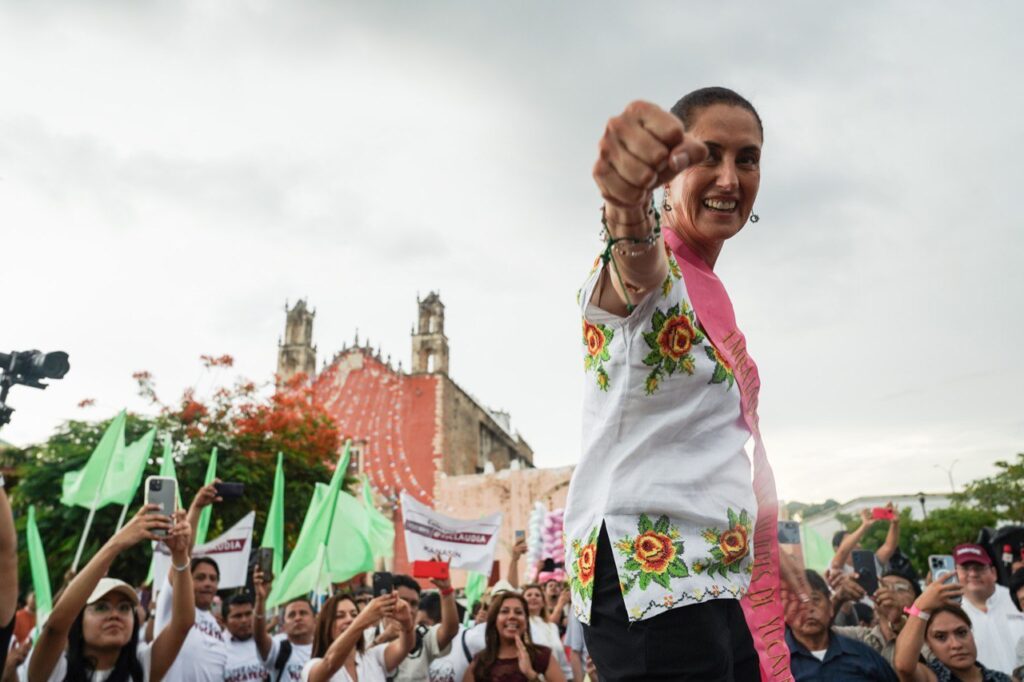
A political firestorm is intensifying in Mexico after Sen. Lilly Téllez accused President Claudia Sheinbaum of protecting politicians allegedly linked to the Sinaloa Cartel following a major U.S. indictment targeting current and former Mexican officials.
U.S. Indictment Targets Mexican Political Figures
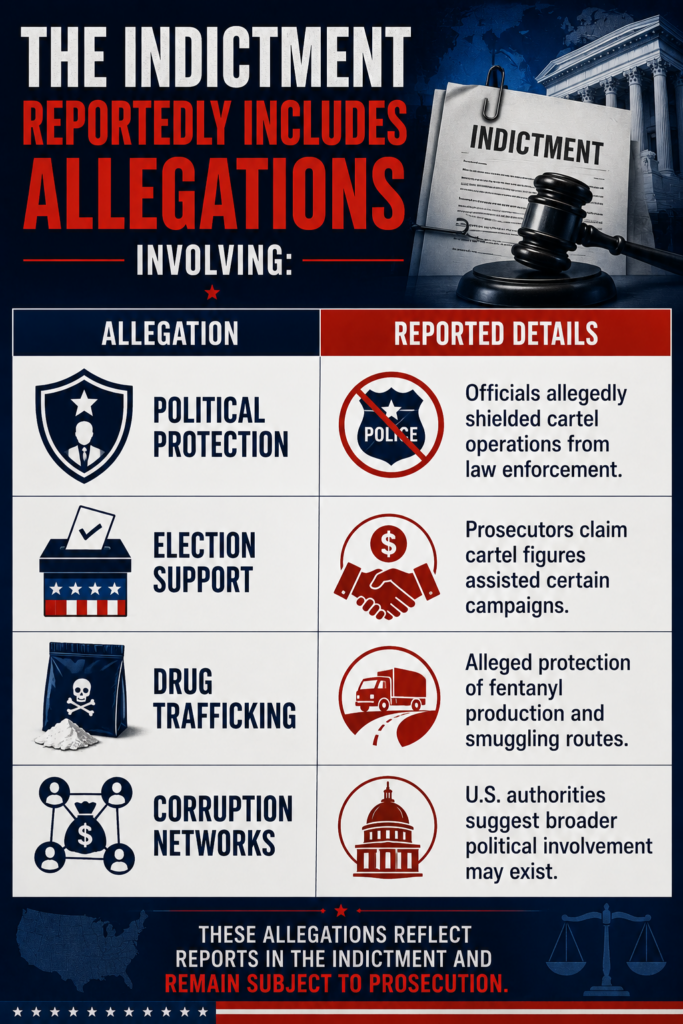
Federal prosecutors in New York recently unsealed indictments accusing 10 Mexican political figures of conspiring with cartel operatives involved in fentanyl trafficking operations into the United States.
Among those named was Sinaloa Governor Rubén Rocha Moya, who has denied wrongdoing.
According to reporting on the indictment, U.S. prosecutors allege certain officials accepted bribes and political support from cartel operatives in exchange for protecting drug trafficking routes and fentanyl production operations connected to the Sinaloa Cartel.
Lilly Téllez Warns of a ‘Mafia State’
During an interview on Fox News, Téllez accused Sheinbaum’s administration of resisting extradition efforts because broader corruption could be exposed inside Mexico’s political establishment:
“She’s afraid that if she extradites… to the United States these narco-politicians, there will be — the Pandora’s box will be open, and many other narco-politicians will fall,” she said. “I mean, this government is not acting, is not responding to the rule of law, but to the rule of the mafia.”
The senator called Mexico a “mafiocracy,” or a mafia state, and said the recently unsealed indictment out of the Southern District of New York was the “most important” accusation against a sitting Mexican government by the United States.
U.S. Attorney for the Southern District of New York, Jay Clayton, and Terrance C. Cole, administrator of the Drug Enforcement Administration (DEA), announced on April 29 the unsealing of an indictment charging Sinaloa Gov. Rubén Rocha Moya and nine others with drug trafficking and related weapons offenses.
The current and former high-ranking government and law enforcement officials are alleged to have partnered with the Sinaloa cartel to distribute massive quantities of narcotics to the United States. The case is assigned to U.S. District Judge Katherine Polk Failla.
Sheinbaum Demands More Evidence
President Sheinbaum has pushed back against the allegations and called on U.S. authorities to provide additional evidence before extradition proceedings move forward.
Her administration argues extradition requests cannot rely solely on public accusations without formal supporting documentation.
Mexico’s Attorney General’s Office reportedly declined immediate extradition requests tied to the case, citing insufficient evidence from U.S. prosecutors.
Sheinbaum has also criticized what she describes as uneven cooperation between the two countries, noting that Mexico has extradited numerous cartel suspects to the United States while accusing Washington of failing to fully cooperate on other investigations.
Morena Party Faces Growing Internal Divisions
The scandal is exposing growing fractures inside Morena, the political movement founded by former President Andrés Manuel López Obrador.
Reuters reported that some factions aligned with López Obrador oppose aggressively cooperating with U.S. extradition efforts or pressuring Rocha Moya to resign, arguing the allegations may carry political motivations.
At the same time, reform-minded figures inside Morena reportedly want the party to address corruption accusations more directly before they damage the movement nationally.
The controversy could become increasingly significant ahead of Mexico’s 2027 regional elections, where several figures named in the investigation had been viewed as influential political contenders.
U.S.-Mexico Relations Face New Pressure
The case is adding pressure to an already strained relationship between Washington and Mexico over fentanyl trafficking, cartel violence, border security, and extradition policy.
Acting U.S. Attorney General Todd Blanche recently warned that additional indictments involving Mexican political figures could still emerge as investigations continue.
Analysts say the expanding use of terrorism-style legal frameworks against cartel-linked activity marks a major escalation in how the United States is confronting organized crime networks operating in Mexico.
Conclusion
The accusations from Sen. Lilly Téllez have intensified one of Mexico’s most politically explosive corruption controversies in recent years.
While the Sheinbaum administration insists stronger evidence is required before extraditions proceed, critics argue the government risks appearing reluctant to confront alleged cartel-linked political corruption.
With U.S. prosecutors signaling additional cases may still follow, the scandal threatens to deepen tensions inside Morena, strain relations with Washington, and reshape Mexico’s political landscape heading into the next election cycle.
READ NEXT: TV Sweetheart Makes Career Pivot After Family Tragedy
















She is married to a cartel leader. Also, Mexicans were coerced into voting for her. Either threatened or paid. I got that info from
a Mexican who came to the U.S.