Mexico scored another major hit against organized crime this week with the capture of a top figure in the Jalisco New Generation Cartel (CJNG), one of the most powerful and violent criminal groups in the Western Hemisphere.
Mexican authorities announced Monday that Audias Flores Silva — known as “El Jardinero,” or “The Gardener” — was taken into custody in the western state of Nayarit. Flores Silva had been identified as a potential successor within the cartel’s leadership and was wanted by the United States, which had offered a $5 million reward for information leading to his arrest.
According to officials, the operation unfolded near the community of El Mirador, where Flores Silva was found hiding in a roadside ditch. A video shared by Mexico’s Security Secretary Omar Garcia Harfuch appears to show the moment of arrest, with a man emerging from a hole in the ground before being detained. No injuries or fatalities were reported during the operation.
🇲🇽 Mexican forces captured "El Jardinero", the man tipped to succeed "El Mencho" as leader of the Jalisco New Generation Cartel.
— Mario Nawfal (@MarioNawfal) April 28, 2026
Audias Flores Silva was hiding in a roadside ditch when he was arrested.
The US had a $5 million reward out for him.
It is not going well for… https://t.co/aOZyLtKl5Q pic.twitter.com/Zwkl1w1wIB
Harfuch said the suspect is “sought by U.S. authorities with the goal of extradition,” underscoring the cross-border implications of the case.
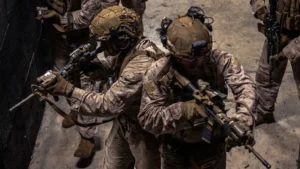
The scale of the military effort highlights the significance of the target. Mexican forces deployed reconnaissance aircraft, six helicopters, four planes, and more than 100 troops on the ground to carry out the mission — a level of coordination typically reserved for high-value cartel leaders.
Flores Silva’s arrest comes just two months after Mexican forces killed CJNG leader Nemesio Oseguera Cervantes, better known as “El Mencho,” in a dramatic military operation. His death triggered a surge of cartel violence, including coordinated attacks on businesses, road blockades, and vehicle burnings that left more than 70 people dead, among them 25 National Guard members.
While the killing of “El Mencho” was widely viewed as a major victory for the Mexican government, it also raised concerns about instability within the cartel and the potential for continued violence as rival factions compete for control.
Flores Silva played a key role within the organization, serving as head of security for Oseguera Cervantes and overseeing drug production and trafficking operations across several key states, including Jalisco, Nayarit, Zacatecas, and Mexico State. His influence within the cartel made him a central figure in its operations — and a priority target for both Mexican and U.S. authorities.
The CJNG has been at the center of growing U.S. concern over fentanyl trafficking. In 2025, President Donald Trump designated the cartel and several others as foreign terrorist organizations, increasing pressure on Mexico to intensify enforcement actions.
U.S. Ambassador to Mexico Ronald Johnson praised the arrest, calling it an “important step” in the fight against transnational crime.
La detención de Audias Flores-Silva, “El Jardinero,” un líder clave del violento CJNG, representa un paso importante contra quienes lucran con el fentanilo y generan violencia en nuestras comunidades. Acciones como esta son esenciales para garantizar que quienes trafican drogas… pic.twitter.com/8K4IxTUFax
— Embajador Ronald Johnson (@USAmbMex) April 27, 2026
“Actions like this strengthen security and help dismantle criminal networks that threaten our communities,” Johnson said in a post on X. “Together, we achieve results that make our nations safer.”
Despite the successful operation, early reports from local media in Nayarit indicate that cartel-linked violence may already be flaring in response, with vehicles and businesses set on fire shortly after the arrest — a reminder of the CJNG’s capacity for rapid retaliation.
Flores Silva’s history with law enforcement spans both sides of the border. He previously served a five-year prison sentence in the United States on drug trafficking charges before returning to Mexico. In 2016, he was arrested by Mexican authorities for his alleged role in an ambush against police in Jalisco but was released three years later.
Since 2021, U.S. officials have sought his extradition on charges including drug conspiracy and firearms possession.
His capture marks another significant blow to the CJNG, but analysts caution that dismantling cartel leadership does not always translate into lasting reductions in violence. In many cases, leadership vacuums can intensify internal power struggles, leading to further instability on the ground.
For now, Mexican officials are touting the arrest as a sign that their more aggressive approach to cartel enforcement is producing results — even as the broader fight against organized crime continues.
READ NEXT: Supreme Court Strikes Down Louisiana Congressional Map