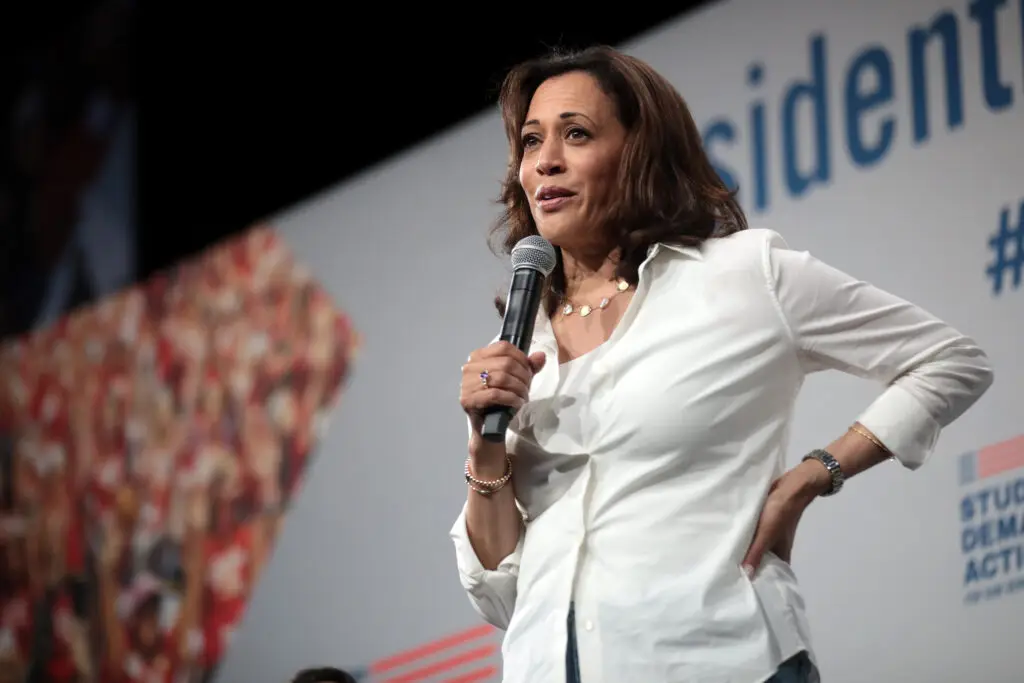
Former Vice President Kamala Harris’ 2024 presidential campaign may have lasted just 107 days, but her new memoir, 107 Days, reveals it was anything but uneventful. From TikTok virality and celebrity endorsements to late-night meltdowns and Oscar-worthy speech prep, Harris’ short-lived run was packed with plot twists — and, fittingly, was shaped in part by Barbie director Greta Gerwig.
In her book, released on September 23, Harris offers a behind-the-scenes look at a campaign that blended Hollywood glamor with digital-era savvy, and ultimately fizzled under the weight of its own expectations.
27 Drafts, Animal Noises, and the “Barbie” Director
One of the standout revelations: Harris’ address at the Democratic National Convention — a pivotal moment following President Joe Biden’s stunning exit from the race — went through a staggering 27 drafts.
“I knew what was riding on it,” Harris wrote. And she had help — from none other than Greta Gerwig, the Oscar-nominated director behind Little Women and Barbie. Gerwig coached Harris personally, advising her to bring emotional authenticity to the podium: “When you speak about your family, see their faces,” Harris recalled being told.
Adding to the unconventional prep, Harris worked with a professional voice coach who asked her — and her staff — to perform “weird hums, grunts, and trills.”
Charli XCX, TikTok, and “Kamala is Brat”
Harris’ campaign leaned heavily into social media culture, embracing a Gen Z rebrand sparked by British pop star Charli XCX. The singer tweeted “Kamala is brat,” a nod to her chart-topping Brat album, and instantly associated Harris with an aesthetic that was “edgy, imperfect, confident, embracing,” according to the book.
From that moment, Harris’ social feeds turned chartreuse — Charli’s signature lime green color — and the slogan “Kamala is Brat” showed up everywhere, from rally merch to viral TikToks. Clips of Harris set to Chappell Roan’s “Femininomenon” racked up millions of views.
Celebrity Cavalry: From Beyoncé to Taylor Swift
Her campaign became a magnet for A-list support. Beyoncé appeared with her on stage in Houston. Cardi B introduced her at a rally in Wisconsin. Megan Thee Stallion and Quavo helped energize crowds in Atlanta. Even Taylor Swift threw in an Instagram endorsement, calling herself a “Childless Cat Lady” in reference to VP JD Vance’s debate remarks.
“There was a question about whether I should have any celebrities at my rallies,” Harris noted in the book. “Did it seem too California, too Hollywood?” But the answer was clear: it worked — at least online.
Oprah Winfrey, Eminem, Bruce Springsteen, Lizzo, Jennifer Lopez, Julia Roberts, Stephen Curry, and Billie Eilish were just a few of the celebrities who publicly backed her.
But the book omits one crucial detail: many of these appearances were paid for — and paid handsomely. According to internal reports leaked after the campaign ended, the Harris team spent an eye-watering $10 million to secure Beyoncé’s appearance alone, which was heavily marketed as a “concert” but ended up being little more than a photo-op.
The Missteps: Unprepped Interviews and Staff Misfires
But it wasn’t all lime-green lights and stadium shows. Harris recounted one particularly frustrating moment on The Checkup with Doctor Mike, when she was ambushed with an unexpected in-depth interview at the end of a 19-hour day — and with no prep.
Her response? “What the f— was that?” she said to her staff afterward, as Cardi B spoke to a rally crowd nearby. The moment highlighted deeper frustrations with internal coordination and miscommunication within the fast-paced campaign.
A Cultural Campaign That Couldn’t Close the Deal
Harris’ attempt to merge political seriousness with cultural relevance made her the most visible candidate of the post-Biden scramble — but not the most viable, as Democratic power players reportedly held back endorsements and questioned whether she had “earned it.”
She mentions former First Lady Michelle Obama only three times in her 300-page memoir — a fact noted by many as indicative of lukewarm establishment enthusiasm.
Still, 107 Days paints Harris as a figure deeply aware of the changing political landscape, one where TikTok trends can define a candidate’s public image as much as policy positions — and where the line between politics and pop culture has never been more blurred.
READ NEXT: Kamala Harris Turns On Biden’s Mental Decline