


WASHINGTON — The U.S. Navy’s newest frigate design, known as FF(X), will not include a vertical launching system (VLS) for missiles, a significant shift that defense analysts say could limit the ship’s combat effectiveness and alter how the Navy deploys surface forces in future conflicts.
The Navy announced the FF(X) program earlier this month after canceling plans to build additional Constellation-class guided-missile frigates beyond the first two hulls, citing an urgent need to accelerate ship production and close gaps in surface combatant capacity.
The decision marks a departure from earlier plans for a heavily armed guided-missile frigate capable of launching a broad mix of air-defense, anti-ship, and land-attack missiles. Instead, the new frigate design will rely on canister-launched missiles, short-range air defenses, and naval guns.
Navy leaders say the move reflects two priorities: controlling costs and avoiding the delays that have plagued recent shipbuilding efforts.
What the Ship Can — and Can’t — Do
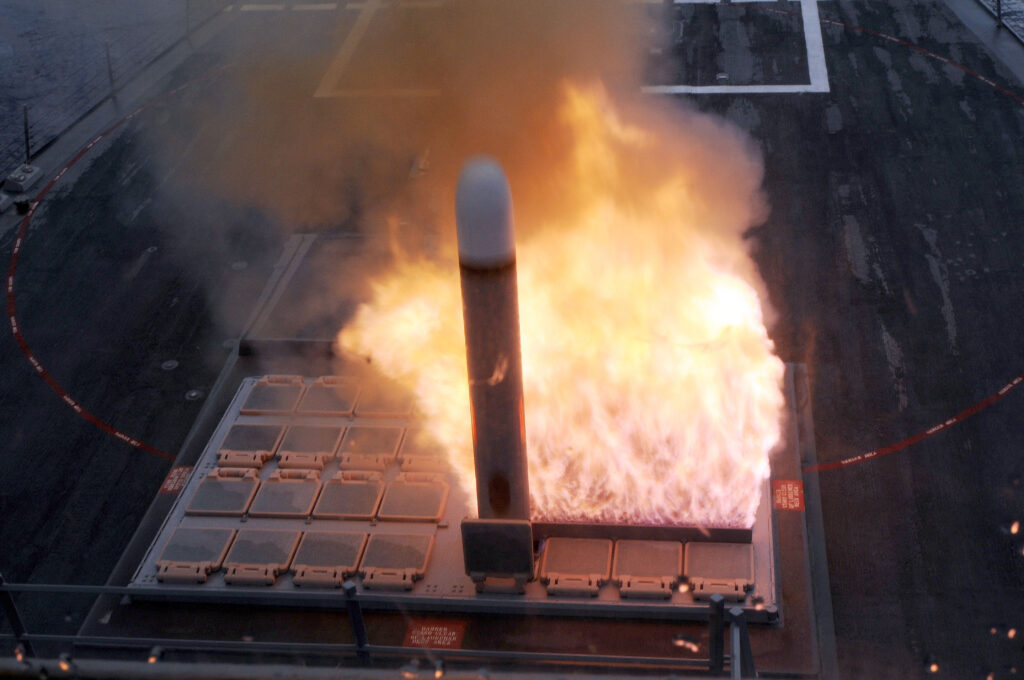
Without a VLS, the new frigate will lack the ability to fire Standard Missile interceptors, Tomahawk cruise missiles, or other long-range weapons commonly carried by destroyers and cruisers. Instead, the ship is expected to be armed with:
- A medium-caliber deck gun
- Short-range air-defense systems such as the Rolling Airframe Missile
- Canister-launched anti-ship missiles
- Sensors and systems focused on patrol, escort and surface warfare
That configuration provides the frigate with basic self-defense and limited strike capability but lacks the layered missile defense needed to protect large areas or operate independently in high-end combat against a near-peer adversary such as China. (RELATED: What The First 48 Hours Of A US-China War Would Look Like)
Strategic Tradeoffs
Supporters of the design argue that the Navy’s current fleet is too small and too expensive, and that simpler ships can be built more quickly to fill gaps — especially as China continues to expand its navy rapidly.
Critics counter that quantity without sufficient capability risks creating a fleet that looks large on paper but relies heavily on a smaller number of high-end ships for real combat power.
The change also reinforces a trend toward high-low fleet concepts, where a handful of advanced warships carry most of the firepower while cheaper ships perform escort, patrol, and presence missions. (RELATED: ‘Golden Fleet’: Trump Announces New Class Of Navy Battleships)
Implications for U.S. Naval Strategy
The absence of a VLS may limit how flexibly the Navy can deploy these frigates in contested regions such as the western Pacific or the Middle East, where missile threats from adversaries are significant.
In a major conflict, the ships would likely operate behind the front line, protecting logistics vessels, escorting convoys, or freeing up destroyers for higher-risk missions.
A Broader Pattern
Navy leaders and defense officials have repeatedly emphasized the need to accelerate ship production, arguing that pursuing “perfect” designs and lengthy modification cycles slows delivery and drives up costs.
As part of that effort, the Navy has shifted toward alternatives that rely on proven platforms and more streamlined construction to expand the fleet more quickly. Lawmakers in both parties have echoed those concerns, urging faster delivery timelines — even if it requires accepting fewer advanced capabilities or simplified requirements — to meet strategic demands and support U.S. shipyards.
Whether the new frigate strikes the right balance between speed, cost and combat power remains an open question — one that could shape the Navy’s effectiveness for decades.
The first FF(X) frigates are slated for production beginning in 2028, with further deployment details and combat system configurations expected as the program progresses.
For now, the move underscores a hard reality facing U.S. defense planners: building more ships quickly may require accepting ships that can do less once they arrive.
READ NEXT: Speaker Johnson’s Moment: Call The Recess Or Admit Defeat



















We are a group of volunteers and starting a new scheme in our community.
Your site provided us with valuable information to work on. You have done an impressive job and our entire community will
be grateful to you.
Sounds like a large LCS. Another marginal ship for the Navy to quickly recall.