A new investigative report is putting one of America’s most recognizable forensic scientists back in the spotlight — and raising fresh questions about how much U.S. expertise has flowed into China’s security apparatus over the past two decades.
Why This Story Is Suddenly Back in Focus
The Daily Caller News Foundation (DCNF) reports that Dr. Henry Lee — best known for his role in the O.J. Simpson murder trial — participated in years of forensic training programs involving Chinese law enforcement and public security institutions. According to the investigation, thousands of Chinese officers and officials received instruction in evidence analysis, criminal investigation techniques, and forensic science methods:
Dr. Henry C. Lee, who was born in China and became famous testifying as an expert defense witness in O.J. Simpson’s 1995 murder trial, served as Connecticut State Police commissioner and investigated dozens of notorious cases including the kidnapping of Elizabeth Smart and the murders of JonBenét Ramsey, Chandra Levy and Laci Peterson.
At least a decade before joining O.J.’s “dream team,” Lee also began sharing his expertise with “China’s FBI,” the Ministry of Public Security (MPS), and its local subordinate, the Public Security Bureau (PSB), with which he held numerous positions until his death at the age of 87 in March 2026, according to DCNF translations of Chinese government and state media reports.
Lee likewise held multiple positions in arms of a Chinese influence and intelligence agency called the United Front Work Department (UFWD), which arranged for Lee to be interviewed in 2019 about his work training Chinese state security personnel in both China and the U.S. at the University of New Haven (UNH), where he had served as a professor for over 50 years, according to DCNF translations of Chinese government and state media reports.
“Over the past 50 years, at least 1,000 teams and more than 10,000 [Chinese police] have received specialized professional training here in Connecticut at UNH,” Lee said, according to a DCNF translation of that 2019 interview. “I feel their academic drive, spirit of tireless research, and love for the cause, party and nation.”
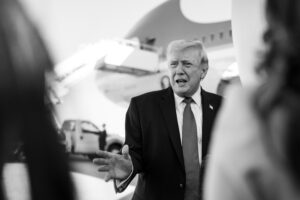
The allegations surface as President Donald Trump arrives in China for a major summit with Chinese President Xi Jinping, against the backdrop of rising tensions over espionage, technology transfer, and national security.
The report does not allege that Lee committed any criminal wrongdoing. But the allegations are already drawing attention on Capitol Hill.
Rep. John Moolenaar (R-Mich.), who chairs the House Select Committee on the Chinese Communist Party, told the DCNF that the claims deserve serious investigation.
“The allegations of UNH training students from the MPS must be thoroughly investigated,” Moolenaar said. “All American universities must do more to protect taxpayer-funded research from our adversaries.”
The Bigger National Security Debate
The story taps directly into a much bigger issue now dominating Washington: how American scientific and technical expertise can be used by foreign governments — particularly China.
For years, U.S.-China academic collaboration was treated as a normal part of globalization. That has changed dramatically.
Federal agencies, lawmakers, and intelligence officials now warn that China aggressively uses research partnerships, talent recruitment programs, and academic exchanges to accelerate military and technological development.
Why “Dual-Use” Expertise Matters
That concern has expanded far beyond traditional defense sectors.
Today, policymakers increasingly focus on “dual-use” expertise — knowledge developed for civilian purposes that can also strengthen surveillance, intelligence, and state security systems. Forensic science falls squarely into that category.
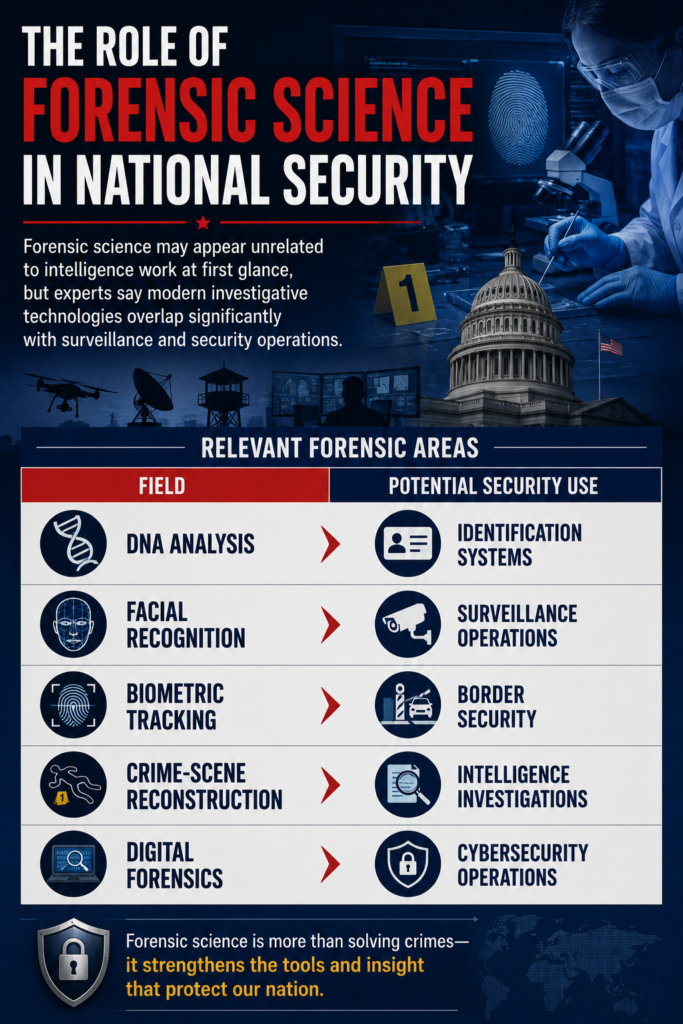
The report also lands as China continues building one of the world’s most advanced surveillance infrastructures, powered by AI, facial recognition, biometric databases, and integrated digital monitoring systems. Critics argue that advanced investigative training could indirectly support those capabilities.
A Broader Shift in U.S.-China Relations
At its core, the controversy reflects a broader shift happening across American institutions.
What was once viewed as open scientific exchange is now increasingly seen through a national security lens.
And as tensions between Washington and Beijing continue to escalate, stories involving technology transfer, research collaboration, and foreign training programs are likely to face even greater scrutiny in the years ahead.
READ NEXT: Trump Allies Frustrated After GOP Leaders Reject Redistricting Plan