Inside “Ghost Murmur,” the program defying the laws of physics…
A previously undisclosed CIA capability known as “Ghost Murmur” has emerged as one of the most controversial intelligence tools reported in recent years, following claims it was used to locate a downed U.S. airman in Iran earlier this month by detecting his heartbeat while he was concealed in mountainous terrain.
According to multiple reports, the classified system is designed to detect the faint electromagnetic signal generated by a human heartbeat — even across long distances and through physical obstacles — using a combination of advanced sensors and artificial intelligence.
A Breakthrough Rescue Operation
The technology reportedly played a role in a high-risk recovery mission after an F-15E Strike Eagle was shot down during operations over southern Iran. One crew member was quickly recovered, while the second — a colonel identified by the callsign “Dude 44 Bravo” — evaded capture for roughly two days while hiding in rugged terrain.
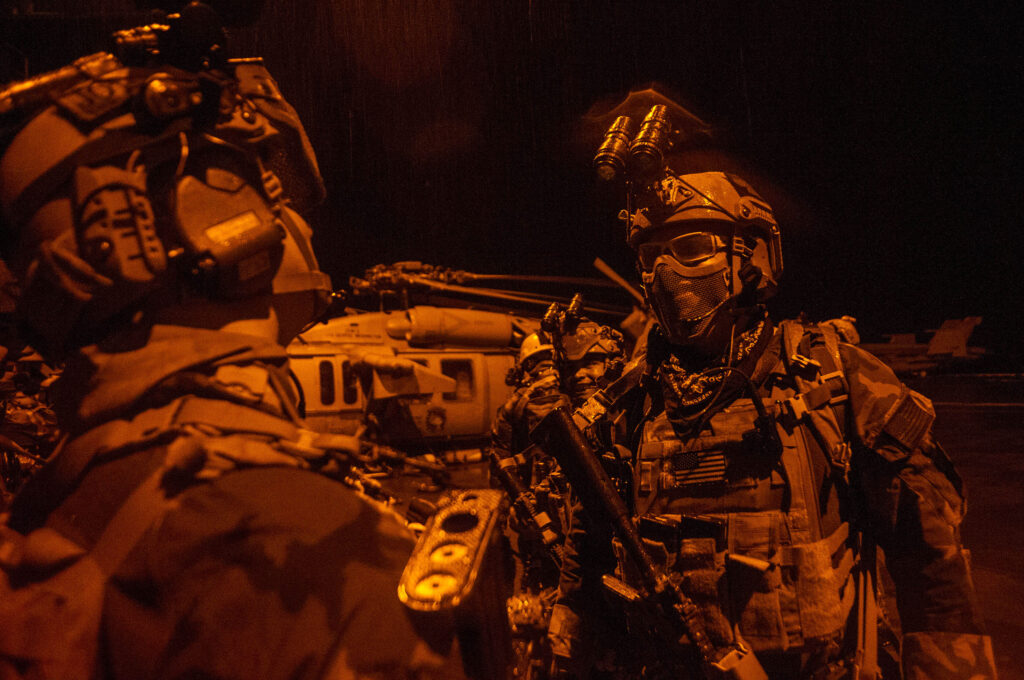
Traditional tracking methods, including locator beacons, provided only a general search area. Intelligence officials then turned to “Ghost Murmur,” which allegedly helped narrow the airman’s location, enabling a successful rescue operation involving Navy SEAL Team Six.
Officials described the system’s capability in striking terms, with one source comparing it to identifying a single voice in a stadium — except across hundreds of square miles.
How the Technology Works
At its core, Ghost Murmur is said to rely on quantum magnetometry, a technique capable of detecting extremely small magnetic fields. Each heartbeat produces a minute electromagnetic signal, a principle used in medical settings such as magnetocardiography.
The reported system combines this concept with AI-driven signal processing to filter background interference and isolate a specific individual’s cardiac signal.
Some reports claim the system can detect heartbeats from distances of up to 40 miles under optimal conditions, particularly in low-interference environments such as deserts or mountainous regions.
Scientific Skepticism
Despite the dramatic claims, many scientists and engineers remain skeptical.
Experts note that detecting such weak magnetic signals typically requires close proximity and highly controlled environments, often within shielded facilities. Some physicists have said the reported range would require technological advances beyond what is currently documented in public research.
Others suggest additional, undisclosed methods may have been used, or that the reported capabilities are being overstated.
Intelligence Implications
Whether fully accurate or not, the emergence of Ghost Murmur points to a broader shift in intelligence gathering — toward biometric detection and AI-enhanced surveillance.
If scalable, such technology could reshape search-and-rescue operations, battlefield awareness, and tracking capabilities in environments where traditional tools like radar, thermal imaging, or satellites are limited.
At the same time, the concept raises significant ethical and strategic questions, particularly around privacy and the future of human detection technologies.
For now, much about Ghost Murmur remains classified. But even the claims surrounding it suggest intelligence agencies are continuing to push the boundaries of what may be possible.
READ NEXT: Cook’s Ratings Shake-Up Sends Single Party Soaring