

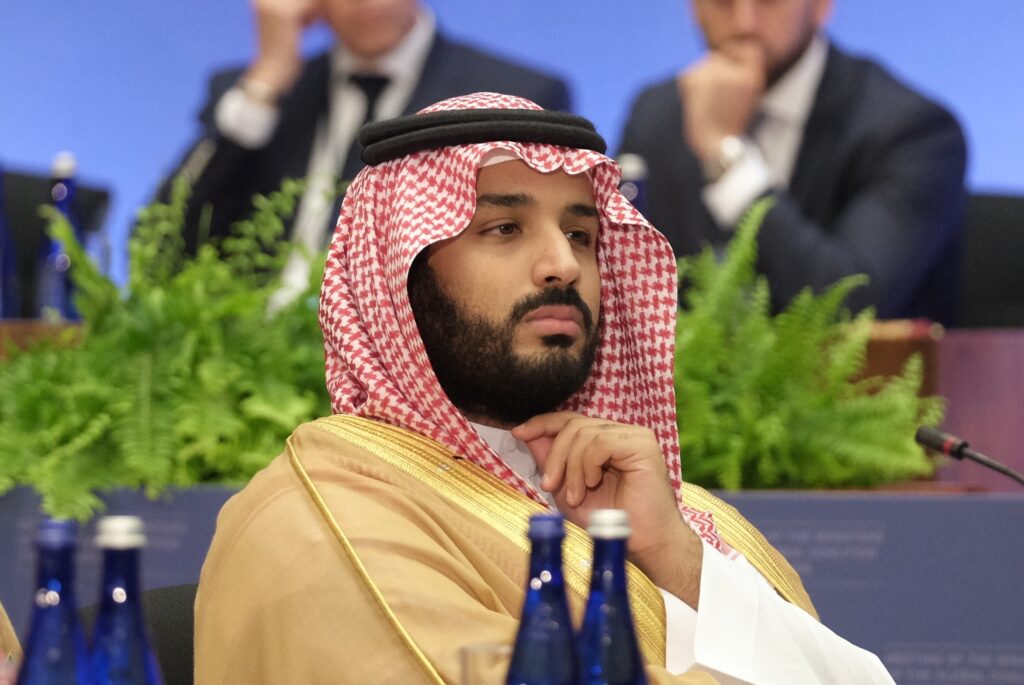
The unresolved war with Iran has opened a rare public window into tensions between President Donald Trump and Saudi Crown Prince Mohammed bin Salman, testing a relationship that has long been central to U.S. strategy in the Middle East.
The disagreement centers on how far the United States should go in confronting Tehran after months of strikes, counterstrikes, and maritime disruption across the Persian Gulf.
Earlier in the conflict, the Saudi crown prince reportedly urged Trump to keep pressure on Iran, viewing the campaign as a chance to weaken a longtime regional rival. But as the war expanded and Iranian retaliation threatened Gulf stability, Riyadh grew increasingly wary of the risks.
Saudi Position Shifted As War Spread
The shift reflected Saudi Arabia’s competing priorities.
On one hand, the kingdom has spent years warning that Iran poses a direct threat through its nuclear program, missile arsenal, and regional proxy network.
On the other, Saudi leaders have worked to stabilize their economy, attract foreign investment, and avoid another major regional conflict that could threaten energy infrastructure and the crown prince’s Vision 2030 agenda.
That tension became harder to manage as Iran escalated attacks around the Strait of Hormuz, a critical global shipping chokepoint, and threatened U.S.-linked assets across the Gulf.
Trump Pressed For Stronger Backing
Trump has sought to present the Iran campaign as part of a broader effort to restore deterrence, protect shipping lanes, and force Tehran into a more restrictive nuclear agreement.
But the president’s approach has frustrated some Gulf partners, who fear that open-ended escalation could expose them to direct Iranian retaliation.
The dispute reportedly intensified after Trump moved to organize a U.S.-led effort to secure commercial shipping through the Strait of Hormuz. Saudi Arabia and other Gulf states were cautious about openly joining a mission that Tehran could view as an act of war.
Relationship Faces Unusual Strain
The disagreement is notable because Trump and Mohammed bin Salman have generally maintained a close working relationship.
During Trump’s first term and return to office, the two leaders emphasized arms sales, energy cooperation, counterterrorism, and joint opposition to Iran.
The current dispute does not mean the U.S.-Saudi alliance is collapsing. But it does show how quickly shared interests can fracture when a regional war threatens to spill over into Gulf territory.
Iran Remains Central Threat
Saudi Arabia still views Iran as its principal regional adversary.
Tehran’s support for proxy groups, its missile program, and its nuclear ambitions remain core Saudi concerns. But Riyadh also appears determined to avoid becoming the battlefield for a larger U.S.-Iran confrontation.
That calculation has complicated Trump’s effort to rally Gulf states behind a more aggressive posture.
Strategic Partnership Enters Harder Phase
The rift highlights a broader shift in the Middle East.
Saudi Arabia still relies heavily on U.S. military cooperation, but the crown prince has pursued a more independent foreign policy, balancing ties with Washington against diplomatic outreach to regional rivals and economic engagement with other global powers.
For Trump, the challenge is persuading Gulf allies to support a hard line against Iran without triggering the kind of regional instability they fear most.
The result is a strained but still essential partnership, with both sides trying to preserve the alliance while disagreeing over how to contain Tehran.
READ NEXT: Fetterman Reveals The One Thing That Would Force Him to Leave Party

















The crown prince ought to read about England’s 1930s Chamberlain.
He’s acting the same way.
‘If you give a rabid dog a piece of meat, it’ll be back for more. If you don’t give it more, it’ll attack YOU’!
‘If you don’t learn from the past, you’ll be condemned to repeat it’.