Exchange occurs amid rising tensions after U.S.-Israeli strikes and Iranian retaliation.
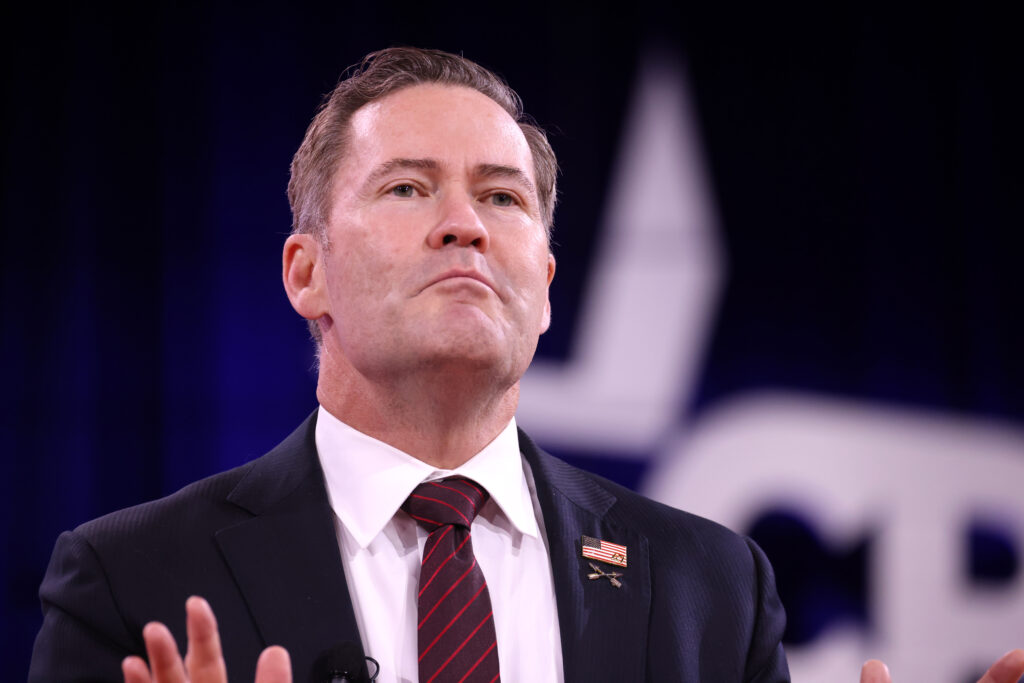
Tensions between the United States and Iran spilled into the United Nations Thursday, as U.S. Ambassador to the U.N. Mike Waltz issued a sharp warning to his Iranian counterpart during an emergency Security Council meeting.
The heated exchange came as world leaders gathered to address the growing conflict involving Iran, Israel, and the United States, which has raised fears of broader instability across the Middle East.
Confrontation at the United Nations
During the emergency session, Waltz delivered pointed remarks directed at Iran’s ambassador to the United Nations, Amir-Saeid Iravani, accusing Tehran’s government of destabilizing the region and engaging in violent activities.
“This representative sits here… representing a regime that has killed tens of thousands of its own people,” Waltz said, referring to the Iranian government and its handling of domestic protests. (RELATED: The Kharg Island Strategy: A High-Impact Way To Break Iran’s Regime)
The entire world has witnessed the Iranian regime’s wholesale slaughter of innocent civilians.
— Ambassador Mike Waltz (@USAmbUN) February 28, 2026
Its presence in the Security Council makes a mockery of the body.
But where the UN lacks moral clarity, President Trump and the United States of America will maintain it. pic.twitter.com/8hVE4wEZ5H
Waltz also accused Iran of waging an “unending campaign of bloodshed and mass murder” and claimed the regime had been involved in plots targeting U.S. officials, including an alleged attempt to assassinate President Donald Trump.
The U.S. ambassador argued that Washington’s recent actions in coordination with Israel were justified under international law and framed them as defensive measures against Iranian threats.
Waltz, a former Green Beret, also issued a subtle threat to Iran’s U.N. Ambassador Amir Saeid Iravani.
NATO Ambassador Mike Waltz threatens Iran's NATO ambassador: "Not my first firefight. He should be careful with his words sitting on American soil, and I'll just leave it at that." pic.twitter.com/wc4LlNigPP
— Aaron Rupar (@atrupar) March 4, 2026
Iran Condemns U.S. and Israeli Military Action
The Iranian ambassador strongly rejected the accusations, condemning the joint U.S.-Israeli strikes on Iranian targets and calling them violations of international law.
Iravani told the Security Council that the attacks had killed and injured civilians and described them as a “crime against humanity.”
Tehran has repeatedly warned that any additional attacks on its territory or interests could trigger further retaliation. Iranian officials have urged the United Nations to address what they describe as “warmongering statements” by the United States and its allies.
Rising Military Tensions in the Middle East
The confrontation at the U.N. reflects broader military tensions in the region following a wave of strikes and counterstrikes involving Iran, Israel, and U.S. forces.
Washington and Jerusalem have argued that the operations were aimed at limiting Iran’s missile capabilities and nuclear program. President Donald Trump has described the military campaign as a necessary effort to address the threat posed by Iran’s weapons development.
Longstanding U.S.-Iran Hostility
Relations between Washington and Tehran have been strained for decades, but tensions have escalated sharply in recent years.
U.S. officials accuse Iran of supporting militant proxy groups across the Middle East and threatening American forces and allies. Iranian leaders, in turn, accuse the United States of attempting to undermine the Islamic Republic and interfere in regional affairs.
These disputes have increasingly played out in international forums such as the United Nations, where both sides seek to shape the global narrative surrounding the conflict.
Global Concerns About Escalation
Diplomats and analysts warn that the current crisis carries the risk of expanding into a broader regional war. (RELATED: Report: Russia Providing Intelligence That Could Help Iran Target US Forces)
Several governments have urged restraint and called for diplomatic solutions to avoid further escalation. With military operations continuing and rhetoric intensifying, international institutions such as the United Nations are likely to remain a central venue for competing claims and diplomatic pressure.
For now, the clash between the U.S. and Iranian ambassadors underscores just how quickly tensions in the Middle East can spill onto the global stage.
READ NEXT: Under Attack: The Moment She Fired Changed Everything