The United States has quietly repositioned several major assets in the Persian Gulf, withdrawing warships and personnel from multiple bases, including a fleet headquarters, signaling growing concern about Iran.
Satellite imagery and naval tracking data show that U.S. Navy combat vessels previously stationed at Naval Support Activity Bahrain, home to the U.S. Fifth Fleet, have left the base for open waters. For now, the facility appears to be without its usual surface combatant presence.
🚨 BREAKING: U.S. FIFTH FLEET PUTS TO SEA
— Mossad Commentary (@MOSSADil) February 25, 2026
According to the AP, all American naval vessels stationed at the U.S. Fifth Fleet headquarters in Bahrain have left port and moved into open waters.
Satellite imagery reportedly shows the harbor now empty. pic.twitter.com/1UXf2XIWhx
It is not part of a routine reshuffle.
🚨 The Pentagon has begun evacuating troops from key bases in Qatar and Bahrain, including locations linked to the U.S. Fifth Fleet, according to The New York Times.
— OSINT_PK (@osintPk) February 21, 2026
When forces are repositioned from frontline bases, it usually means planners are preparing for multiple… pic.twitter.com/GpMdTM19Cw
The shift comes as tensions with Iran continue to climb and as the Trump administration weighs potential responses if Tehran refuses to meet U.S. demands. The buildup marks the most significant concentration of American firepower in the region since the early days of the Iraq War in 2003.
A visible shift in posture
Naval Support Activity Bahrain has long served as the anchor of U.S. maritime operations in the Persian Gulf. Destroyers, patrol ships, and logistics vessels typically operate from the base, supporting missions that range from counterterrorism patrols to safeguarding commercial shipping lanes.
Now, those ships are at sea.
Dispersing vessels into open water can reduce their vulnerability. Fixed facilities are easier targets. Ships underway are harder to track and strike, especially if tensions spill into open conflict.
The repositioning echoes a similar maneuver in June 2025, when U.S. forces spread out ahead of Iran’s attack on a U.S. base in Qatar. That move was widely seen as an effort to shield American assets from retaliation.
Carrier movement adds weight
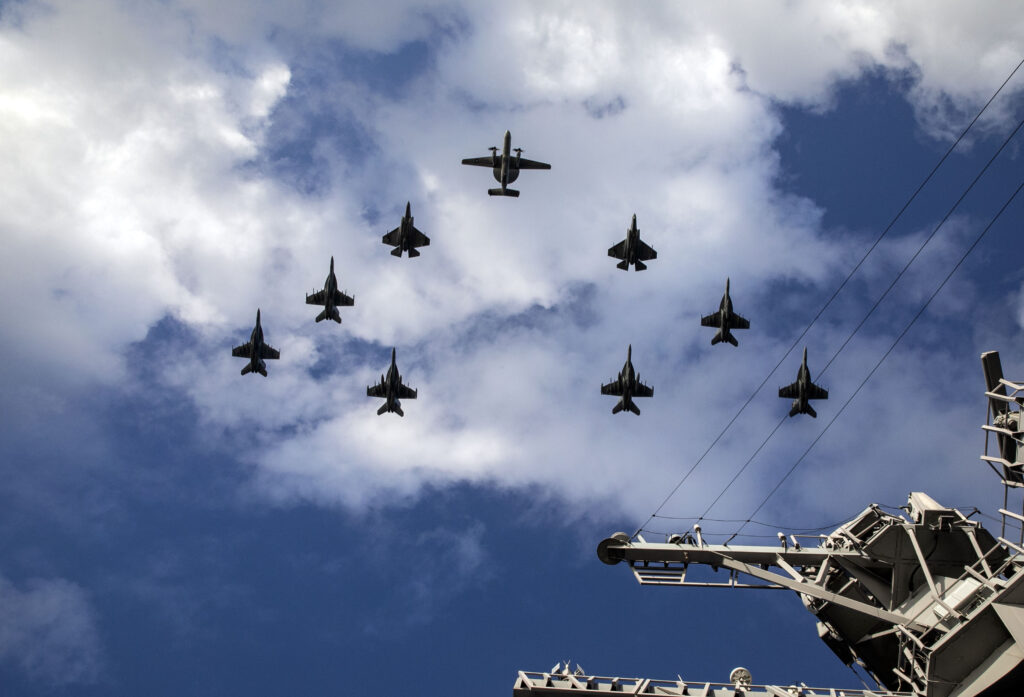
Among the vessels involved in the broader realignment is the aircraft carrier USS Gerald R. Ford. The carrier recently departed the U.S. naval base at Souda Bay in Crete and is now part of the regional posture adjustment.
Aircraft carriers are not subtle instruments. Their presence alone sends a message.
When a carrier strike group enters or shifts within a theater, it signals that Washington is preparing for a range of options, from deterrence to direct action. It also provides flexibility, allowing the United States to respond quickly without relying on fixed installations that could come under attack.
Talks ahead, pressure on Tehran
The military movements are unfolding just before a third round of nuclear talks in Geneva.
That timing is unlikely to be accidental.
The Trump administration has made clear it expects Iran to comply with its demands, particularly after the regime’s mass killing of government protesters. The White House has warned that failure to do so could bring consequences. While officials have not publicly detailed specific military plans, the repositioning of naval forces underscores that Washington intends to negotiate from a position of strength.
In practical terms, this means two tracks moving at once: diplomacy in Europe and deterrence in the Gulf.
Whether the buildup convinces Tehran to change course remains to be seen. What is clear is that the United States is not waiting passively. By shifting ships out of port and into open water, the Navy is signaling readiness while reducing risk.
For now, the Fifth Fleet’s headquarters remains in Bahrain. But the empty docks tell their own story.
READ NEXT: Dems Sweep Key Contests As Trump Delivers State Of The Union