

A 2025 Homestead Act for Modern America
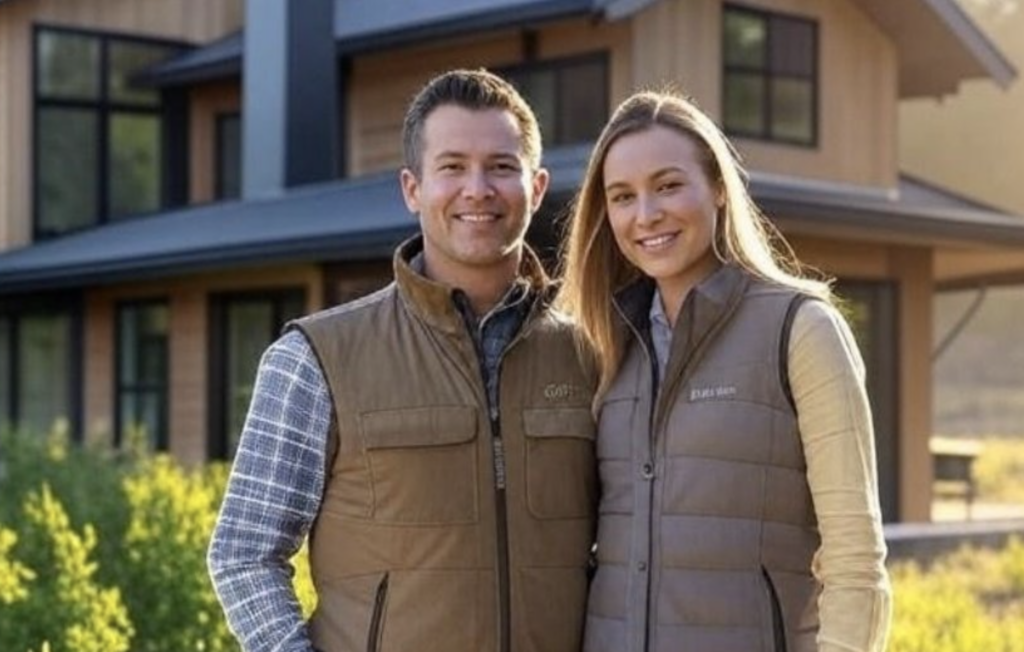
It is a rare moment in history when a single policy can invoke the pioneering spirit of America’s past while charting a bold course for its future. President Trump, alongside incoming Interior Secretary Doug Burgum, now has the opportunity to resurrect one of the most transformative policies in American history: the Homestead Act. By introducing the Homestead Act of 2025, their administration could grant a million families the chance to claim 40 acres of land and low-cost loans to build homes equipped with solar power, Starlink internet and modern wells. This initiative could address skyrocketing housing costs, encourage self-sufficient lifestyles and reinvigorate the American dream.
The Housing Affordability Crisis
America is in the throes of a housing crisis. In cities like San Francisco and New York, median home prices soar above $1 million, far outpacing the financial reach of middle-class families earning $100,000 annually. According to the National Low Income Housing Coalition, nearly 19 million households spend more than 30% of their income on housing, making them cost-burdened. The situation is unsustainable, with urban areas becoming increasingly unaffordable for working families and young professionals.
Migration patterns further underscore this reality. States like California and New York are experiencing an exodus of residents fleeing high taxes and prohibitive living costs, while states like Texas and Florida are seeing population booms. Yet even these affordable states face challenges as urban sprawl stretches resources thin. A Homestead Act tailored to the 21st century could provide a long-term solution, offering Americans the means to relocate to underutilized federal lands and build new lives centered on independence and opportunity.
The Historical Roots of Homesteading
To appreciate the promise of a new Homestead Act, we must first understand the profound legacy of the original. Signed by President Abraham Lincoln in 1862, the Homestead Act opened millions of acres of federal land to settlers willing to cultivate and develop it. It was an audacious gamble on the virtues of individual effort and free enterprise. This policy led to the distribution of 270 million acres—over one-tenth of all U.S. land—to 1.6 million homesteaders, transforming the vast and untamed West into a mosaic of farms, towns and thriving communities.
The Southern Homestead Act of 1866 extended opportunities to formerly enslaved individuals, while the Timber Culture Act of 1873 encouraged environmental stewardship by awarding land to those who planted trees. Later adaptations, such as the Kinkaid Amendment, recognized the unique challenges of arid regions by offering larger plots in western Nebraska. Homesteaders were required to live on their claims for five years, build a dwelling and make tangible improvements. Though imperfect, the system provided a powerful vehicle for economic mobility and national growth.
A 21st-Century Homestead Act
The Homestead Act of 2025 would blend the principles of its predecessor with the realities of the modern era. Technology has transformed how we live and work, making it feasible for professionals to thrive in remote locations. Rising housing costs and urban overcrowding underscore the urgency of offering Americans new paths to homeownership and independence.
Core Provisions
- Plot Sizes: Families can apply for 40, 100 or 250 acres depending on their intended use—whether work-from-home professionals, agricultural pioneers or small-scale miners.
- Residency Requirements: Homesteaders must live on the land 75% of the year for five years, ensuring genuine commitment.
- Development Mandates: Claimants must build a habitable home with renewable energy (e.g., solar or hydro), a water well and internet access via Starlink.
- Eligibility: Open to citizens over 18 and noncitizens legally residing in the U.S., with the condition that title transfers after five years and naturalization.
- Support Systems: Low-interest loans would be available for infrastructure improvements, including roads, housing, solar panels and water systems.
Land Allocation
The Bureau of Land Management (BLM) would oversee the identification of suitable lands, prioritizing areas with minimal environmental impact and existing access to resources like roads and water. This initiative would focus on underutilized federal lands, creating opportunities for communities while preserving natural habitats.
Incentives and Community Building
Tax incentives would encourage sustainable practices and cooperative development. Homesteaders could form community associations to share resources, knowledge and infrastructure, fostering a sense of collective enterprise reminiscent of early American settlements. These associations could leverage digital tools to manage governance and infrastructure, creating a blueprint for modern, self-sufficient communities.
Lessons from History
The original Homestead Act succeeded because it tapped into an essential truth: Americans thrive when given the freedom to pursue their dreams through hard work and ingenuity. However, the policy’s historical shortcomings must inform its modern counterpart. For example, advanced technologies like solar power and drip irrigation can make arid lands viable, mitigating one of the original act’s biggest failings.
The Environmental Case
The Homestead Act of 2025 could also serve as an environmental model. By encouraging sustainable practices such as renewable energy and reforestation, the policy could reduce urban sprawl and its associated pollution footprint. Imagine communities powered entirely by solar energy, with water sourced from advanced wells and waste managed through innovative systems. These modern homesteads would not only be self-sufficient but also environmentally harmonious, offering a stark contrast to the overcrowded, resource-draining urban centers of today.
Conclusion
The Homestead Act of 2025 represents more than just a policy; it is a call to renew the American spirit of opportunity, resilience and self-reliance. In an age where many feel stifled by the bureaucratic overreach of “The Swamp” and the corporate monopolies of the tech elite, this initiative offers a path back to the core values that built this nation. By embracing the tools of the modern age—Starlink, solar energy and advanced well systems—while honoring the principles of our past, President Trump and Governor Burgum could transform millions of lives and reshape America’s landscape for generations to come. In the words of Thomas Jefferson, “Cultivators of the earth are the most valuable citizens. They are the most vigorous, the most independent, the most virtuous.” It’s time to cultivate a new generation of American pioneers.
Sponsored by the John Milton Freedom Foundation, a nonprofit dedicated to helping independent journalists overcome formidable challenges in today’s media landscape and bring crucial stories to you.
READ NEXT: Biden’s Lame Duck Draconian Restriction Predicted To Increase Criminal Violence

















Still think Trump isn’t part of the NWO?
Hate Trump all you want, but show me one single President or elected leader from any party that has suggested anything like this. You can’t. One of the 78 executive orders Trump signed on his inauguration day was authorizing The Homestead Act of 2025. Why would he do that? Well, why does the Federal Government own 60% of all physical land in America? Trump wants to give that land back to you and me. It’s now law by executive order and Congress is expected to approve it permanently later this year. I’m not Democrat OR Republican. Proud Libertarian. And this act by EO is right up my ally. Furthermore, with the removal of the IRS and later the Federal Reserve, inflation will stop, congressional overspending will stop, and many states are now taking a look at eliminating property taxes. All these things combined equals a pristine opportunity for anyone starting out, or like myself now in my 60’s, use this as an opportunity to establish myself domestically and create a legacy for the family. And if this thing actually does everything it says, and I am able to take full advantage of it, then trust me… I WILL vote for Trump and MAGA again.
Since solar is only a temporary and intermittent solution, what is the environmental plan for the failed solar panels and batteries in a few years?
I find it very contradictory. The way to deal with this is just like they did during the US expansion. Stop telling people to use useless renewable ENERGY SOURCES WHEN THEY ARE ALL SYBSIDISED AND DO NOT HAVE TO COMPETE.
Give all that land to the states and let the states section the land off. This is the peoples land, not the federal government. They have ruined everything they touched since the beginning of the 20th century.
Good luck in getting that passed, because both the Deep State (The Matrix) and the United Nations will not allow it to happen. You will need to disband the Bureau of Land Management–by the way, it was George Soros who got the BLM implemented because he is first and foremost a communist pig. The United Nations has a plan for America’s future land use.
It’s already law, by executive order… On January 20, 2025. The Homestead Act of 2025, one of Trump’s 78 EO’s on that day. Congress is expected to approve it later this year.
Anyone interested in this should read, Gaviotas: A village to reinvent the world. I read it decades ago and never forgot it, I’m too old now but my name would have been at or near the first to sign up.
The eligibility: Open to citizens over 18 and noncitizens legally residing in the U.S., with the condition that title transfers after five years and naturalization….will this be thru legit entry, ie applying for admittance? And if any part of the agreement is determined not to have been fulfilled, will it take multiples of the five years to get the unnaturalized noncitizen off the land and out of the country, family in total?
As for communities powered entirely by solar energy….ENTIRELY.. .is that not an insane proposition? Even in Nebraska the skies are not sunny day in day out, 365 days. How much grazing, farming, tree planting land will be bulldozed to make room for the solar collection plates? And what happens in hail & tornados storms? How far away in distance and how deep does the ground heat from those panels have untoward effects? What nation will the innards of those batteries come from? Obviously I have some preconceived thinkings on this subject. Please correct, clarify any thoughts recorded here that are totally out of line. But lets not rush into what comes across as a great idea at first blush. Thank you.
No homeowner’s insurance coverage. You have to be within a certain distance of a fire hydrant or fire department to qualify.
It took our local volunteer fire deparment over an hour to get to our house that’s about 20 minutes from town. It iwasn’t necessarily the distance, it was getting enough volunteers to leave their day jobs to get the engines up and running.
Most people forget that rural towns have citizen VOLUNTEERS, not paid, full time fire-fighters
Americans are soft, computer, grid tied wimps w no pioneer spirit.
I live off grid in the harsh rocky mountains of Colorado. We’ve watched for almost 2 decades as people find super cheap land and stick around in campers for a year or 2 and pull up stakes
Lots of abandoned places, never finished with garbage, abandoned vehicles trashed out, etc.
Just because you have 40 acres doesn’t mean it’s all farmable. A d lots of BLM land already has long term leases to ranchers.
I live 25 miles from the nearest big town of 13,000 people. I don’t have reliable internet or phone unless I get satellite.
It’s very costly to dig wells and sometimes you have to truck your own water in. No electric services, so you have to go solar, wind, heat with wood or propane. The post office does not deliver mail to my house, instead I have to get it in town, 10 miles away.
We don’t have a gas station on our town. It’s a very short growing season, we get 9 inches of rain annually if lucky. Winter temps can get down to -30 actual temperature then add 40-60 mph and then add that chill factor
40 acres is a long walk to your neighbor, if you have nearby neighbors.
A lot of people who come out here are running from something, unemployed is high, more people on government assistance, than not.
It’s the poorest county in Colorado and the 20th poorest in the country. Education is only ok. There’s a lot of mobile homes in the area and food and goods are more expensive because it’ s all trucked in over the mountains
It would certainly be a great experiment
But even the habitat for humanity recipients don’t usually last as long as their contracts for low cost ownership agreements
I foresee lands that would end up being trashed out and abandoned in less than the 5 year commitment. Then where do these people go? Back to the cities.
Current cost to dig. 75′ well where I live is $45-70,000 if you can get the permits. Not all land has water in the us, like California and much of the southwest is dry. You’d need a 4×4 vehicle, etc etc and would there be government restrictions on alternative building like strawbale, cobb, etc
And animals. Very few people know how to raise goats, rabbits and chickens or shoot a gun for protection again apex predators like bears, etc or know how to fix dress game for food
If trump does this, I want to be on his advisory council, lol
“Cute idea”
Reality? 99% of Americans do not know how to homesetead, especially 40 acres out in the boonies. No cell towers, too expensive to dig personal wells, hour + drive to a grocery store, sustainable living – with NO TV, NO Internet, etc???
I ‘ve lived almost 18 years 100% off grid in the Rockies of Colorado where temps get down to -31 F and then add 50+ MPH winds and wind chills to -50
How many city kids know how to homestead goats, rabbits and chickens, plant gardens, etc etc Most can’t even sew a button on a shirt!
It would make more sense to make off grid sustainable communities with community farming and livestock. Offer positions of supervisors and consultants of people like me who actually LIVE off grid, sustainable in alternative construction like straw bale.
The takers wont last the full 5 years and then you will have 1000’s of BLM lands trashed out and abandoned.
In my area, the average cost to dig a private well is $50-65,000.00 That’s with no major rock in the soil. Our is 75 feet deep. Some people have to dig down to 350 feet.
And FEDERAL land still has to comply with LOCAL zoning and buildig laws. In Colorado, for example, we cannot legally collect rain water off our roofs. ALL water belongs to the State of Colorado, that in turn SELLS it to other states, like California.
I have a word in mind, starts with C and ends with CK. Can of worms that will fail. Most Americans are way too soft. Guess what, there’s no APP for cutting and splitting wood. You have to go out and do it yourself