

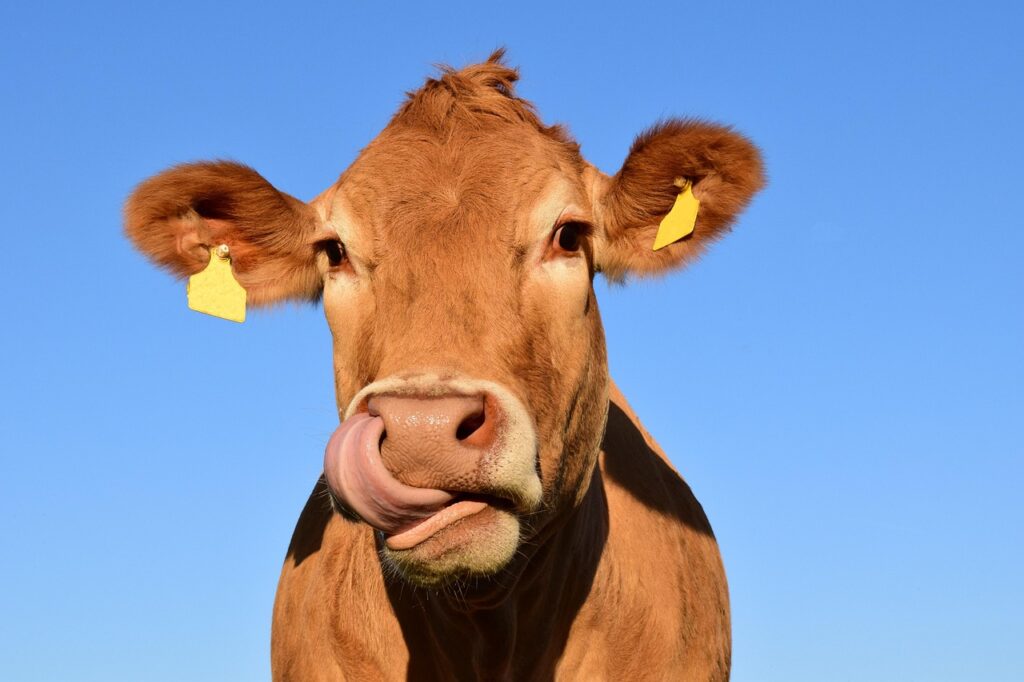
A Mexican steer may live more of its life in the United States than in the country of its birth. Born on pastureland in Chihuahua, it is weaned and sold at 400 pounds to a U.S. feedlot operator near Amarillo. There, it grows fat on Iowa corn and Kansas sorghum, gains 1,000 pounds and is ultimately slaughtered in a federally inspected plant. The ribeyes remain in Texas. The offal and cheek meat travel back south for tacos in Juarez. The hide? It may end up as a leather boot produced in León and sold in Dallas. This is not simply a cow’s journey. It is an economic parable.
Some would see a problem. Surely, it would be better if Mexico raised and fattened its own cattle. Or if the United States relied solely on domestic-born steers. Would it not be more patriotic, more sovereign, more efficient to localize the process? In fact, no. The opposite is true. The current system, one which sees as many as 4,000 head of cattle crossing the border daily at the Santa Teresa livestock port, is not a compromise. It is an optimization. It leverages each country’s comparative advantages and harmonizes economic interests through voluntary exchange, producing mutual gains not in spite of international trade, but precisely because of it.
Understanding why requires a step back into economic first principles. Cattle production is not a monolith. It is a chain of distinct operations: breeding, calving, growing, finishing, slaughter, processing and marketing. Each segment demands different inputs, faces different costs and is sensitive to different constraints. The Mexican rancher thrives in the first phase. Land is cheaper, forage is abundant and labor costs are low. A family-run operation in Sonora can raise weaned calves at a lower cost than its Texan counterpart. But the equation shifts when those calves must be fed corn, monitored daily and fattened for market. Mexico lacks the feed infrastructure and faces crushing interest rates, often above 20 percent. The United States, with abundant grain and large-scale feedlots, can accomplish the second phase more cheaply, more efficiently, and with lower risk.
This is not theory. It is empirical reality. Mexican ranchers, faced with rising feed costs and high financing burdens, find it rational to sell their calves early. U.S. feedlot operators, in turn, secure a reliable stream of animals to fill their pens and keep their operations running at full capacity. The result? A calf born in Mexico and finished in the United States commands a higher total market value than one raised entirely in either country. A 400-pound calf might sell for $700. Feeding it to slaughter weight in Mexico would cost at least another $300 in feed and interest, and still might not match the quality or yield of a U.S.-finished steer. But in an American feedlot, $300 in feed and care can turn that same animal into a $1,500 finished product. The gain is shared. The trade persists.
The Santa Teresa crossing illustrates this symbiosis with striking clarity. Located on the New Mexico-Chihuahua border, it processes over half of all U.S.-bound Mexican cattle. On peak days, it handles more than 4,000 head, moving them through health inspections, brand certifications and auctions in a system that has become a logistical marvel. The Union Ganadera de Chihuahua owns facilities on both sides, ensuring seamless movement. The steer that walks through this corridor is not just a cow. It is a symbol of what international cooperation can achieve when guided by price signals rather than political sentiment.
Some critics object: What about sovereignty? What about food security? But such concerns misdiagnose the nature of interdependence. There is no food insecurity in this arrangement. In fact, U.S. consumers benefit. By lowering the average cost of beef production, this trade reduces the price of ribeyes in Dallas and ground beef in Detroit. Mexican consumers also benefit. The organs and secondary cuts that American diners largely ignore are shipped south, where they fetch higher prices and satisfy real culinary demand. This dual-market system extracts maximum value from each animal. Nothing is wasted. Each part finds its highest use.
Even the hide finds its way back. After slaughter in the U.S., it may be shipped to a tannery in León, where skilled Mexican workers transform it into finished leather. That leather, now a belt or boot, may return across the border as a finished good. A single steer, then, can cross the border multiple times in different forms: as live animal, as meat, as hide, as leather. This is not inefficiency. This is integrated production.
Some would call this outsourcing. That is a misnomer. It is not outsourcing when each party performs the function for which it is best suited. Nor is it exploitation when both parties profit and consent. Mexican ranchers are not losing value by selling calves at 400 pounds. They are capturing value that would otherwise be lost to high interest rates or inadequate infrastructure. U.S. feeders are not undermining domestic producers; they are supplementing their herds in a way that keeps feedlots full and meatpackers operating. The meatpacking industry, in turn, gains scale, which lowers per-unit costs. And consumers, at the end of the chain, see lower prices.
The cattle trade is also resilient. During the 2024 screwworm outbreak in Mexico, imports were briefly suspended. The result? U.S. feedlots scrambled. Supply dropped. Prices spiked. The interdependence was laid bare. It is not a matter of charity. It is necessity. When Mexican calves do not cross, American producers feel it. The system is efficient precisely because it is integrated. Disruptions are costly. That is the mark of a real partnership.
It is tempting to view this arrangement as fragile, dependent on treaties and goodwill. But it has proven remarkably durable. NAFTA eliminated tariffs on cattle and beef. The USMCA preserved that zero-tariff status. Even during the Trump administration’s tariff wars, the cattle trade was largely spared. Why? Because both countries understood the stakes. Disrupting the flow of cattle would not punish one side. It would hurt both. Trade in beef is not a concession. It is a bargain struck anew with every shipment, every contract, every auction at Santa Teresa.
Nor is this a race to the bottom. The USDA and its Mexican counterparts maintain health and safety standards that rival any in the world. Each steer that crosses the border is inspected, tagged, and tracked. The slaughterhouses that process Mexican-origin cattle are subject to U.S. inspection standards. And the beef that returns to Mexico is likewise vetted. Regulatory cooperation undergirds the entire trade. It is not laissez-faire. It is rule-based commerce.
This system does not render borders meaningless. Rather, it proves that borders can be instruments of coordination, not just barriers. National identity need not be tied to autarky. We do not weaken our sovereignty by cooperating with our neighbors. We exercise it. The U.S. gains more control over its food supply by participating in a predictable, rules-based, cross-border system than it would by attempting to wall itself off.
There is also a deeper philosophical lesson here. Trade is not zero-sum. Mutual gain is not only possible, it is normal. The story of the cross-border steer is a counterpoint to the dogma of economic nationalism. It is proof that when two nations specialize, exchange, and coordinate, the result can be higher productivity, lower costs, and greater prosperity on both sides. That prosperity is not abstract. It is measured in jobs, in exports, in full feedlots and bustling auction yards.
If critics wish to dismantle this system, they must answer a difficult question: what would they replace it with? Should Mexico attempt to fatten and finish every calf it produces? Should the U.S. abandon a million head of reliable feeder cattle annually? Would consumers prefer higher beef prices? Would ranchers welcome reduced markets? The alternatives are not compelling.
The integrated U.S.-Mexico cattle trade is not perfect. But it is coherent. It aligns incentives. It rewards efficiency. And it preserves, rather than undermines, the autonomy of each side. It is a model not just for agriculture, but for trade more broadly. Where the political class obsesses over walls and decoupling, the steer crossing at Santa Teresa quietly reminds us of what can happen when neighbors trade in good faith. Not dependency. Not compromise. Just profit, partnership, and a full dinner plate.
The final proof is this: the steer never votes, never speaks, never protests. But its journey reveals more about international economics than any campaign speech. It is born in one country, raised in another, consumed in both, and useful to all. A modest animal. A profound lesson.
Sponsored by the John Milton Freedom Foundation, a nonprofit dedicated to helping independent journalists overcome formidable challenges in today’s media landscape and bring crucial stories to you.
READ NEXT: States Push Back: Service Branch Can’t Unilaterally Take Strategic Units

















So you agree with President Trump.
Reciprocal Respect or none.
Good to hear.
Now, what about those cow farts?