

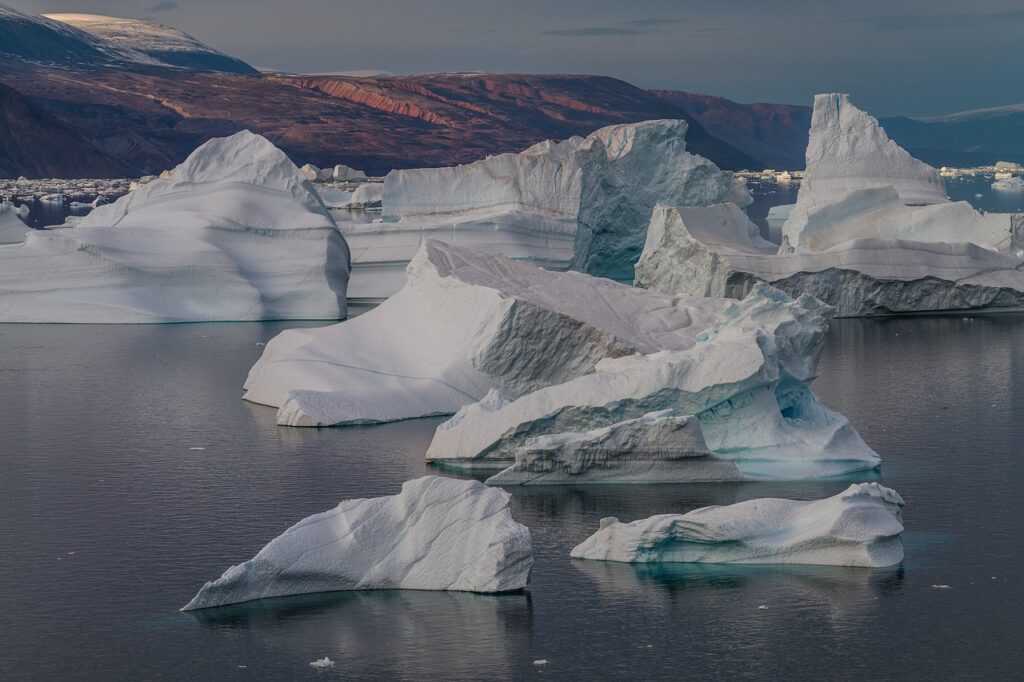
In the wake of President-elect Trump’s renewed interest in acquiring Greenland, Prime Minister Múte Egede firmly declared his intention to pursue independence from Denmark.
“The Greenlandic people’s opportunity for independence has been adopted through the provisions of the Self-Government Act, thereby creating a legal basis for how independence can be achieved,” Egede stated defiantly.
He elaborated on the ongoing efforts: “A draft constitution for our country has also been prepared. Work has already begun with regard to creating the framework for Greenland as an independent state within the possibilities and provisions of the Self-Government Act.”
Egede hinted at imminent developments for Greenland’s future, referencing the steps taken since Trump’s second attempt to purchase the island. Greenland’s strategic location in the Arctic—an area experiencing profound sea ice decline with far-reaching geopolitical implications—has only heightened global interest in the territory.
A Storied Strategic Past
Though geographically part of North America, Greenland’s political and cultural ties to Europe trace back over a millennium, rooted in the earliest Norse settlements. Its strategic importance has been evident for decades in Washington, beginning during World War II when Denmark fell under Nazi occupation. The United States, in an agreement with Denmark’s ambassador, established military bases on the island to counter German expansion and secure critical shipping routes.
Greenland proved vital for weather stations and early warning systems during the war, as Arctic weather patterns influenced European military operations. The imminent Cold War further elevated its significance, with the U.S. establishing Thule Air Base in 1943. Located along the shortest route between the U.S. and the Soviet Union, Thule eventually became a key outpost for early-warning radar systems and ballistic missile monitoring as part of North American Aerospace Defense Command (NORAD).
Even today, Thule Air Base remains a cornerstone of U.S. missile defense and NATO’s Arctic strategy. Greenland’s radar systems are critical for monitoring global security threats, and its location has renewed interest amid rising tensions between global powers, including China’s Arctic ambitions.
A Vision for the Future
In response to Trump’s recent remarks, Egede unequivocally stated that Greenland “is not for sale and will never be for sale.” He reiterated the territory’s determination to protect its autonomy, noting significant advancements that reflect its evolving identity. These include the inauguration of an international airport and plans for new infrastructure in Ilulissat and Qaqortoq, designed to bolster trade and tourism.
“Greenland is ours. We are not for sale and will never be for sale. We must not lose our long struggle for freedom,” Egede proclaimed in his New Year’s Day address.
Climate change has further amplified Greenland’s importance. Melting ice has opened new sea routes and revealed untapped natural resources, enhancing the island’s value both economically and strategically. While the U.S. maintains its presence at Thule Air Base, Greenland’s government is laying the groundwork for a more flexible and modern infrastructure to support its vision for independence.
All the while the geopolitical spotlight on the Arctic intensifies.
READ NEXT: Guarding The Franchise: A Simple Solution To Limit Election Conspiracy Theories




















“ an area experiencing profound sea ice decline with far-reaching geopolitical implications.”
Let’s not muddy the valid strategic importance of Greenland by introducing false climate hysteria propaganda. The amount of arctic ice is growing in recent years, and the dates predicted for when there would be no more ice in the arctic passed several years ago.
As pointed out later in the article, the strategic importance of Greenland has existed for decades. My dad served at Thule Air Base on the DEW line during the Korean War. So, let’s not pretend it’s strategic importance is dependent on erroneous climate change propaganda.
It depends on what article you are reading, this morning I read, the Arctic was forming new ice. As for Greenland, my understanding of recent readings is that Denmark is quite interested in being relieved of having to maintain a military presence there, that it has become a financial burden. They leave, give Greenland its Independence, America continues with our base and give support to Greenland in exchange. No deeds, sales slips involved.
good post.Never knew this, appreciate it for letting me know.