






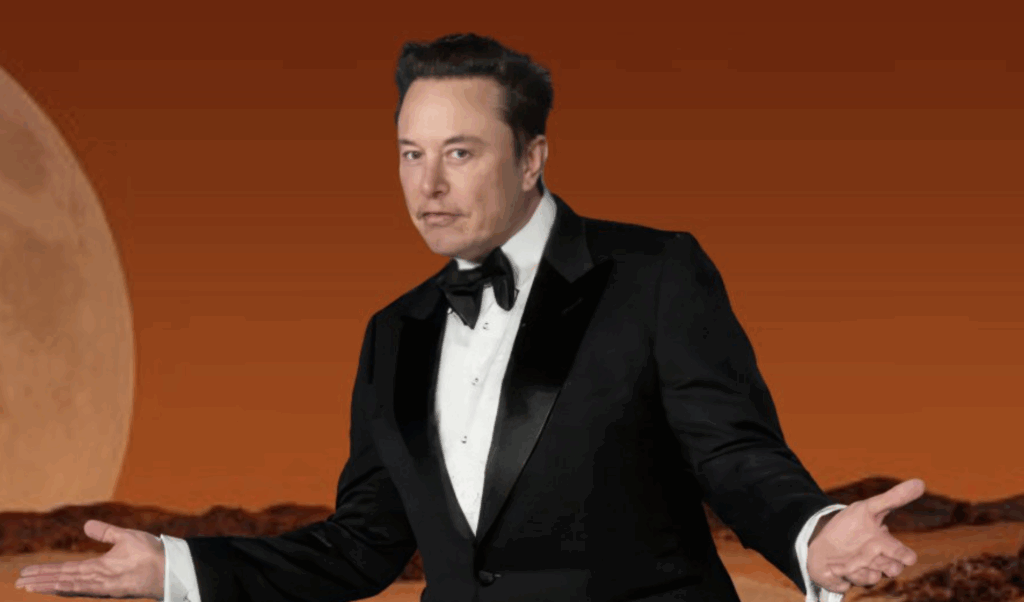
Elon Musk’s rise from a young immigrant in the 1990s to the most consequential industrialist of the modern era is at once a story about innovation, discipline, and a striking commitment to the principle that compensation should track achievement. His career illustrates how economic value is created in the real world. It also exposes the error in the claims made by critics who insist that he takes more than he contributes. The opposite is true. Musk’s entrepreneurial efforts have injected almost a trillion dollars into the U.S. economy when measured across wages, taxes, supplier networks, and capital formation. His companies today exceed a trillion dollars in combined market value. In 2021 alone, he paid $11 billion in taxes, the highest personal tax payment ever recorded. His most recent Tesla pay package requires him to increase the company’s market cap by at least $8.5 trillion and generate $400 billion in annual profits before he receives a single dollar. This is what pay for performance means when taken seriously. Before explaining why that matters, it is helpful to understand the underlying picture. Musk’s companies have become a significant part of the country’s economic landscape. They pay high wages. They fund public programs through employee and corporate taxes. They purchase vast quantities of U.S.-manufactured goods. They build industries that did not exist two decades ago. Far from draining public resources, Musk’s firms have strengthened the fiscal health of the nation. To see this clearly, it is worth laying out the economic reality in straightforward terms.
— Larry Goldberg (@TeslaLarry) November 12, 2025
Consider first the basic flow of wages. From 2021 through 2025, Musk’s companies paid about $110.7 billion in salaries. These salaries supported roughly 150,000 employees at peak. The average compensation was about $170,000. These are not abstract figures. They represent families buying homes, sending children to college, and building wealth. Tesla alone became the largest manufacturing employer in California, with wages roughly 50% higher than the state’s average. SpaceX, heavily focused on engineering, paid even more. When wages of this scale are deployed, the effects ripple outward. Economists describe multiplier effects in which a dollar of wages produces between $1.5 and $2.0 in local economic activity. In practice, each Tesla job produces approximately one additional job somewhere else in the economy. The numbers suggest that Musk’s payroll contributed perhaps $150 to $220 billion in wider economic output. Critics who claim Musk extracts value misunderstand that his companies generate it in abundance. These wages alone contradict the charge that he freeloads off others. The money flows the other direction.
A second piece of the picture involves taxes. Many Americans would be surprised to learn that the tax contributions associated with Musk’s companies reach about $46 billion over five years. Employee income taxes and payroll taxes account for most of that amount. Workers at his companies, earning significant wages, produce significant federal and state revenue. Corporate taxes add another layer. Tesla paid more than a billion dollars in income taxes in 2022. Employer payroll taxes contribute billions more. These tax payments are not theoretical. They fund highways, public schools, and Medicare. They reduce deficits. They pay for NASA, which is made all the more noteworthy given that SpaceX now launches U.S. astronauts to orbit. And above all of this sits Musk’s personal contribution. In 2021, he paid $11 billion in federal taxes. One might expect such a figure to be praised by public officials who claim to care about fiscal responsibility. Yet when Musk received TIME’s Person of the Year award, Senator Elizabeth Warren declared that he should “stop freeloading off everyone else.” The claim was false. The record shows the opposite. Musk has paid more taxes than any human being in history. His companies have paid tens of billions more. When critics repeat talking points about rigged systems and oligarchs, they display a misunderstanding of the actual structure of the tax code and the economic role of entrepreneurial firms.
Supplier spending forms yet another dimension of Musk’s economic footprint. Tesla alone spent about $166 billion on U.S. suppliers from 2021 to 2025. These suppliers manufacture everything from batteries to semiconductors. The effect is a revival of U.S. industrial capacity. SpaceX spent billions on aerospace components, supporting machine shops and advanced materials firms across the country. xAI is now building a major computing center in the U.S., with initial investment around $9 billion and further phases that may approach tens of billions. Neuralink and The Boring Company rely on U.S. manufacturing for tunneling machines and biomedical components. These supplier relationships matter because they illustrate how value creation diffuses across regions. Economic critics tend to fixate on stock price movements. They ignore the million smaller transactions that support firms in Michigan, Nevada, Texas, and California. Musk’s companies buy domestic goods. They do not offshore their core supply chains. They help anchor American manufacturing rather than hollowing it out.
Combining wages, taxes, and procurement, Musk’s firms injected about $338.9 billion into the US economy from 2021 to 2025 alone. These numbers understate the full picture. They omit shareholder gains, secondary job creation, and the long run value of new technologies. The total impact since the 1990s likely approaches a trillion dollars. Critics sometimes ask why Musk’s personal wealth is so large. The intuitive explanation is that value creation on this scale has consequences. Wealth accumulates to those who build productive firms. The pattern is familiar from American history. Henry Ford, John D. Rockefeller, and Andrew Carnegie each built industries that reshaped the country. They accumulated wealth because they organized labor and capital into productive systems that improved daily life. Musk’s companies have restored this older American pattern in which innovation and industry go hand in hand.
At this point, a confused reader might ask whether these economic contributions justify Musk’s extraordinary pay package. The answer requires careful attention to the structure of that package. Musk receives nothing unless he delivers at least $8.5 trillion in new market value and $400 billion in annual profits. These conditions are not symbolic. They are strict. They push risk onto the entrepreneur rather than the company or its shareholders. This is the opposite of the standard corporate model in which executives receive generous compensation regardless of performance. Senator Bernie Sanders described Musk’s pay package as evidence of an oligarchy. The facts point in the other direction. The entire logic of Musk’s compensation is that economic reward must track economic achievement. If he fails to produce trillions in new value for shareholders and the U.S. economy, he receives nothing. That principle should appeal to critics who claim to care about fairness. Yet many of Musk’s critics object even when the compensation structure imposes accountability. Their objections therefore cannot be about economic justice. They express political disagreement dressed up as fiscal critique.
There is an irony in the way critics attack Musk. The same political figures who denounce him rely on economic growth to fund the public programs they champion. Growth requires innovation and capital formation. Musk’s companies supply both. They pioneer new industries, build high wage jobs, and pay extraordinary taxes. Critics attempt to separate their favored programs from the economic foundations that make those programs possible. They want public benefits without public revenue. The challenge for responsible governance is that tax revenue depends on productive activity. Musk’s activity has been especially productive. His companies build reusable rockets, mass market electric vehicles, tunneling machines, brain interfaces, and AI systems. They do so at scale. They invest heavily in research. They hire American workers in vast numbers. They purchase American goods. They export American technology abroad. These are the facts. They do not vanish because critics prefer a different narrative.
A second irony lies in the contrast between Musk’s pay package and the compensation structures common in the corporate world. Many executives receive multi million dollar salaries independent of performance. Their companies can lose money for years while executives remain insulated from consequences. Musk’s pay package rejects this approach. It demands results. It conditions reward on success. If widely adopted, it would align executive incentives with shareholder and societal interests. Critics who claim to favor accountability should applaud this model. Instead they attack it because it involves large numbers. The size of the potential payout distracts them from the terms that govern it. But the size is the point. To earn a large payout, Musk must deliver a level of value creation unprecedented in corporate history. This is exactly how pay for performance should work.
The economic story is incomplete without noting that Musk’s companies create strategic capacity for the U.S. SpaceX provides launch services that replace reliance on foreign rockets. Tesla has shifted global markets toward electrification. xAI is building domestic AI infrastructure in an era of geopolitical competition. Neuralink pursues neurotechnology that could anchor future medical industries. These contributions matter for national security and long term economic resilience. The United States benefits when foundational technologies are built domestically by firms committed to American industry. Musk’s companies are among the few doing this work at scale.
If one steps back from the political rhetoric and examines the evidence, a pattern emerges. Musk has paid more in taxes than any individual in history. His companies have paid tens of billions more. He has built industries that employ more than a hundred thousand Americans. He has restored American manufacturing in critical sectors. He uses a compensation structure that demands performance before reward. He has injected close to a trillion dollars into the US economy. This is economic leadership, not economic extraction. A society serious about prosperity should recognize that reality. Even critics benefit from the revenues and technologies his companies produce.
Thus the claim that Musk freeloads off the system collapses under scrutiny. The record shows the opposite. Musk’s entrepreneurial work is one of the greatest engines of economic value in the country’s modern history. It produces jobs. It produces technology. It produces tax revenue. It strengthens the strategic position of the United States. The wise path is to understand this reality with clarity rather than obscuring it with slogans.
If you enjoy my work, please subscribe: https://x.com/amuse.
Sponsored by the John Milton Freedom Foundation, a nonprofit dedicated to helping independent journalists overcome formidable challenges in today’s media landscape and bring crucial stories to you.
READ NEXT: Agriculture Secretary: Tens Of Thousands Of Dead People Receiving SNAP Benefits























Thanks Elon now fix Tesla QA for cars & Customer Service needed
Reorganize for Tesla Automotive & Robotics alone
MR. MUSK certainly has been a positive influence on our country with his job creation here.
https://americanliberty.news/commentary/how-one-immigrant-entrepreneur-supercharged-american-prosperity/amuse/2025/11/
Loved to read commentary on Musk’s success and contributions to this country.
I am an entrepreneur immigrant who created a small manufacturing business with good paying wages to my employees. While my contributions are insignificant compared to Musk’s, I am proud of them.
We need more Musks who lift the country’s economy and prosperity.