







Wall Street tumbled Thursday morning in response to President Trump’s sweeping new tariff plan. The Dow Jones opened down 1,200 points (2.6%), while the S&P 500 fell over 3% and the Nasdaq plunged more than 4%, marking one of the steepest single-day drops of Trump’s second term.
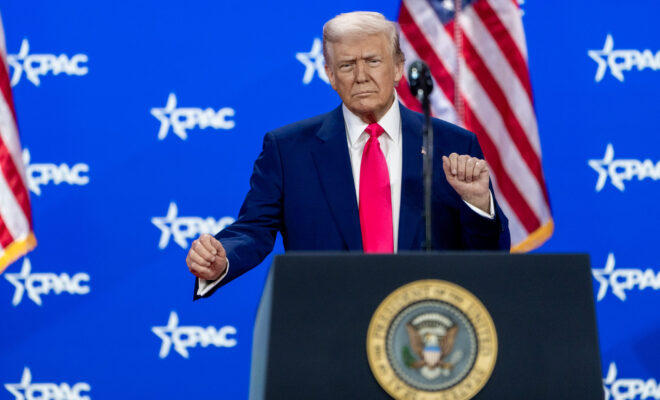
The selloff came as investors began digesting Trump’s “Liberation Day” tariff regime, which includes:
-A 10% universal baseline tariff on all imports
-Higher “reciprocal” tariffs targeting nations with aggressive trade barriers
-Specific penalties aimed at China, Mexico and EU member states
Big losers: Global-facing companies like Apple, Nike and multinational manufacturers took major hits, with fears mounting over a potential global trade war.
The Washington Times reports on investors grappling with tariffs higher than anticipated:
The president said he was being lenient and the U.S.-imposed tariffs were roughly half of what other nations charged through tariffs and other trade barriers.
The Trump administration says the levies are a long-overdue restructuring of a global trade order stacked against the U.S. and its workers. They say other countries tap into America’s spending power but shun U.S. producers who want to sell their wares within their borders.
Commerce Secretary Howard Lutnick defended the move, saying other countries “need to evaluate their treatment of the U.S. economy.”
“This is the reordering of fair trade,” Commerce Secretary Howard Lutnick said Thursday on CNBC’s “Squawk Box.” “It’s about those non-tariff trade barriers. That’s what we are addressing.”
“I expect most countries to start to really examine their trade policy towards the United States of America, and stop picking on us,” Lutnick continued. “Stop saying that we can’t sell our corn to India, stop saying that we can’t sell our beef anywhere. Just stop treating us so poorly.”
Trump’s claim that the U.S. imposes lower tariffs than other countries is partly true, but it needs important context—and he often does conflate trade deficits with tariffs, which are two separate issues.
✅ What’s Accurate:
- The United States generally has lower average tariff rates than many other countries, especially developing nations.
- According to World Trade Organization (WTO) data:
- The U.S. average applied tariff is about 2.4%.
- The EU average is around 5.1%, China is about 7.5% and some developing countries like India average over 13%.
- Many U.S. trade partners do have higher tariffs on certain goods like cars, agriculture and textiles. For example:
- The EU charges a 10% tariff on U.S. cars, while the U.S. charges only 2.5% on EU cars.
- China has historically had high barriers to entry for foreign companies, including tariffs, quotas and regulations.
❌ What’s Misleading:
- Trump often mixes up tariffs and trade deficits, implying that a trade deficit is caused by high foreign tariffs. In reality:
- A trade deficit just means the U.S. imports more than it exports.
- It’s not directly caused by foreign tariffs. It can be driven by things like:
- A strong dollar (makes imports cheaper),
- Higher consumer demand,
- Investment flows into the U.S.
- Allies like Canada, the EU and Japan do not have extreme trade barriers compared to the U.S., especially in sectors like services and tech.
- For instance, the U.S. and EU have many sectors with reciprocal or very low tariffs due to trade agreements and WTO rules.
⚖️ Final Verdict:
Trump is correct that U.S. tariffs are generally lower than those of many other countries, particularly in certain sectors. But when he says other countries charge “double” what we do and implies that’s the reason for our trade imbalance, he’s oversimplifying and conflating different issues.
This is a breaking news story. Please check back for updates.
READ NEXT: Newly Elected Republican Claps Back After Being SLAMMED By MAGA Icon


















Mr. Houck’s expertise in “campaigns” and “targeted messages” hardly qualifies him as an international economics expert. I think he should pursue his love of photography and not present questionable opinions on economics.
Speculative markets hate change, even when it’s long term positive. Exactly what we’re seeing here.