

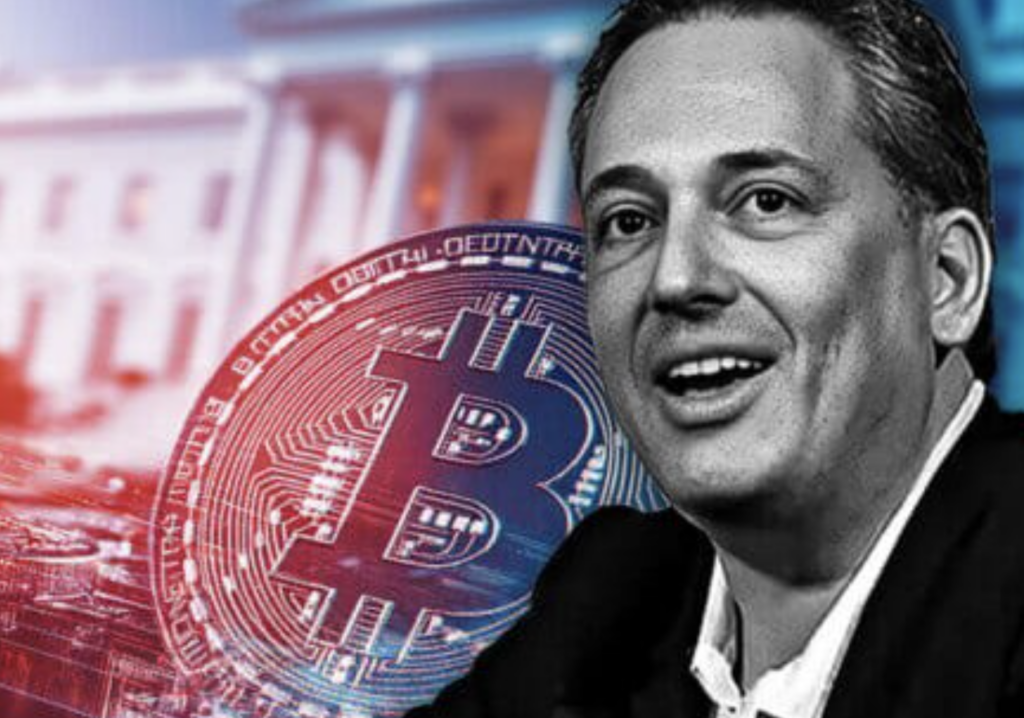
David Sacks has just taken on a role that few outside Washington could have imagined: he’s now the Trump administration’s “Crypto and AI Czar.” While this may startle those who remember him as a quiet, behind-the-scenes player in Silicon Valley’s upper echelons, for anyone paying attention to his steady ascent—from PayPal pioneer to influential venture capitalist—his arrival on the national stage feels almost inevitable.
Not long ago, Sacks’ name was primarily passed around at pitch meetings and venture conferences, a whispered byword for a man who could spot the next big thing before anyone else. Now he’s stepping into the public eye, a figure who wants to return the reins of America’s technological destiny to the people, rather than leave them in the hands of unaccountable coastal elites or their allies in Big Tech.
Sacks’ career first took shape among the so-called “PayPal Mafia,” a gang of tech luminaries who defined the rules of online commerce. While Elon Musk grabbed headlines, Sacks—PayPal’s quiet COO—kept the company’s engines humming, turning a curious digital payment service into a global juggernaut. By 2002, when PayPal went public and was then snapped up by eBay for $1.5 billion, Sacks was just 29 years old. He had proven himself a master builder in a world thick with dreamers and dealmakers.
After that, he could have faded comfortably into a life of cashmere sweaters and complacency. Instead, Sacks set his sights on the business software world, founding Yammer in 2008. Here, too, he found extraordinary success: Yammer applied consumer-style growth tactics to the staid world of enterprise communication, rapidly gaining millions of users before Microsoft scooped it up for $1.2 billion in 2012. By then, Sacks had a certain mystique: not just the Midas touch, but the savvy to reinvent the very way companies talked to themselves.
He honed that edge further with Craft Ventures, the investment firm he co-founded in 2017. Backing unicorns like Facebook, Uber, Airbnb, Reddit and SpaceX, Sacks shaped the next generation of disruptors. Though his peers knew him well, the general public still saw him as another Silicon Valley insider—until he joined the “All-In Podcast.” With Chamath Palihapitiya, Jason Calacanis and David Friedberg, Sacks dropped the usual guarded PR-speak and let the world see who he really was: a sharp critic of Big Tech’s censorship, a skeptic of top-down bureaucracy, and a man who questioned whether America’s digital giants were truly serving the national interest. He championed free speech and warned that America’s tech titans were becoming paternalistic overlords rather than engines of opportunity.
It was this provocative perspective—and not just his record of success—that caught the eye of President Trump’s team. On December 6, 2024, the White House unveiled Sacks as the country’s first-ever Crypto and AI Czar. The appointment rattled Washington and Silicon Valley alike. To the former, he was an unpredictable new force with deep tech credentials. To the latter, he was a disquieting reminder that the days of unchallenged Big Tech dominance were numbered.
Sacks’ policy goals reflect a man determined to bring clarity, structure, and public accountability to a technological landscape that has, for too long, felt like the Wild West. He wants to end Big Tech’s monopoly on digital discourse by promoting decentralized platforms—less top-down censorship, more genuine free exchange. On the cryptocurrency front, he seeks stable, comprehensible regulations to shepherd the industry out of regulatory limbo and into the mainstream. Indeed, his most daring vision may be establishing a national Bitcoin reserve, ensuring America’s pole position in the digital economy as other nations, particularly China, scramble to define their own crypto futures.
Sacks also grasps the moral and strategic dimensions of AI. It’s no longer enough just to out-innovate rivals; we need ethical guardrails that preserve American liberty even as we surge forward technologically. By taking the lead in AI development—balancing prudence with ambition—Sacks aims to ensure the U.S. sets the tone for what advanced machine learning and decision-making systems can and should do. Gone is the muddled approach of the Biden-Harris era, where half-hearted policies on misinformation and clumsy crypto oversight drove innovators overseas. In its place, Sacks offers a clear, confident American vision that recognizes tech as not just another industry, but the very framework of modern life and national power.
This move also bolsters the Trump administration’s credibility on technology policy. For too long, critics have painted populist conservatives as luddites or narrow-minded skeptics. Sacks is living proof that the America First movement is not anti-innovation; it simply refuses to let innovation be guided by unaccountable elites. His track record—billions in successful ventures, a reputation for foresight, and a willingness to challenge prevailing Silicon Valley dogma—underscores that conservative governance need not fear the future.
If there’s a historical parallel to be drawn, think of the early 20th century, when industrial titans helped shape America’s economic destiny, balancing unfettered growth with national priorities. Sacks steps into a role not unlike that of a modern-day industrial statesman, poised to oversee the digital machinery that will define America’s next century. He’s acutely aware that technology is more than a set of tools or a marketplace plaything. It’s an extension of our public square, our financial systems, our very liberty—and it must serve the American people rather than subjugate them.
Of course, he’ll face resistance. Washington’s entrenched interests never yield easily, and Silicon Valley’s mandarins won’t surrender their unchecked authority without a fight. But if anyone is equipped to manage these political minefields, it’s the man who quietly steered startups into billion-dollar exits and transformed impossible visions into everyday reality. His tenure at Zenefits—where he stabilized a scandal-plagued venture—proves he can handle crises that blend policy, ethics, and bottom-line discipline.
In naming Sacks as Crypto and AI Czar, Trump hasn’t just found a savvy manager or a techie with buzzword credentials. He’s selected a man who understands the stakes: the country’s freedom and prosperity depend on who controls the digital domain. With Sacks at the helm, there’s a chance to realign tech innovation with American values—ensuring that brilliant new tools serve the public good, rather than the preferences of a cloistered elite.
For decades, David Sacks helped shape the future from behind the scenes. Now the country is watching. If his past is any guide, he’ll more than rise to the occasion.
Sponsored by the John Milton Freedom Foundation, a nonprofit dedicated to helping independent journalists overcome formidable challenges in today’s media landscape and bring crucial stories to you.
READ NEXT: Tucker Carlson Given Huge News By The Court

















All the US tech companies got their seed money from the USG. In return they built companies that benefited the USG while claiming services consumers needed. PayPal, EBAY, FaceBook, all collect user date for themselves (marketing) and for the USG who stores it at its UT data center. As for a ‘national’ crypto, why? That puts it the hand of the government same as paper money printed with digits.