










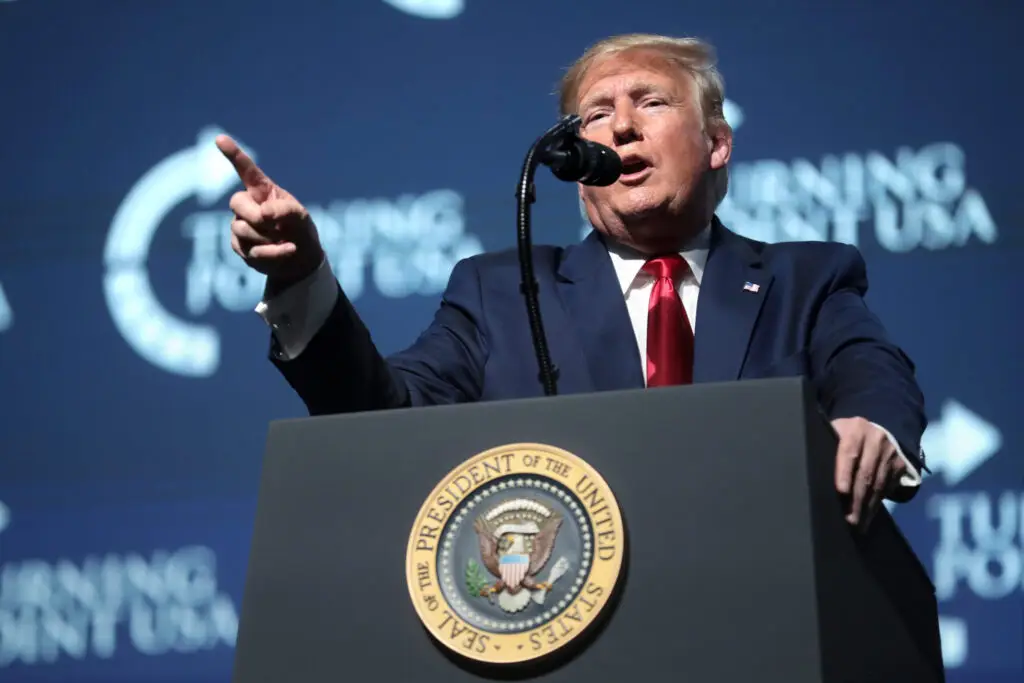
WASHINGTON — New labor data suggest a sharp shift in the U.S. workforce, likely reflecting changes in immigration enforcement and economic policy under President Trump.
In July 2025, native-born workers gained 383,000 jobs, according to Federal Reserve Economic Data (FRED). Meanwhile, employment for foreign-born workers has dropped by 1.5 million since April.
🚨 BREAKING: It has just been revealed that native-born workers are GAINING HUNDREDS of thousands of jobs…
— Eric Daugherty (@EricLDaugh) August 1, 2025
…while foreign-born workers are down a whopping 1.5 MILLION since April 2025.
Native +383K for July.
THE UNIVERSE IS HEALING.
The migrant workers are being removed. pic.twitter.com/OV5A5xhtXe
The data point to a significant change in labor dynamics, likely driven by stepped-up deportation efforts and tighter immigration controls under the Trump administration.
Foreign-born workers — both legal and illegal — have played a major role in the labor market in recent years.
Since 2020, foreign-born labor has accounted for 88% of all workforce growth, according to an analysis by the Center for Immigration Studies. But that trend appears to be reversing as immigration policy tightens. Analysts warn this could worsen structural labor shortages, especially in sectors that rely on seasonal or low-skill labor.
A 2022 study from the National Bureau of Economic Research found that cutting low-skill immigrant labor can raise native-born employment by 1–2% in the short term. The finding backs a central claim of Trump’s “America First” agenda. Still, economists remain divided on whether the long-term effects on wages and productivity will be positive or negative.
Despite the strong July showing for native-born employment, the overall jobs picture is less encouraging. The Bureau of Labor Statistics reported just 73,000 jobs added in July — well below the 115,000 expected. May and June numbers were also revised sharply down — by 258,000.
That makes May through July the weakest three-month stretch for job growth since the COVID-19 pandemic. Excluding 2020, it’s the softest labor market since 2010, in the aftermath of the Great Recession.
CNBC continues:
Stock market futures fell further after the news while Treasury yields also were sharply lower.
“This is a gamechanger jobs report,” said Heather Long, chief economist at Navy Federal Credit Union. “The labor market is deteriorating quickly.”
The weak report, including the dramatic revisions, could provide incentive for the Federal Reserve to lower interest rates when it next meets in September. Following the report, futures traders raised the odds of a cut at the meeting to 75.5%, up from 40% on Thursday, according to CME Group data.
“This is the slowdown that we’ve been expecting,” said Luke Tilley, chief economist at Wilmington Trust. “Firms are facing a very different cost structure. They need to adapt to a new cost structure, which means holding off on hiring.”
Other economists say that while immigration crackdowns are reshaping the labor force, broader factors — such as protectionist trade policies and business uncertainty — could be weighing down overall job creation.
READ NEXT: Judge Drops The Hammer On Anti-Trump Star In High-Stakes Lawsuit





















BRILLIANT!!!!!!!!