


President Donald Trump announced on May 1, 2025, that any country or individual purchasing Iranian oil or petrochemical products will face immediate secondary sanctions, effectively barring them from conducting business with the United States. This move intensifies the administration’s “maximum pressure” campaign against Iran, aiming to curb Tehran’s nuclear ambitions and support for regional militias.
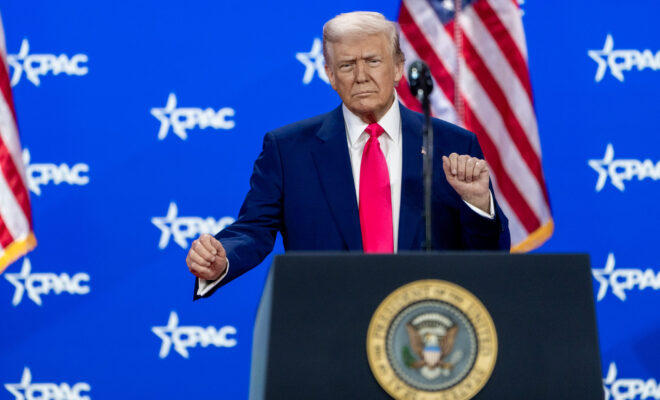
In a post on Truth Social, Trump declared, “Any Country or person who buys ANY AMOUNT of OIL or PETROCHEMICALS from Iran will be subject to, immediately, Secondary Sanctions. They will not be allowed to do business with the United States of America in any way, shape, or form.”
The announcement follows escalating tensions between the U.S. and Iran, particularly concerning Iran’s support for the Houthi rebel group in Yemen. Earlier in the week, U.S. Defense Secretary Pete Hegseth warned that Iran would “pay the consequence” for providing “lethal support” to the Houthis. This rhetoric coincides with a series of U.S. airstrikes against Houthi targets in the Red Sea region, aimed at protecting international shipping lanes and deterring further aggression.
The Daily Wire reports:
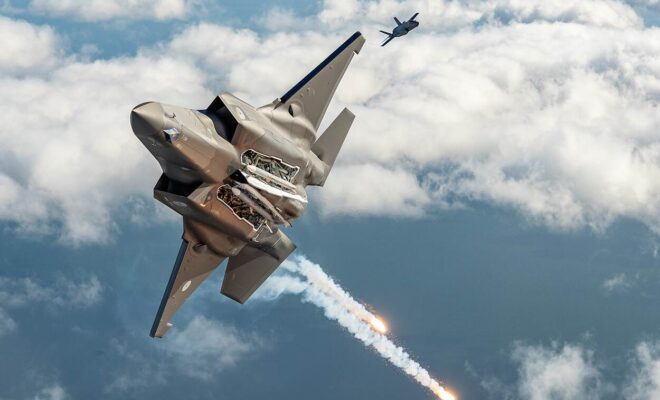
It’s unclear what incident prompted Hegseth’s post. But on Monday, an encounter with the Houthis caused a $60 million U.S. F/A-18 fighter jet to slip off the hangar deck of the aircraft carrier USS Harry S. Truman and fall into the Red Sea.
The United States has spent several weeks conducting airstrikes on the Houthis in response to the group’s more than 100 attacks on international cargo ships, tankers, and naval vessels following Hamas’ October 7 attack on Israel. Since March, over 800 Houthi targets have been hit, resulting in the elimination of hundreds of fighters and leaders, and Houthi ballistic missile launches and suicide drone attacks are down 69% and 55% respectively, Fox News reported.
China, Iran’s largest oil customer, is the primary target of these sanctions. China continues to import significant quantities of Iranian oil, often through covert methods such as ship-to-ship transfers and falsified documentation. These practices have enabled Iran to circumvent sanctions and maintain its oil exports. The U.S. has previously imposed sanctions on entities involved in these illicit activities, including Chinese companies and vessels engaged in the smuggling of Iranian oil.
The Trump administration’s renewed sanctions come amid stalled negotiations over Iran’s nuclear program. The fourth round of talks, scheduled to take place in Rome, was postponed. While the U.S. has expressed willingness to engage diplomatically, it has also emphasized that military retribution remains on the table if Iran continues its nuclear development and support for extremist groups.
In April, Trump said, “I think if the talks aren’t successful with Iran, I think Iran is going to be in great danger. It’s not a complicated formula. Iran cannot have a nuclear weapon, that’s all there is.”
The imposition of secondary sanctions represents a significant escalation in Trump’s Iran strategy. By targeting third-party countries and companies, the U.S. aims to isolate Iran economically and pressure its leadership to comply with international demands. However, this risks further straining relations with key allies and partners who may be reluctant to sever economic ties with Iran, particularly in the energy sector.
READ NEXT: Trump Prepares To Strike Iranian Nuclear Sites – Hard