








China’s increasing presence in the Caribbean and Central America is raising alarms over potential threats to U.S. national security. Known as “America’s third border” due to its proximity to the U.S., the Caribbean region has seen a surge in Chinese investments in maritime logistics and infrastructure in recent years. This expanding footprint in the Western Hemisphere could grant China access to the strategic coastline of Florida, bringing it closer to American shores than ever before.
According to Gordon G. Chang, a noted author and expert on U.S.-China relations, China’s growing influence in the Caribbean region is a clear attempt to expand its reach near the U.S. homeland. Chang emphasized that these investments, which include projects like the $3.4 billion Freeport Container Port in the Bahamas — located just 87 miles east of Palm Beach, Florida — are part of China’s broader plan to secure strategic footholds in the Americas.
China’s strategic investments in the Caribbean are not just about trade or infrastructure. The region’s proximity to the U.S. makes it a critical location for geopolitical maneuvering. According to a report from the House Foreign Affairs Committee, China invested over $10 billion in six Caribbean countries between 2005 and 2022, underscoring its growing influence. This expansion is seen as part of China’s broader Belt and Road Initiative, which seeks to increase its global influence through infrastructure development and financial investments.
One of the most notable examples of China’s growing influence in the region is its involvement with the Panama Canal. Since the U.S. handed over control of the Panama Canal to Panama in 1999 under the Torrijos-Carter Treaties, China has quietly, yet effectively, made inroads into the region. Several Chinese companies have invested heavily in ports and terminals near the canal, with a Hong Kong-based company controlling two of the five ports close to its entrances.
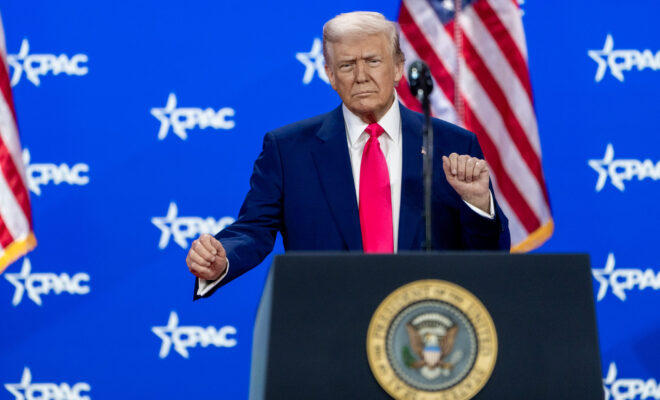
President Donald Trump has repeatedly raised concerns over China’s involvement in the canal. “Above all, China is operating the Panama Canal. And we didn’t give it to China. We gave it to Panama, and we’re taking it back,” Trump declared. While his first administration didn’t end Chinese influence, it did seek to increase U.S. engagement in the region.
Chang sees this as a wake-up call for the U.S. to regain control of the region and to use financial leverage to counter China’s growing presence. “This is going to take some time because China didn’t take over the Canal Zone with soldiers; they took it over with business attire, checkbooks, and suitcases of cash,” he said. “The U.S. needs to respond with its own financial resources to push China out.”
China’s growing influence in the Caribbean coincides with an alarming rise in the number of Chinese nationals encountered by U.S. border authorities. The number of Chinese migrants apprehended at both the northern and southern borders has surged dramatically in recent years. In fiscal year 2022, there were 1,970 encounters with Chinese nationals. That number skyrocketed to over 24,000 in fiscal year 2023, and by the first half of fiscal year 2024, over 24,000 Chinese migrants had already been apprehended.
Initially, many Chinese nationals crossing into the U.S. were families fleeing from their home country. Now, however, the majority of those apprehended are single men of military age, traveling alone. According to reports, these migrants often travel in groups of 4 to 15 individuals, all equipped with identical kits, a detail that has raised concerns about the possibility of organized groups entering the U.S.
As China continues to extend its influence in the Caribbean and Central America, the U.S. faces a growing security challenge on its doorstep. With Chinese-backed infrastructure projects in the region, including strategic ports and logistics hubs, China could potentially gain access to and control of waterways that are critical to for U.S. national security.
For years, the U.S. has largely ignored the geopolitical dynamics in its own backyard. However, as China’s activities intensify, experts like Chang warn that the U.S. can no longer afford to be passive. “This is the first time in more than a century that an American president has given his primary principle focus to countries closest to the United States,” Chang said, referencing the Trump administration’s early focus on Latin America and the Caribbean.
READ NEXT: Chinese Spying Is Overwhelming Western Countries











Carter always meant well, but didn’t have a clue. Giving the canal to china may have been his biggest blunder and it was BIGGG! one.
I guess Cuba will be speaking Mandarin soon?
What happened to the Monroe Doctrine?