
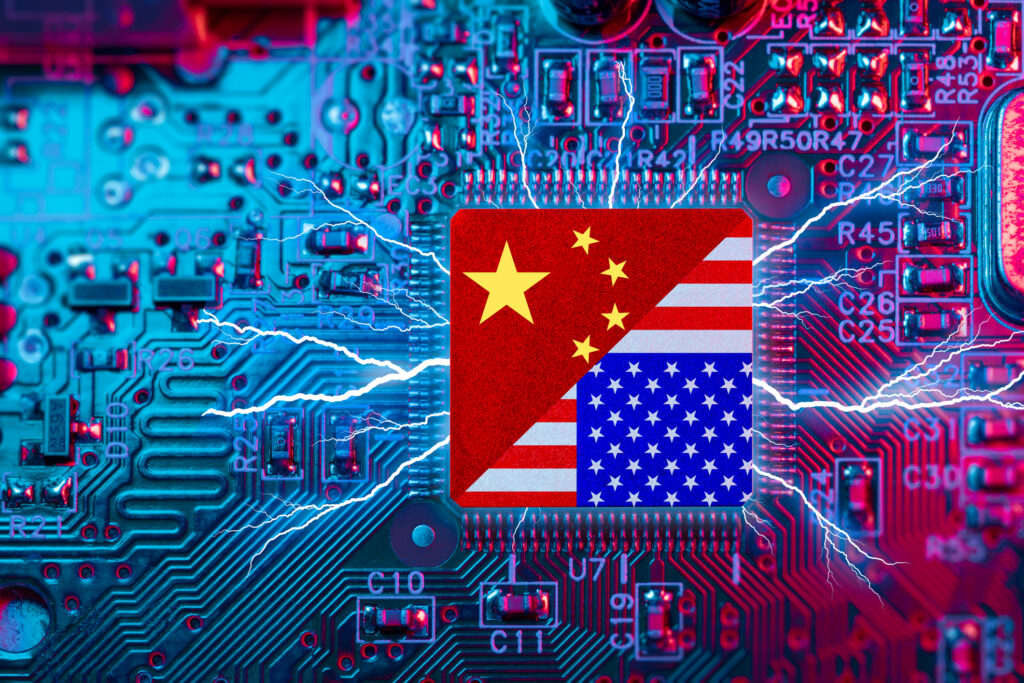
China is actively pursuing brain-computer interface (BCI) technology in an attempt to merge human cognition with machines, raising alarm among American national security experts and accelerating the global race toward artificial general intelligence (AGI).
According to a report from The Washington Times, citing a recent Georgetown University presentation to American officials, the Chinese Communist Party (CCP) is funding efforts to “augment human cognition and human-machine teaming” through advanced BCI systems — the kind that connect the human brain directly to external computers.
This strategy diverges significantly from the United States’ current emphasis on large language models and machine learning. Instead, China appears to be experimenting with bio-digital convergence — using the human brain itself as a core component.
“If you want human-equivalent AI, you’re not going to get it just by increasing the parameters [of models],” said William Hannas, lead analyst at Georgetown’s Center for Security and Emerging Technology and a former CIA linguist. “China understands this and is exploring human-machine symbiosis more aggressively than the West.”
BCI: From Sci-Fi to State Strategy
BCI technology allows for communication between a human brain and an external device. While non-invasive BCIs use sensors on the scalp to detect brain activity, invasive systems require electrodes to be surgically implanted into the brain, allowing for much finer control and data access.
According to Hannas, who obtained Chinese government documents outlining their AI research priorities for 2024 and 2025, China is investing heavily in brain-inspired AI and neuro-technological integration. These projects go beyond mimicry of neural networks and aim to physically connect human biology to machines, blurring the line between man and machine.
Chinese Media: “AI Will Become Part of Humans”
Chinese state-run media have openly promoted a vision of a future where AI becomes a physical extension of the human body, and two Chinese researchers working on brain-based AI projects told The Washington Times that they were recruited by the Chinese government for this purpose as early as 2018.
While such developments have traditionally been seen as the stuff of science fiction, the reality is rapidly catching up. The technology has reportedly been used in experimental breakthroughs, such as allowing paralyzed individuals to speak or type using only their thoughts.
U.S. Response: Protect and Promote
Though China’s rapid innovation is cause for concern, American officials remain confident the United States still leads the world in AI capabilities. Michael Kratsios, head of the White House Office of Science and Technology, told Fox News Digital in April that the Trump administration’s “Promote and Protect” strategy will continue to safeguard American dominance in emerging tech, including AI, semiconductors, and cybersecurity.
Still, the emphasis on ethical boundaries and privacy protections in U.S. tech development stands in stark contrast to China’s approach, which critics warn could lead to coercive or even dystopian applications of brain-machine interfaces.
Strategic Implications: Cognitive Warfare?
The integration of BCI into military and intelligence systems could mark the next frontier of cognitive warfare, according to defense analysts. If China succeeds in developing AI systems that are directly enhanced by human thought or emotion, it could potentially leapfrog current U.S. capabilities in areas ranging from cyber operations to autonomous weapon systems.
As geopolitical tensions rise and the boundaries between human and machine continues to blend, the race for neural supremacy is no longer hypothetical — it’s already underway.
READ NEXT: ICE Director Warns Far-Left Groups May Use AI To Dox Agents As Assaults, Threats Surge
A ticking time-bomb set by Joe Biden and Kamala Harris to Hurt ElectionsThey Must Be Stopped! |