



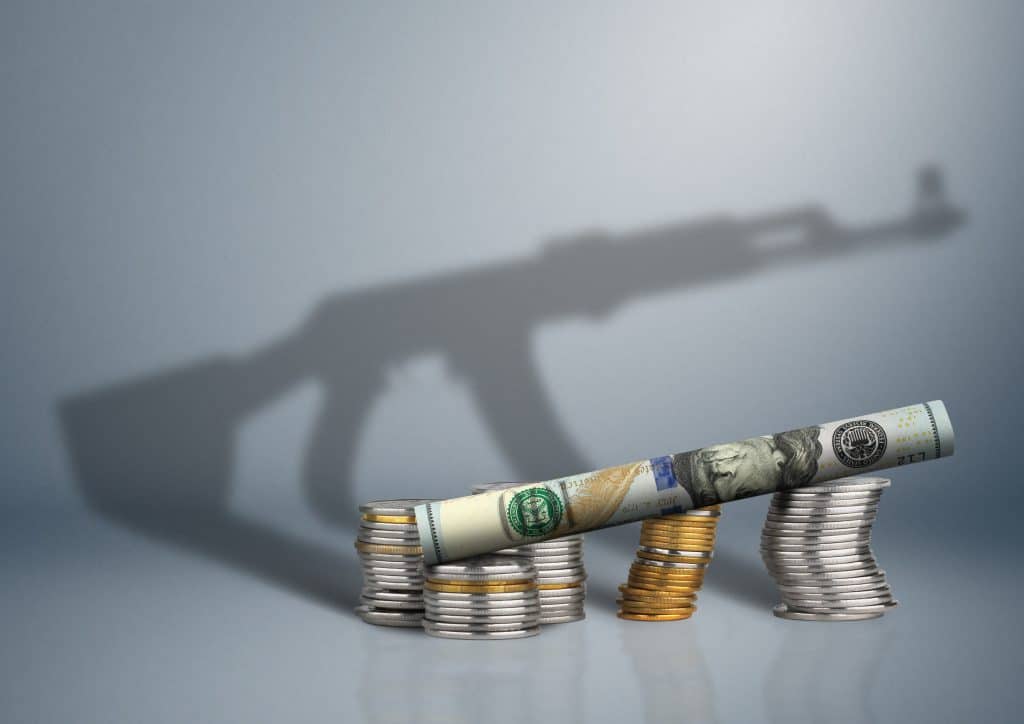
A new report from The Wall Street Journal reveals a sophisticated and deeply entrenched alliance between Mexican drug cartels and Chinese money laundering networks operating within the United States — a partnership that is moving hundreds of millions of dollars in illicit drug proceeds into the hands of Chinese nationals.
At the heart of the operation is the notorious Sinaloa Cartel, once headed by imprisoned kingpin Joaquín “El Chapo” Guzmán. According to the report, the cartel is working closely with Chinese operatives inside the U.S. to clean vast sums of drug money and funnel it into the American financial system, enabling Chinese clients to bypass currency restrictions while cartels reap profits from narcotics sold in U.S. cities.
“The cartel’s activities generate enormous sums of U.S. currency in the United States that belong to the cartel in Mexico,” the DOJ said in a press release. “Profits from the drug trade must be repatriated for use by the cartel — and Chinese networks have become essential to making that happen.”
The scheme often begins with drug sales in the U.S., where Mexican cartels have flooded the market with fentanyl, methamphetamine, and other synthetic drugs. Once the drugs are sold, cartels are left with massive amounts of U.S. currency that must be laundered back to Mexico.
Enter the Chinese nationals. Operatives, some of whom are students or visitors in the U.S., travel to Mexico to collect cash directly from the cartels. They then smuggle the money back into the U.S., depositing it into a complex network of American bank accounts — often opened with forged documents — and sell access to those funds to wealthy Chinese clients who pay in yuan.
Because Chinese citizens are barred from moving more than $50,000 in foreign currency annually under Beijing’s strict capital controls, many seek illegal methods to invest in American property, pay university tuition, or transfer family wealth abroad. This demand has created a lucrative laundering market within Chinese-American communities.
To complete the laundering cycle, the funds are used to buy low-cost Chinese goods — electronics, textiles, and other products — that are shipped to Mexico and sold under the guise of legitimate trade. The final proceeds, now in pesos, are returned to the cartels.
According to The Wall Street Journal, Chinese laundering groups have become an indispensable part of cartel operations in the U.S., charging as little as 1–2% in fees — far less than traditional black-market bankers. These networks often communicate with their Mexican partners through encrypted Chinese messaging apps, making it harder for law enforcement to track their movements.
A Department of Justice (DOJ) investigation known as “Operation Fortune Runner” led to the June 2024 arrest of several Los Angeles-based cartel associates and Chinese money launderers. Authorities said the suspects were responsible for a wide-ranging effort to disguise and repatriate drug proceeds to Mexico through American banks and international trade fronts.
One particularly brazen case involved a luxury Range Rover picking up cash at several homes in Los Angeles, only to drop it off with a Chinese high school student, who later admitted to law enforcement that he had received over $60,000. Drug-sniffing dogs confirmed narcotics residue on the money.
The laundering network is just one part of the growing nexus between Chinese actors and Mexico’s cartels. American officials have repeatedly warned that China is the primary supplier of precursor chemicals used in the production of fentanyl — a drug responsible for over 70,000 overdose deaths annually in the U.S.
This complex alliance — cartels in Mexico, laundering cells in the U.S., and chemical suppliers in China — has enabled drug trafficking organizations to scale up their operations dramatically while evading law enforcement and sanctions.
In response, U.S. officials are ramping up pressure on financial institutions and calling for tighter oversight of student visa programs, foreign property purchases, and cryptocurrency exchanges. But as long as demand for illicit drugs and off-the-books financial services exists, experts warn, these transnational alliances will continue to evolve.
The DOJ, DHS, and DEA have vowed to expand joint investigations with international partners, though the challenge remains formidable.
READ NEXT: Is This Powerful Liberal Group An Illegal Chinese Operation?
















Great reporting
Like this surprises anyone? Before we had “cartels” in the USA, we had MAFIAS doing exactly the same thing. As well as all the US Politicians, like Pelosi, Kerry, Clintons, Biden, Obamas, etc
“Book deals and Speeches” = money laundering.
Who do you tink owns all the bug fancy resorts in Mexico? Certainly NOT American corporations. LOL
Is the genteral public in the USA THAT naive???