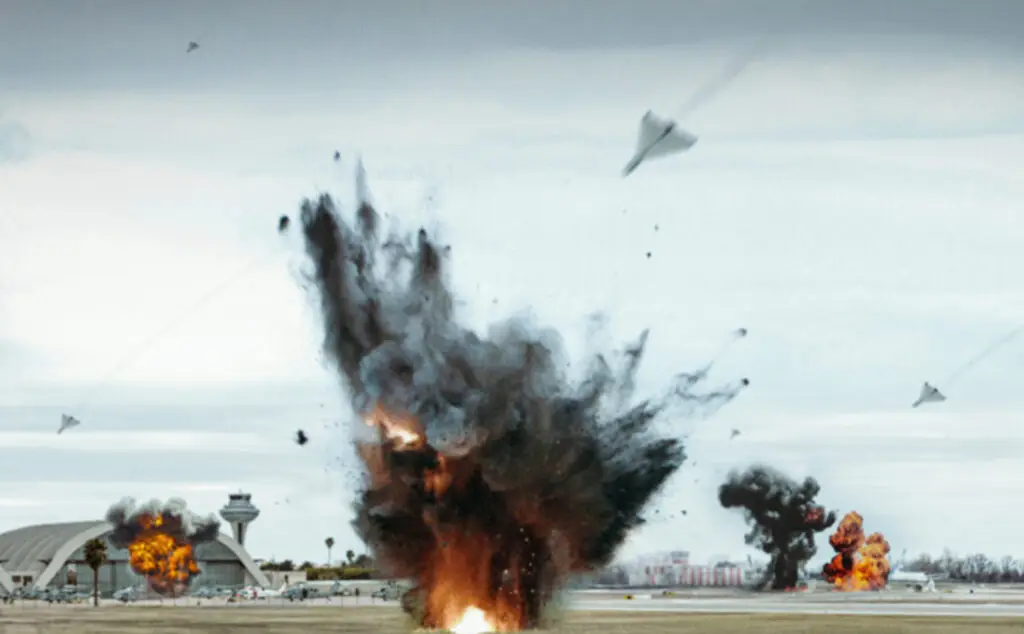
Three Russian suicide drones have allegedly struck Moldova in the past few hours, further escalating tensions in Eastern Europe. Moscow claims the strikes were aimed at infrastructure in a southern Ukrainian port, but Moldova has reported two drone explosions on its territory. Meanwhile, NATO member Romania has discovered drone fragments and remnants of explosives at two separate locations.
According to reports, Russia launched a large-scale drone offensive overnight, deploying 140 drones against Ukraine. One person was injured in the Izmail district of the Odesa region, which borders both Moldova and Romania.
BREAKING:
— Visegrád 24 (@visegrad24) February 13, 2025
3 Russian suicide drones have struck Moldova over the past few hours
🇲🇩🇷🇺 pic.twitter.com/TGfYp6xv7g
Diplomatic Fallout and Moldova’s Response
The reported violation of Moldovan airspace has triggered a diplomatic standoff. Moldova has summoned the Russian ambassador and announced the closure of Russian cultural centers in response. Moldovan President Maia Sandu condemned the strikes, accusing Moscow of disregarding national borders and escalating regional instability.
In a post on X, Sandu stated that Russian recklessness was responsible for “putting Moldovan lives at risk.”
“Russia respects no borders, attacks civilians, spreads terror… Leave us, peaceful nations, alone,” she added.
Russia’s war on Ukraine crossed into Moldova again. Shahed drones violated our airspace, two exploded on our soil, putting Moldovan lives at risk.
— Maia Sandu (@sandumaiamd) February 13, 2025
Russia respects no borders, attacks civilians, spreads terror. Its war on Ukraine is criminal. Leave us, peaceful nations, alone. pic.twitter.com/6PYD8oKkIz
Moldova, though officially neutral, has increasingly found itself caught in the crossfire of the Russo-Ukrainian War. This is not the first time drone activity linked to Russia’s military operations in Ukraine has affected Moldovan territory, further raising security concerns in the region.
Historical Context: Moldova-Russia Relations
Since declaring independence from the Soviet Union in 1991, Moldova has navigated a complex relationship with Russia while pursuing closer ties with Europe. Historically part of the Romanian principality of Moldavia before being ceded to Russia in 1812, Moldova’s geopolitical position remains a point of contention.
A significant strain on Moldova-Russia relations stems from the Transnistria conflict. The breakaway region of Transnistria, which declared independence from Moldova in 1992 after a brief war, remains under Russian influence, with approximately 1,500 Russian troops still stationed there. Tensions between Chisinau and Moscow deepened in 2003 when Moldova rejected a Russian proposal to resolve the Transnistria issue. Subsequent economic pressures, including a Russian ban on Moldovan wine exports in 2006, further exacerbated tensions.
Moldova’s Shift Toward Europe
In recent years, Moldova has sought closer integration with European institutions. The country applied for EU membership in 2022, a move that has placed additional strain on its already fragile relationship with Russia. The presence of Russian troops in Transnistria, combined with Moldova’s historic reliance on Russian energy supplies, leaves the country vulnerable to Kremlin influence.
Nevertheless, Moldova is making progress to lessen its dependence on Moscow by exploring alternative energy sources and enhancing border security.
This is a breaking news story. Please check back for updates.
READ NEXT: Unmasking Rogue Judges – A Plan To Stop Constitutionally Dubious Orders