

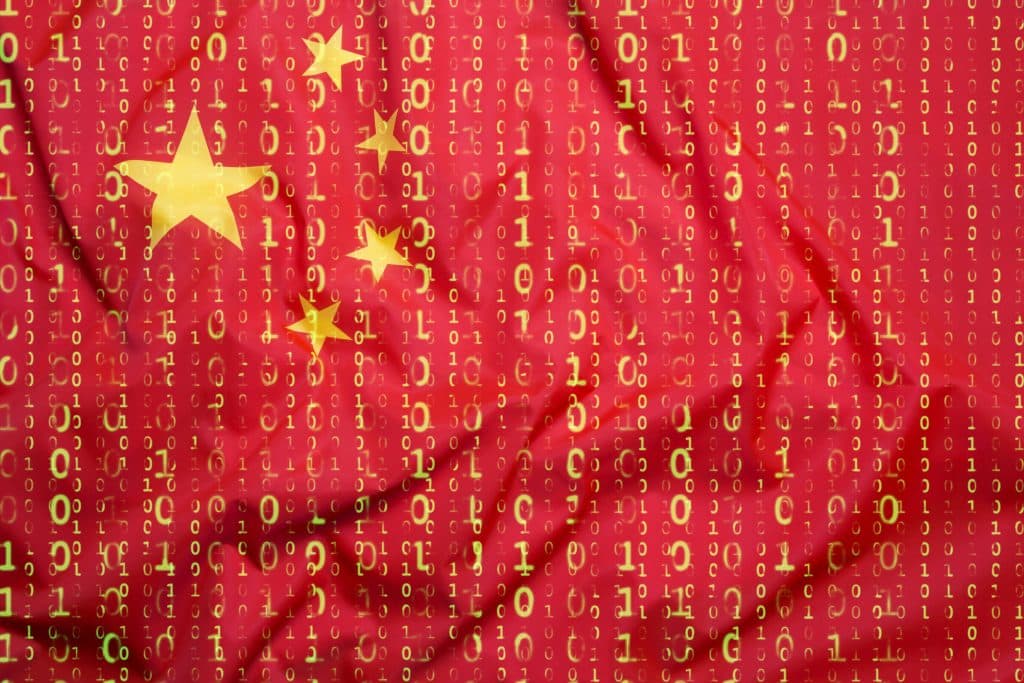
The Trump administration took a significant step by implementing a new round of export controls to further limit China’s access to advanced U.S. technologies. The Bureau of Industry and Security (BIS), a division of the U.S. Department of Commerce, announced the addition of 80 companies to a trade blacklist, many of which are Chinese. The move, founded on national security concerns, is designed to prevent the Chinese Communist Party (CCP) from acquiring cutting-edge technologies related to supercomputers, quantum computing, and military applications.
The new restrictions specifically target China’s ability to develop “exascale” supercomputers—machines capable of performing quintillion calculations per second—as well as technologies used to create hypersonic weapons and military drones. The BIS emphasized that their goal was to curb China’s military advancements and ensure that American technological innovations are not exploited for military purposes that could potentially threaten American safety and interests.
“American technology should never be used against the American people,” said Under Secretary of Commerce for Industry and Security, Jeffrey Kessler. “The BIS is sending a clear, resounding message that the Trump administration will work tirelessly to safeguard our national security by preventing U.S. technologies and goods from being misused for high-performance computing, hypersonic missiles, military aircraft training, and UAVs that threaten our national security.”
In recent years, China has made substantial investments in artificial intelligence (AI), supercomputing, and other advanced technologies, and concerns about intellectual property theft and espionage have only risen. The Trump administration’s decision to blacklist Chinese companies is part of its broader strategy to stymie China’s ambitions to dethrone the United States as the de-facto global leader.
Brandon Weichert, senior national security editor at The National Interest, explained the strategic importance of these export controls. “By further constraining exports to China, Trump could stunt China’s long march toward toppling U.S. tech dominance,” Weichert noted. However, he added that playing “keep away” with technology will only work temporarily. “A competitor like China will inevitably adapt and overcome whatever controls are imposed. We need to pair playing keep away with out-innovating the Chinese. That’s the key. And we’ve yet to fully embrace this part of the equation.”
Experts, including Weichert, argue that many Chinese companies are either state-owned or closely aligned with the CCP, making them potential vehicles for espionage rather than legitimate business ventures.
“The more we can restrain their access and complicate their mission here, the better. That can only be done via the imposition of export controls,” Weichert contended.
China responded harshly to the new export controls. Guo Jiakun, a spokesperson for China’s Foreign Ministry, condemned the maneuver, calling it “typical hegemonism” and a “serious violation of international law and the basic norms governing international relations.” China has consistently challenged the Trump administration’s trade measures, which have included tariffs in addition to export restrictions. President Trump announced in February that he would double the existing 10% tariffs on Chinese imports to 20%, beginning in March. In response, Beijing has imposed its own countermeasures, including tariffs on a variety of American goods.
The new export restrictions also reflect President Trump’s “America First” agenda, which focuses on reducing America’s dependency on foreign trade, especially with China.
READ NEXT: Is Your Chinese-Made Refrigerator Spying On You?


















MAYBE I MISSED IT, BUT WHAT ABOUT A MIDDLEMAN BUYING THE TECHNOLOGY AND THEN SELLING IT TO A SUB CCP BUYER TO GET AROUND THE BLACKLIST?!?!
China has been the world’s leader in intellectual property theft since at least the end of WWII. And the world has allowed them to get away with it so far.