
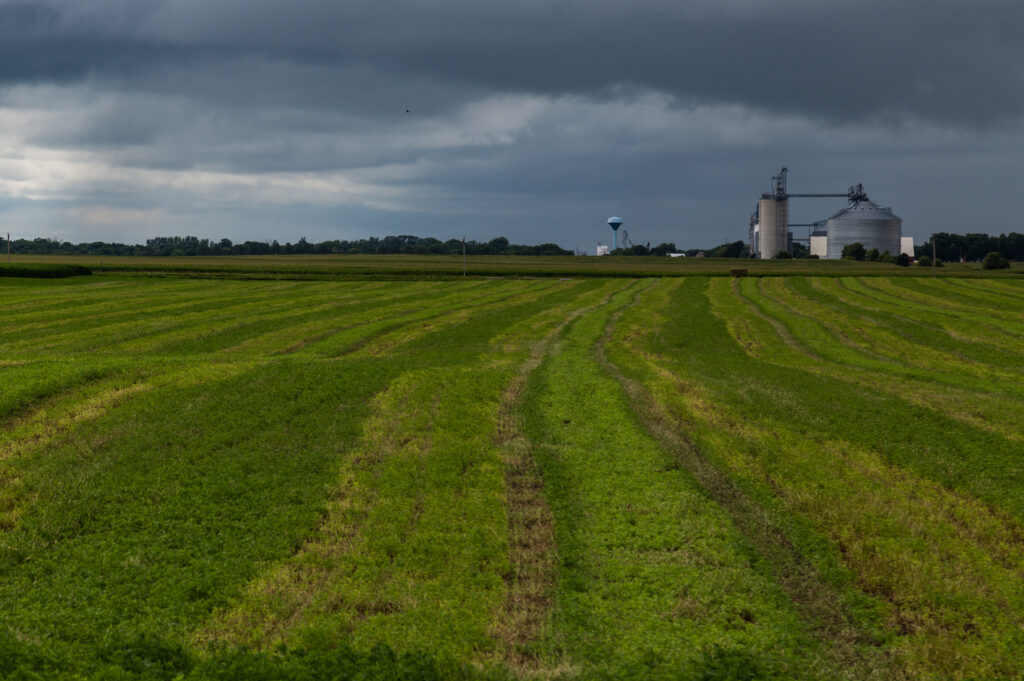
The Trump administration has begun resettling Afrikaner refugees from South Africa, citing systemic racial discrimination and politically sanctioned violence against white farmers. A senior State Department official confirmed to the Daily Caller that hundreds—and possibly thousands—of Afrikaners are expected to arrive in the United States beginning later this summer.
The policy, formalized by an executive order signed by former President Donald Trump, asserts that South Africa’s government has engaged in hateful rhetoric and enacted policies that amount to “race-based persecution.” The executive order specifically condemns what it describes as “racially discriminatory property confiscation” and a growing pattern of violence disproportionately affecting Afrikaner landowners.
According to the State Department official, the resettlement program began quietly earlier this month when 59 Afrikaner refugees arrived in the U.S., just ahead of a scheduled meeting between Trump and South African President Cyril Ramaphosa.
“We won’t be talking about dozens of arrivals, but hundreds and perhaps thousands,” the official said, adding that the U.S. expects to “massively scale this up” by late summer. As of now, the department is reportedly managing a backlog of over 50,000 refugee applications from Afrikaners, with more anticipated.
Nine more refugees arrived in Atlanta on Friday, joining the initial group.
The executive order has not only ignited debate in South Africa, but has also stirred division among American refugee resettlement organizations. Notably, Episcopal Migration Ministries—a long-time partner of the U.S. refugee program—announced it would begin winding down its collaboration with the federal government shortly after Trump’s order took effect.
The controversy underscores a long-standing tension in U.S. immigration and refugee policy: who qualifies for protection, and what shapes those decisions. The administration frequently cited national security concerns to justify sharp limits on refugee admissions. Racial discrimination—particularly against white minorities—is being cited as the primary grounds for granting sanctuary.
Proponents of the Afrikaner resettlement program insist that the violence targeting white farmers in South Africa is real and underreported, often involving brutal farm attacks. They also note the ease of assimilation and valuable addition of English speaking farmers. Critics, however, accuse the Trump administration of politicizing these tragedies while downplaying or dismissing other global humanitarian crises.
The executive order not only green-lights refugee admissions but also cuts off certain forms of U.S. aid to South Africa, a move that is likely to further strain diplomatic ties. South Africa’s government has repeatedly denied accusations of state-sponsored persecution, calling U.S. concerns exaggerated and ideologically driven. When South African leaders visited the White House just weeks ago, Trump played a video in front of them showing mass graves of white South Africans and documenting the threat faced.
The Trump administration appears undeterred. “This is about standing up for human rights, regardless of race,” the State Department official said. “Just because the victims are white doesn’t make the persecution any less real.”
Critics of the Trump administration have accused it of racial preferentialism for welcoming Afrikaner refugees, but this charge invites scrutiny of its own ideological underpinnings. While the administration is accused of favoring white refugees, an equally compelling argument can be made that some of its detractors—and even segments of the refugee resettlement community—are exhibiting racial bias in the opposite direction. The decision by groups like Episcopal Migration Ministries to sever ties with the federal government after just 60 white refugees were resettled raises questions about whether their commitment to humanitarian principles is truly universal, or selectively applied. If the suffering of Afrikaner families—documented victims of racially motivated violence—is dismissed or minimized because they are white and perceived as politically inconvenient, then the moral posture of these organizations comes under serious ethical scrutiny. In this context, accusations of “preferentialism” begin to look more like discomfort with acknowledging that white people, too, can be victims of persecution worthy of refuge.
READ NEXT: Episcopal Church Refuses to Resettle White South African Refugees
















It’s all so sad, especially since some of these farmers are on land their families have worked for centuries, driven off by marxists.