

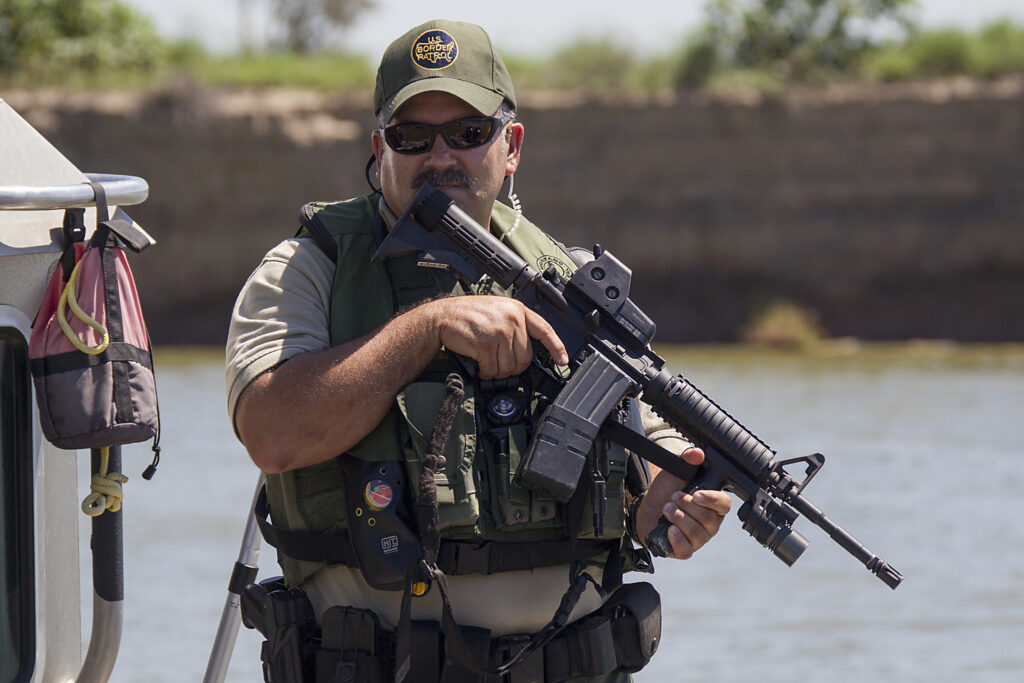
In a harrowing incident near Fronton, Texas, U.S. Border Patrol agents came under fire from suspected cartel members as illegal immigrants attempted to cross into the United States. Agents returned fire, forcing the migrants to abandon the attempted crossing, according to Fox News’ Bill Melugin.
Friendly Mexican military forces are currently gathered on the opposite side of the river.
Texas DPS @LtChrisOlivarez tells me DPS is now patrolling the area and has a drone in the air and can see Mexican military assets now staging on the other side of the river. pic.twitter.com/z61RkrVvEq
— Bill Melugin (@BillMelugin_) January 27, 2025
According to Melugin, when incidents involving cartel gunmen occur, standard operating procedure dictates U.S. authorities contact Mexican officials. In response, Mexico typically deploys military forces to the area to confront the threat.
“Sometimes they come in guns blazing if the gunmen are still there,” Melugin noted on X (formerly Twitter). He also referenced “crazy drone videos” captured by Texas Department of Public Safety (DPS) over the years, which show dramatic scenes of Mexican military operations as viewed from the U.S. side of the border. These videos highlight the high-stakes environment in which both nations attempt to address cartel violence and illegal activity.
Drug cartels have a substantial influence over parts of the U.S.-Mexico border. They control many key smuggling routes and have established highly sophisticated operations to traffic drugs, weapons and people across the border. Cartels such as the Sinaloa Cartel and the Jalisco New Generation Cartel (CJNG) employ violence, corruption and bribery to maintain their control over these routes.
Their influence extends to both sides of the border, as the most prolific drug trafficking organizations rely on partnerships with local gangs in the U.S. to distribute drugs and conduct other criminal activities. Border regions with high cartel activity have also seen increased violence, human trafficking and challenges for law enforcement trying to reassert law and order.
Authorities in vulnerable areas frequently report on cartel activities, including the use of tunnels, drones and even makeshift submarines for transporting contraband.
On Jan. 20, 2025, President Trump signed an executive order designating drug cartels as foreign terrorist organizations (FTOs).
Designating them as such enables the U.S. government to use expanded tools to combat them, such as freezing assets, imposing sanctions and prosecuting those who provide material support to the organizations. It also increases international cooperation in targeting these groups.
While the designation does not automatically authorize the use of military force, it could pave the way for such action under specific circumstances. Lethal force could be used if authorized under existing U.S. laws, such as the Authorization for Use of Military Force (AUMF), or if Congress grants specific approval for military action against the cartels.
This is a breaking news story. Please check back for updates.
READ NEXT: [REVIEW] Which Popular Brand Reigns Supreme In Micro Compact Pistols?











Deport them all, jail those who aid and abet known criminals, and finish the wall.
US should station Marine snipers and spotters in areas this is happening and let them have green light to respond. Those guys get what they are after. These incidents would likely diminish to none in a short time.
Send in the A-10’s at least 2 of them.