

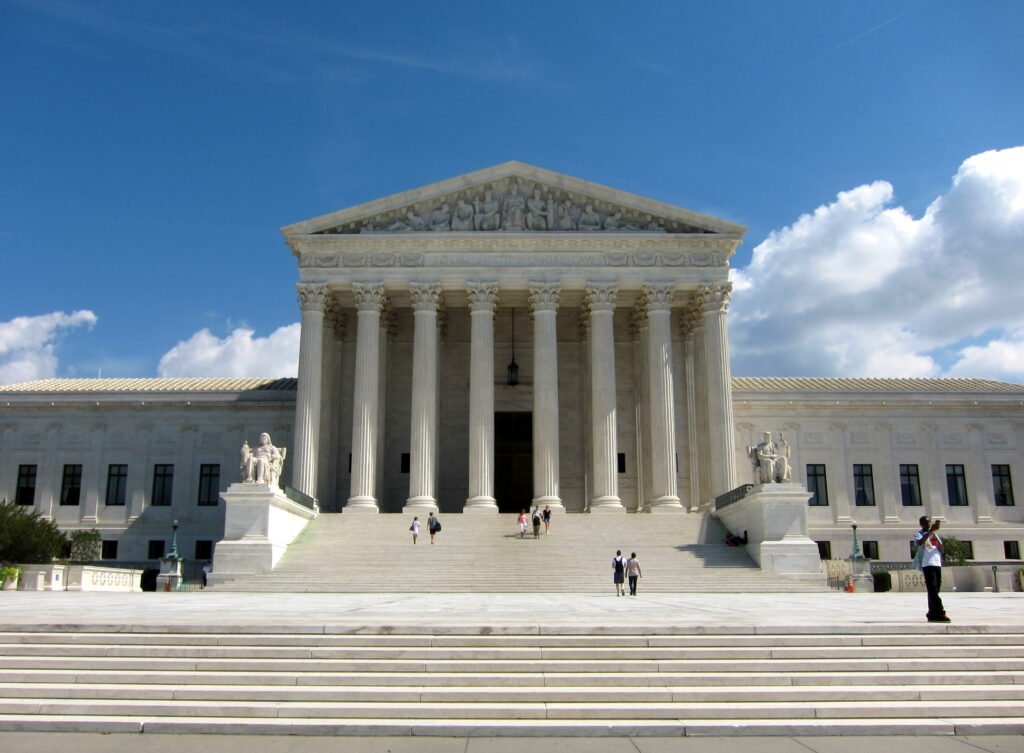
Fox News legal analyst Jonathan Turley said Monday that the Supreme Court handed Republicans a serious defeat in their fight over mail-in ballots, after the justices ruled that states may continue counting some ballots received after Election Day.
The 5-4 ruling allows states to count mail ballots that are postmarked by Election Day but arrive later, preserving laws in Mississippi and other states with similar deadlines.
Turley, a George Washington University Law School professor, said on Fox News that the decision cuts directly against one of President Donald Trump’s central election priorities.
“I think this is a significant loss for Republicans who have wanted to try to rein in the way that we do our elections,” Turley said, according to Mediaite.
He pointed to California as the kind of system that has frustrated Trump and many conservatives.
The case, Watson v. Republican National Committee, centered on a Mississippi law allowing absentee ballots postmarked by Election Day to be counted if they arrive within five business days. Republicans argued that the practice violated federal statutes establishing a uniform national Election Day for federal races.
The ruling leaves intact similar laws in 14 states, including both Republican- and Democrat-led states, as well as comparable provisions for military and overseas voters in many other states. More than 750,000 ballots nationwide were counted under such grace-period laws during the 2024 election, according to court filings and reporting on the case.
The decision represents a legal defeat for Trump, who has spent years criticizing mail voting and has repeatedly argued that elections should be decided on Election Day.
Trump’s Justice Department backed the Republican National Committee’s challenge before the Supreme Court, continuing the administration’s broader effort to tighten election rules ahead of the 2026 midterms.
Justice Amy Coney Barrett wrote the majority opinion, joined by Chief Justice John Roberts and the court’s three liberal justices. Barrett said federal law sets the day for voting, but does not impose a national deadline for ballot receipt.
“The election-day statutes say nothing about ballot receipt, and we cannot add to the words Congress chose,” Barrett wrote.
Barrett also said the fight belongs in Congress, not before the courts.
“If varied deadlines for ballot receipt similarly call for a national solution, the American people must choose it through their elected representatives,” she wrote.
That point was central to Turley’s analysis. He said the court did not necessarily bless long vote-counting windows as good policy. Instead, it said Republicans had chosen the wrong legal tool.
“What the court is saying is that you can’t use this federal law to achieve that purpose, that there is room at the elbows here for states like Mississippi to count ballots that had been postmarked before Election Day,” Turley said.
He added that the decision now sends the issue back to elected lawmakers.
“That means that it shifts attention back to Congress, and also to the state legislators, to determine whether, politically, they want to go forward and say, ‘We need to clean this process up. We need to bring back a certain degree of certainty and clarity that doesn’t allow this open-ended process we see in California.”
As the court concluded its Monday session, Chief Justice John Roberts announced that the Supreme Court will hand down all of its remaining opinions from this term Tuesday, setting the stage for a blockbuster day with decisions expected on birthright citizenship, transgender athlete bans, and campaign finance.
READ NEXT: Supreme Court Declines Trump Appeal In E. Jean Carroll Case, Leaving $5 Million Verdict Intact


















Trump deserves much of the criticism for this bs decision. He is the one who appointed Barrett. She has been a total disgrace to conservatives. There needs to be a recourse for bad apple appointments like her.
I, a conservative, agree with the court.
BUT, I also agree that these mailed-in votes MUST be scrutinized carefully to make sure that they were done by LEGALLY authorized U.S. American citizen voters.
No more ballot stuffing! No more of all that other illegal ‘crap’!
Legal U.S. American votes are ALL that matters.