

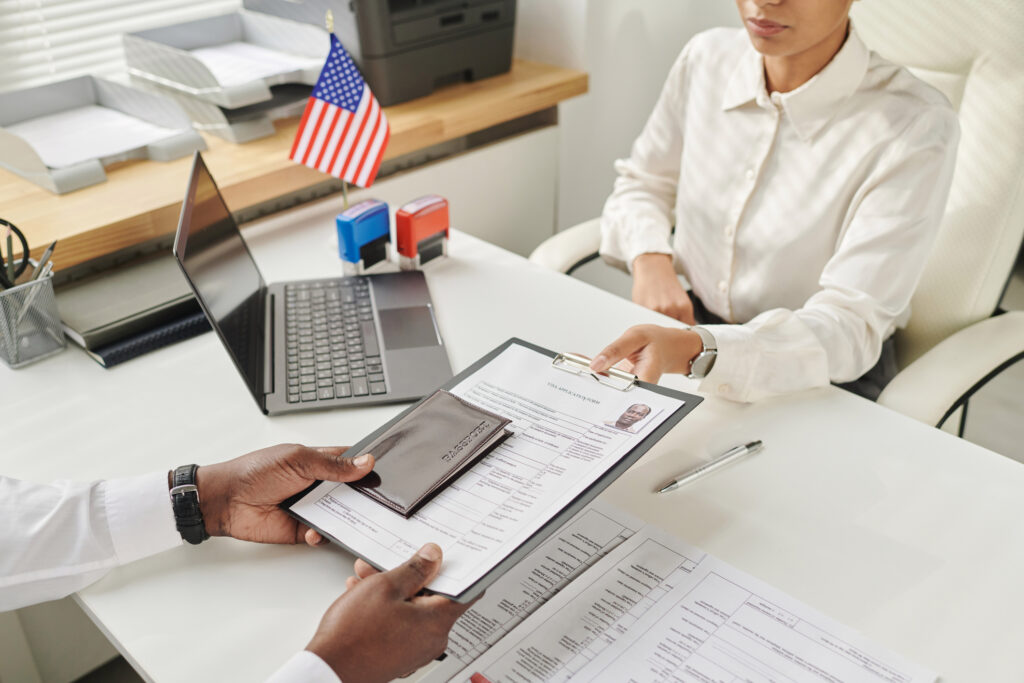
A federal judge has struck down President Donald Trump’s controversial $100,000 fee on new H-1B visas, ruling that the administration lacked the legal authority to impose the charge without congressional approval.
U.S. District Judge Leo Sorokin of the federal court in Boston issued the ruling Monday in a lawsuit brought by 20 Democratic state attorneys general challenging the fee, which Trump announced in September 2025 as part of a broader effort to curb the use of foreign labor programs.
Court finds fee unlawful
Sorokin concluded that the administration’s fee increase was unlawful and must be invalidated. The ruling effectively blocks enforcement of the fee, which increased the cost of obtaining a new H-1B visa from several thousand dollars to $100,000.
Sorokin, an appointee of former President Barack Obama, concluded that the payment operates as a tax based on its structure and implementation. “Here, the substance and application of the $100,000 payment reveal that it is a tax, regardless of what the payment is called,” he wrote.
His decision represents a significant setback for one of the Trump administration’s most aggressive immigration restrictions aimed at high-skilled foreign workers. H-1B visas are commonly used by technology companies, universities, healthcare providers, and other employers to hire foreign professionals in specialized fields.
Fee faced multiple legal challenges
Trump imposed the fee through a presidential proclamation issued in September 2025. The administration argued the measure would encourage companies to hire and train American workers rather than relying on foreign labor.
The policy immediately drew legal challenges from business groups, universities, state governments, and employers who argued the fee amounted to an unauthorized tax that Congress never approved. Several lawsuits were filed in federal courts across the country.
Before Monday’s ruling, another federal judge in Washington had upheld the fee in a separate case, creating a split among federal courts over the scope of presidential authority under immigration law.
Appeal likely
The Justice Department had previously argued that the president possessed broad authority under federal immigration statutes to restrict the entry of foreign workers when deemed necessary to protect U.S. interests. During a hearing last month, Sorokin questioned whether that authority extended to imposing what challengers characterized as a massive new tax on employers.
The administration has not yet announced whether it will appeal the ruling, but legal observers expect the case could ultimately reach a federal appeals court and potentially the Supreme Court given the conflicting decisions issued by different federal judges.
For now, the ruling prevents enforcement of one of the most consequential changes to the H-1B program enacted during Trump’s second term and restores the status quo while the litigation continues.
This is a breaking news story. Please check back for updates.
READ NEXT: Trump Storms Out After Heated Exchange

















“A federal judge has struck down”…… Who else is sick of this shit?