




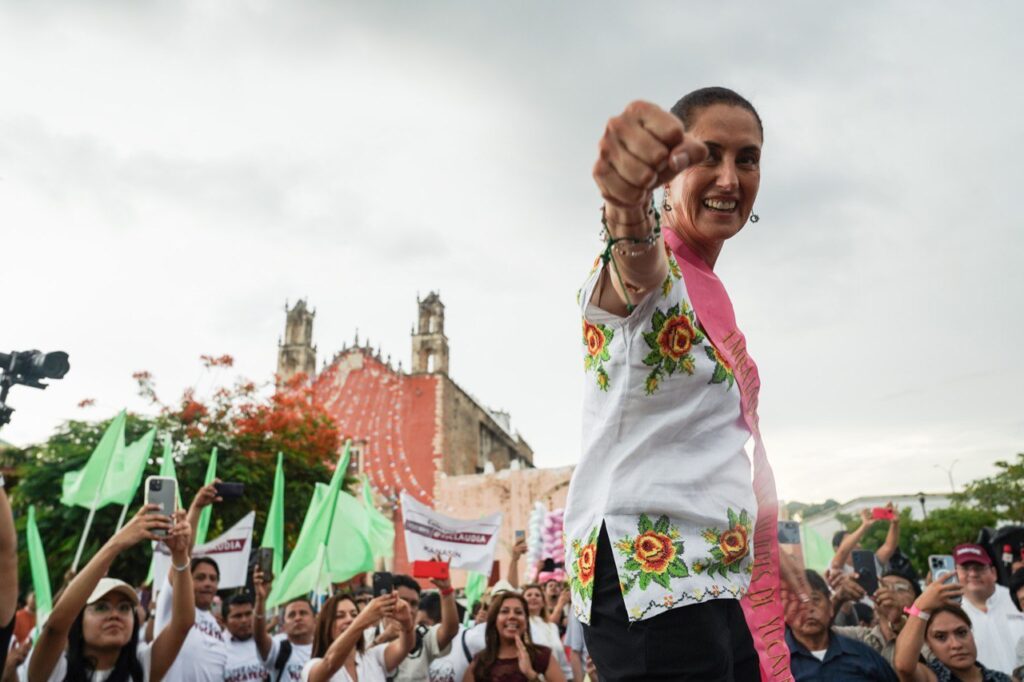
Donald Trump is once again shaking things up—this time, by ruffling feathers south of the border. Mexican President Claudia Sheinbaum is fuming over his recent executive order to rename the Gulf of Mexico as the “Gulf of America,” a move that has added fuel to an already tense U.S.-Mexico relationship.
Now, Sheinbaum’s administration is considering legal action against Google for displaying the new name on its maps. She made it clear in her daily press conference that Mexico isn’t backing down, emphasizing that the country maintains sovereignty over much of the Gulf and dismissing Trump’s renaming efforts as only applying to U.S. territory. Despite Mexico’s formal request for Google to continue using the longstanding “Gulf of Mexico” label, the tech giant has stuck with the new designation in some areas.
Fox News reports that the Mexican chief intends to pursue U.S. companies that use the official name of the Gulf of America instead of its previous historical name:
“We are going to wait. We are already seeing, observing what this would mean from the perspective of legal advice, but we hope that they will make a revision,” Sheinbaum said, according to Reuters.
Google Maps officially updates to ‘Gulf of America’ 🇺🇸 pic.twitter.com/xfmtODPZcs
— Joe Rogan Podcast (@joeroganhq) February 11, 2025
Google renamed the body of water after President Donald Trump signed an executive order to change it. Now, Google Maps users in the United States will see “Gulf of America” in the app, and users outside the U.S. and Mexico see both terms, the company said.
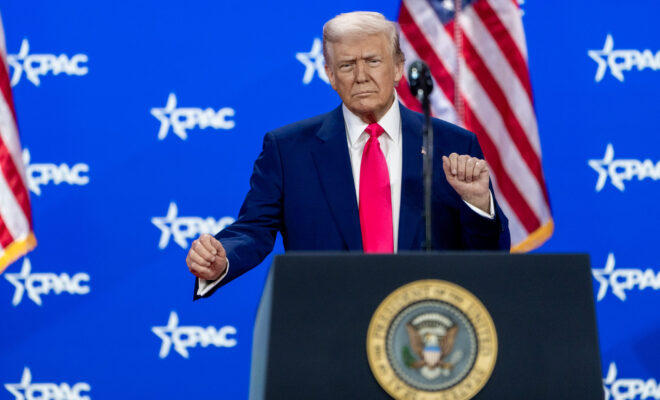
“We’re going to be changing the name of the Gulf of Mexico to the Gulf of America, which has a beautiful ring. That covers a lot of territory,” Trump said Tuesday. “The Gulf of America. What a beautiful name. And it’s appropriate.”
“All we are asking of Google is to look at the decree that the White House released and that President Donald Trump signed. You’ll see in that decree that it does not refer to the whole gulf,” Sheinbaum said.
In response to the backlash, Google defended its decision, pointing to its standard practice of updating geographic names in line with official government sources. The company reiterated that users in the U.S. would see “Gulf of America,” while those in Mexico would still see “Gulf of Mexico.” Everyone else? They’d see both names, a compromise that has done little to ease tensions.
Sheinbaum isn’t having it. She stressed that the name “Gulf of Mexico” has been in use since 1607 and is recognized by the United Nations. Taking a shot at Trump’s rebranding, she argued that if Google is open to politically motivated map changes, maybe it should also label the continent as “Mexican America,” referencing early Mexican constitutional documents.
But this controversy isn’t just about geography—it’s about power. Trump’s bold move didn’t just challenge Mexico; it also put the American media and tech giants in an uncomfortable position. While Google and Apple Maps quickly fell in line, the left-leaning Associated Press (AP) refused to acknowledge the name change. That decision had consequences.
The AP’s defiance led to the White House barring one of its reporters from an Oval Office event with the King of Jordan, and another from a later reception. AP Executive Editor Tara Copp accused the administration of punishing the news outlet for sticking with “Gulf of Mexico.” CNN’s Brian Stelter echoed that sentiment, claiming Trump is trying to control the media narrative by pressuring outlets that don’t comply with his directives.
Some see this as a power play. The AP, long considered a standard-bearer for journalistic guidelines, holds influence over the entire media landscape. If Trump can get them to budge, others may follow. Yet, the AP’s refusal stands in stark contrast to its past willingness to update language in response to cultural shifts—like its 2020 decision to capitalize “Black” when referring to race after the George Floyd protests/riots. The inconsistency isn’t lost on critics, who argue that the AP’s stance against “Gulf of America” is more about politics than principles.
As this battle over naming rights continues, the message from the White House is clear: Those who challenge the administration’s authority may find themselves on the receiving end of consequences. With tensions mounting between Mexico, the media and the tech world, one thing is certain—this isn’t just about a name. It’s about who gets to control the narrative.
READ NEXT: A Monument To Bureaucratic Failure: The Retirement Mine That Elon Musk Found
















Tell her to take a flying leap and focus on getting rid of those drug cartels. She is lucky the U.S. hasn’t fired on their property – YET!
I had to leave my home in Mexico because of the cartels and if shew doesn’t play ball with the U.S. Mexico will fail and go totally bankrupt!