Republican National Committee Chairman Joe Gruters is predicting what he calls the “biggest election integrity win” yet, pointing to ongoing legal efforts that could reshape how elections are conducted nationwide.
The comment comes as the RNC continues an aggressive legal strategy targeting voting rules in multiple states, including a cases that has reached the Supreme Court of the United States.
What the ‘Big Win’ Refers To
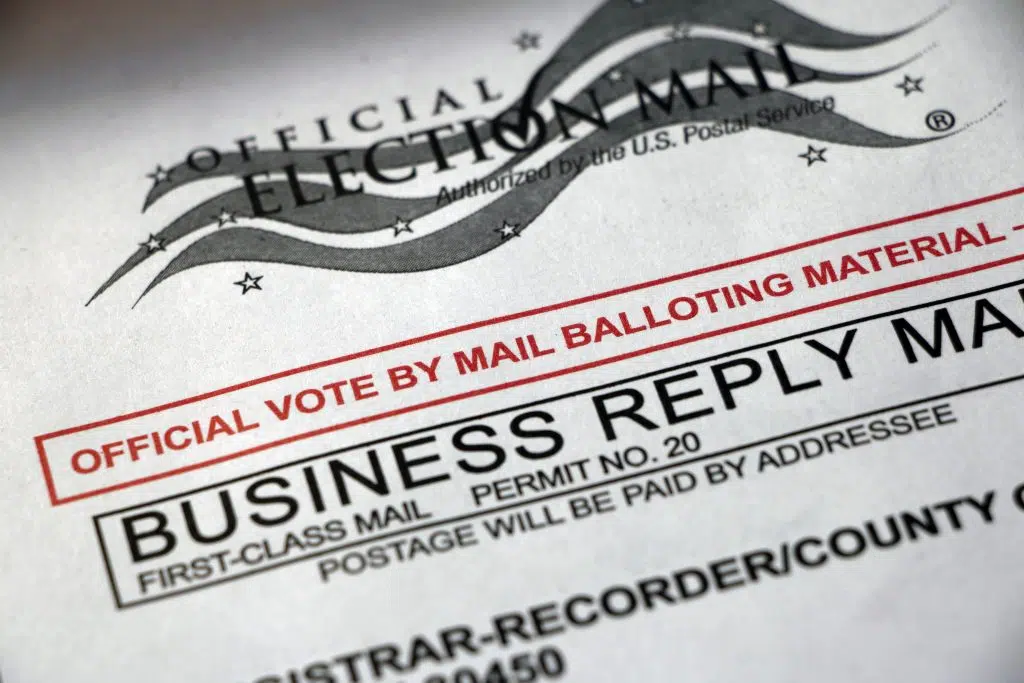
Gruters’ prediction hinges on Watson v. Republican National Committee, a major legal challenge involving ballot deadlines now before the Supreme Court. At issue is whether states can count mail-in ballots received after Election Day if they were postmarked on time.
At its core, the case asks whether states may accept ballots that arrive after Election Day but were mailed on or before that date. Roughly a dozen states currently allow a grace period, permitting ballots to arrive several days late and still be counted.
Gruters, along with other Republican officials, has expressed confidence that the Supreme Court will ultimately rule that ballots received after Election Day should not be counted.
If the Court sides with the RNC, the decision would mark a significant shift in election law and align with broader Republican efforts to tighten ballot deadlines. A ruling is expected by late June or early July 2026, just ahead of the midterm elections.
The crux of the case centers around a Mississippi law passed during the Covid-19 pandemic that allows election officials to count ballots that are postmarked by Election Day but received up to five days later. Although Mississippi Solicitor General Stewart defended his state law during last month’s oral arguments, nationally speaking, post-Election Day grace periods are more traditionally favored by Democrats, who support more lenient receipt rules for mail ballots. More than a dozen other states have similar laws on the books.
RNC officials view the pending Mississippi decision as a potential bulwark against deliberate attempts to influence an election after Election Day. “The only reason” to allow post-Election Day receipt verification for mail-in ballots is to “game the system and try to cheat at the end, and so this is just closing that door,” Gruters told National Review of the party’s lawsuit. If the court rules in the RNC’s favor and overturns post-Election Day grace periods, “everybody would have to abide by the same rules, and Election Day would mean exactly what it says.”
Last month’s oral arguments before the Supreme Court revealed that several other key issues are at stake in the case. These issues include: how long grace periods should last so long as ballots are postmarked by Election Day, whether this matter is best left for Congress, and whether laws such as Mississippi’s undermine public trust in elections.
“Is that something we should be thinking about, confidence in the election process?” Justice Brett Kavanaugh interjected at one point during the oral arguments.
Broader Election Integrity Campaign
The RNC’s legal push is part of a wider strategy that has expanded significantly since 2020.
The committee has filed 100+ lawsuits across dozens of states, with efforts focused on voter ID enforcement, ballot handling, and voter roll accuracy
Recent victories include agreements strengthening ID requirements and registration safeguards in states like North Carolina.
Gruters has framed these efforts as ensuring elections are “clear, fair, and consistently enforced.”
Why This matters
The Supreme Court is weighing a case that could force more than a dozen states to change their voting rules within months, potentially invalidating ballots that arrive after Election Day and reshaping how mail-in voting is handled in federal elections.
Earlier this year, the Court ruled in a separate case, Bost v. Illinois State Board of Elections, that candidates have the right to challenge mail-in ballot rules — effectively opening the door for cases like this one.
The broader legal push is already underway.
Gruters told National Review that the party is involved in “128 lawsuits across 32 states,” describing a broad legal effort targeting election procedures nationwide.
He cited two recent developments as examples: a ruling that blocked the expansion of ranked-choice voting in Maine, and a case in North Carolina examining whether jury questionnaire data can be used to identify potential noncitizens on voter rolls.
Gruters says the impact is adding up:
“Although people may say, ‘Oh, these are small wins here and there,’ collectively, we are making a difference, and we’re making these elections more safe and secure.”
READ NEXT: Questions Emerge After Foreign Commentator Issues Unusual Constitutional Claim