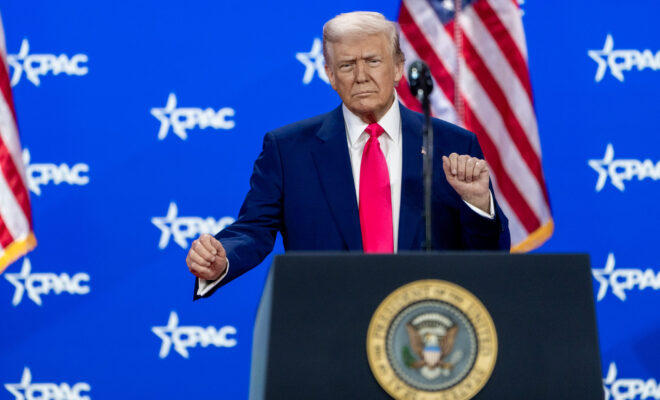










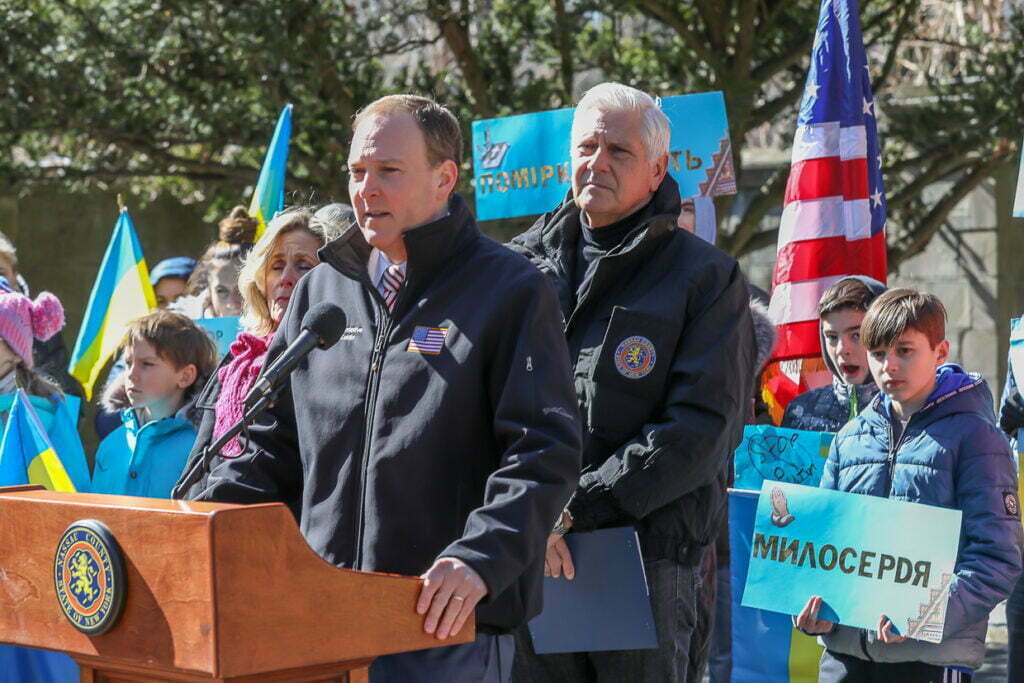
President Donald Trump on Wednesday signaled that his Environmental Protection Agency (EPA) could be poised for significant workforce reductions. During the first presidential cabinet meeting of his second term, Trump announced that EPA Administrator Lee Zeldin may cut approximately 65% of the agency’s staff, a drastic measure with the goal of streamlining the agency and eliminating inefficiencies.
“I spoke with Lee Zeldin, and he thinks he’s going to be cutting 65 or so percent of the people from environmental [agencies], and we’re going to speed up the process too at the same time,” Trump told reporters. “He had a lot of people that weren’t doing their job, they were just obstructionists, and a lot of people that didn’t exist.”
The announcement comes as part of a larger effort by the Trump administration to reduce the size and spending of the federal government. The President has long advocated for cutting down the size of government agencies, citing concerns over excessive bureaucracy and waste. This includes the recent wave of federal layoffs across various government sectors to reduce costs and streamline operations.
Zeldin, appointed as EPA Administrator during Trump’s second term, has already begun implementing changes to tackle what he described as “mismanagement” at the agency. He recently highlighted issues with wasteful spending, alleging that billions of taxpayer dollars were funneled to left-wing nonprofit organizations, some of which were reportedly linked to Democratic voter mobilization efforts during the previous administration. Zeldin’s remarks have raised concerns about the allocation of taxpayer funds, especially to organizations that were politically active with partisan allegiance.
This move has drawn mixed reactions. Supporters of the administration’s focus on efficiency and waste reduction argue that such drastic cuts are necessary to restore fiscal responsibility and ensure that taxpayer dollars are used effectively. They point to the need for a leaner, more efficient government that prioritizes results over red tape.
Supporters of these measures argue that bloated, overstaffed agencies often lead to inefficiencies that result in projects far outside the scope of the agency’s core mission, which taxpayers are largely unaware of. They contend that large government bureaucracies tend to divert resources toward activities and initiatives that may not directly benefit the public or fall within the intended goals of the agency. By streamlining the workforce, proponents believe that agencies can focus more directly on their primary objectives—such as environmental protection in the case of the EPA—while eliminating redundant or extraneous operations. This, they argue, will result in more accountable, transparent government.
Zeldin announced that the EPA had cut more than $67 million in grants that were earmarked for “wasteful DEI and Environmental Justice grants.”
Among the cuts was a $16 million grant to the Institute of Sustainable Communities in Vermont for the creation of a “National Environmental Justice Thriving Communities Technical Assistance Center.” Of this total, $12.4 million was canceled. Similarly, the San Diego State University Foundation had its grant slashed, which was intended to fund environmental justice projects for “underserved communities,” including tribal, indigenous, and Pacific Island groups.
“We will make sure every penny spent by EPA goes towards protecting human health and the environment, and Powering the Great American Comeback,” Zeldin said in a statement. “I am proud to partner with DOGE to restore fiscal responsibility and accountability in our government.”
READ NEXT: Stacey Abrams Group Fined $300K Over Campaign Violations