

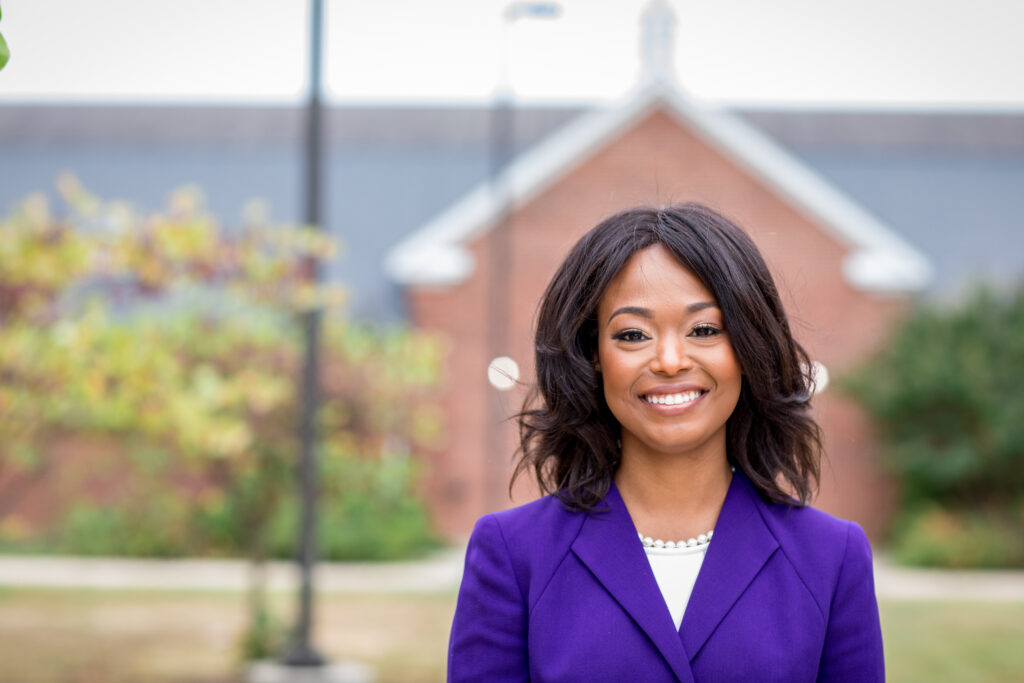
President Donald Trump suggested Thursday that the federal government could “take back” Washington, D.C., if democratic socialist mayoral candidate Janeese Lewis George wins next week’s Democratic primary, inserting himself directly into one of the country’s most closely watched local elections.
“I wouldn’t like it,” Trump said when asked how he would respond to a Lewis George victory. “Maybe we’ll take back Washington and run it on a federal basis. We won’t put up with it. We’re not going to lose our businesses. By the way, Washington, now, is a safe, beautiful place.”
Trump did not elaborate on what actions he might pursue or explain what he meant by “take back” Washington.
As NBC4 Washington reported, the remarks came in response to a question about Lewis George’s campaign and comparisons between her candidacy and that of New York City Mayor Zohran Mamdani:
“We are not going to get ICE off our streets by fearing this president,” Lewis George said in a statement. “We are not going to protect our rights or Home Rule by obeying in advance.
“Threatening Home Rule because you do not like how residents vote is an attack on democracy itself,” she said.
The campaign for Kenyan McDuffie, Lewis George’s main competition in Tuesday’s primary, released a statement saying, “The stakes of this election couldn’t be higher, but DC decides who will be the next mayor, not Donald Trump.”
The statement defended home rule and noted overreach by the Trump administration, promising to “revive our economy that Trump’s policies have decimated, including the tens of thousands of residents who have been laid off by his unconscionable actions with Elon Musk.”
The Democratic primary scheduled for June 16 is effectively the election that will determine Washington’s next mayor, given the city’s overwhelming Democratic voter registration advantage. Incumbent Mayor Muriel Bowser is not seeking reelection.
Lewis George, a member of the Democratic Socialists of America, has emerged as a leading contender and has built her campaign around progressive policies, setting up a contest that increasingly resembles broader national fights over the future direction of Democratic politics.
READ NEXT: John Thune’s Real Constituents Don’t Live In South Dakota












How many dumbasses are there out there?
That’s all we need … another lib in charge of DC.
The situation isn’t bad enough there, we need another lib to make it worse.
NOT!