

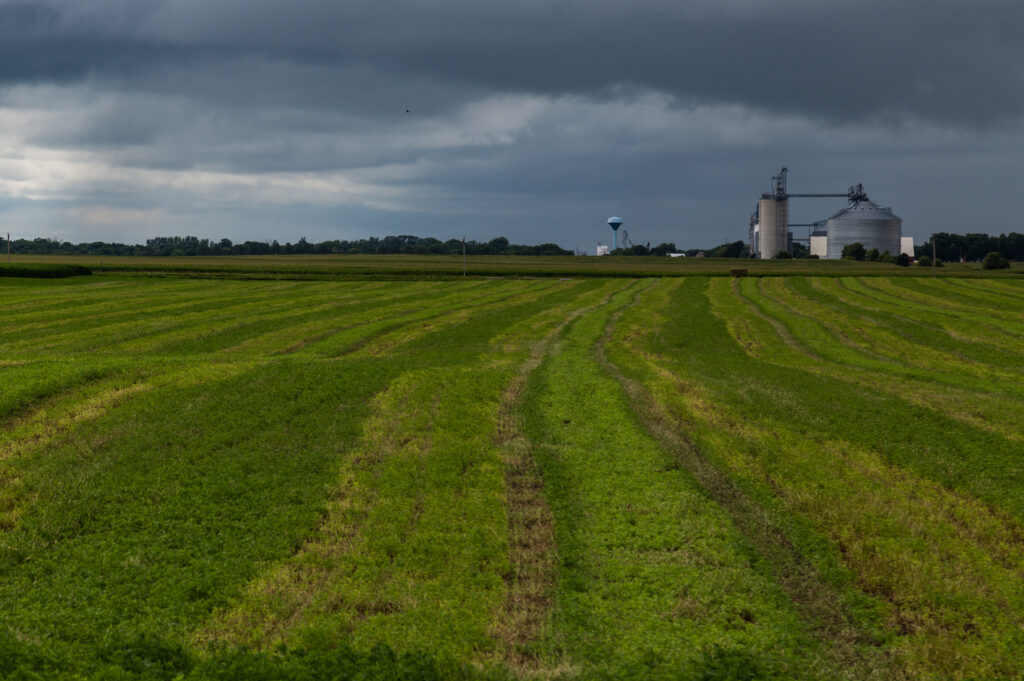
Secretary of Agriculture Brooke Rollins announced Monday evening the launch of the National Farm Security Action Plan, a sweeping new initiative by the U.S. Department of Agriculture (USDA) designed to fortify the nation’s agricultural infrastructure, crack down on foreign threats, and realign food policy with President Donald Trump’s “America First” agenda.
Speaking during a virtual pen-and-pad briefing ahead of a Tuesday press conference, Rollins outlined seven core action pillars of the plan, ranging from securing farmland and domestic supply chains to eliminating fraud in the federal nutrition safety net.
“This is about protecting the foundation of American agriculture — our land, our farmers, and our food,” Rollins said. “The USDA is committed to rooting out foreign influence, criminal abuse, and vulnerabilities across the entire system.”
1. Securing American Farmland
Rollins began with the plan’s top priority: protecting U.S. farmland from foreign adversaries. She highlighted the growing concern over land ownership by foreign nationals — especially Chinese entities — noting that over 265,000 acres of U.S. farmland are currently owned by Chinese interests, often near military installations.
2. Strengthening Agricultural Supply Chains
Rollins said the U.S. agriculture sector is at a disadvantage due to its reliance on foreign-produced inputs and infrastructure, including shipping, fertilizers, and processing components.
“The second pillar; we are enhancing the resilience of the agricultural supply chain. American agriculture is currently at a disadvantage on the world stage because the production of key ag-inputs and the transportation of American ag-commodities around the world rely on components produced in other countries, including some of our foreign adversaries.”
3. Fighting Fraud and Foreign Exploitation in SNAP
The USDA’s Supplemental Nutrition Assistance Program (SNAP) — the largest program under its purview — has become a target for fraud by transnational gangs, according to Rollins.
She detailed ongoing schemes involving cloned point-of-sale devices and card skimming, noting that stolen benefits are funding criminal enterprises both domestic and abroad.
“Law enforcement has identified a troubling trend of transnational criminal organizations stealing from the poor and the American taxpayer by cloning point of sale devices and card skimming. To address this vulnerability, USDA is actively ensuring no funds across the department’s sixteen nutrition programs are being used to fund activities related to terrorism or criminal activity. In addition, the department will disqualify authorized retailers that are complicit in SNAP fraud, or otherwise demonstrate a lack of responsible business behavior to transact purchases made with SNAP.”
4. Enhancing Research Security and Preventing IP Theft
Rollins also raised concerns over foreign interference in agricultural research, warning of intellectual property theft and agroterrorism targeting American institutions.
“To address this risk, USDA is instituting a new process to ensure that all research funded by USDA provides value to American farmers, ranchers, producers, and foresters,” Rollins explained.
5. Aligning USDA Policy with ‘America First’ Agenda
Rollins said the agency is reviewing all USDA policies to ensure they no longer subsidize or support adversarial countries.
“USDA programs have a history of supporting other countries, and adversarial interests, including foreign adversaries seeking research and development funding,” Rollins added. “Recent USDA policy allowed companies in foreign countries, even those from countries of concern, to be placed in the bio-preferred program catalog for mandatory federal purchasing and voluntary labeling initiatives. Those countries include, China, North Korea, Iran, and Russia.”
6. Safeguarding Plant and Animal Health
With growing concern over agricultural biosecurity threats — including invasive species, livestock diseases, and bioterrorism — Rollins announced increased collaboration with DARPA and other federal agencies.
“Unintentional or intentional, agricultural biosecurity threats such as invasive species, foreign animal diseases, and pathogens pose a serious risk to the resilience of American agriculture. To address this threat, USDA is partnering with the Defense Advanced Research Projects Agency or DARPA, and other federal research agencies to ensure ag-products funded by DARPA promote military readiness, protect U.S. plants and animals on farms, and enhance agricultural security.”
7. Defending Agricultural Infrastructure from Cyber and Physical Attacks
Finally, Rollins emphasized the need to protect agricultural infrastructure — including grain elevators, meat processing plants, and transportation networks — from cyberattacks and sabotage.
The rollout of the National Farm Security Action Plan follows months of heightened scrutiny over China’s growing footprint in U.S. agriculture. As Breitbart News reported in February, the Trump administration has been exploring ways to restrict foreign ownership of American farmland — a concern increasingly shared by lawmakers across both parties.
Rollins reaffirmed the administration’s commitment to stopping the trend:
“America’s food should be grown on American soil, by Americans — not controlled by those who wish us harm.”
“We’re putting American farmers and families first again,” she concluded. “Because the strength of our agriculture is the strength of our nation.”
READ NEXT: One Congressman is Standing Up to China, Moves to Block Farmland Purchases














This was beautiful Admin. Thank you for your reflections.
Nice rundown — clear and direct. Quick question: how will the plan balance national security checks on foreign land ownership with preventing harm to legitimate foreign investment and trade? Also, any details on timelines or funding for strengthening supply chains would help.