
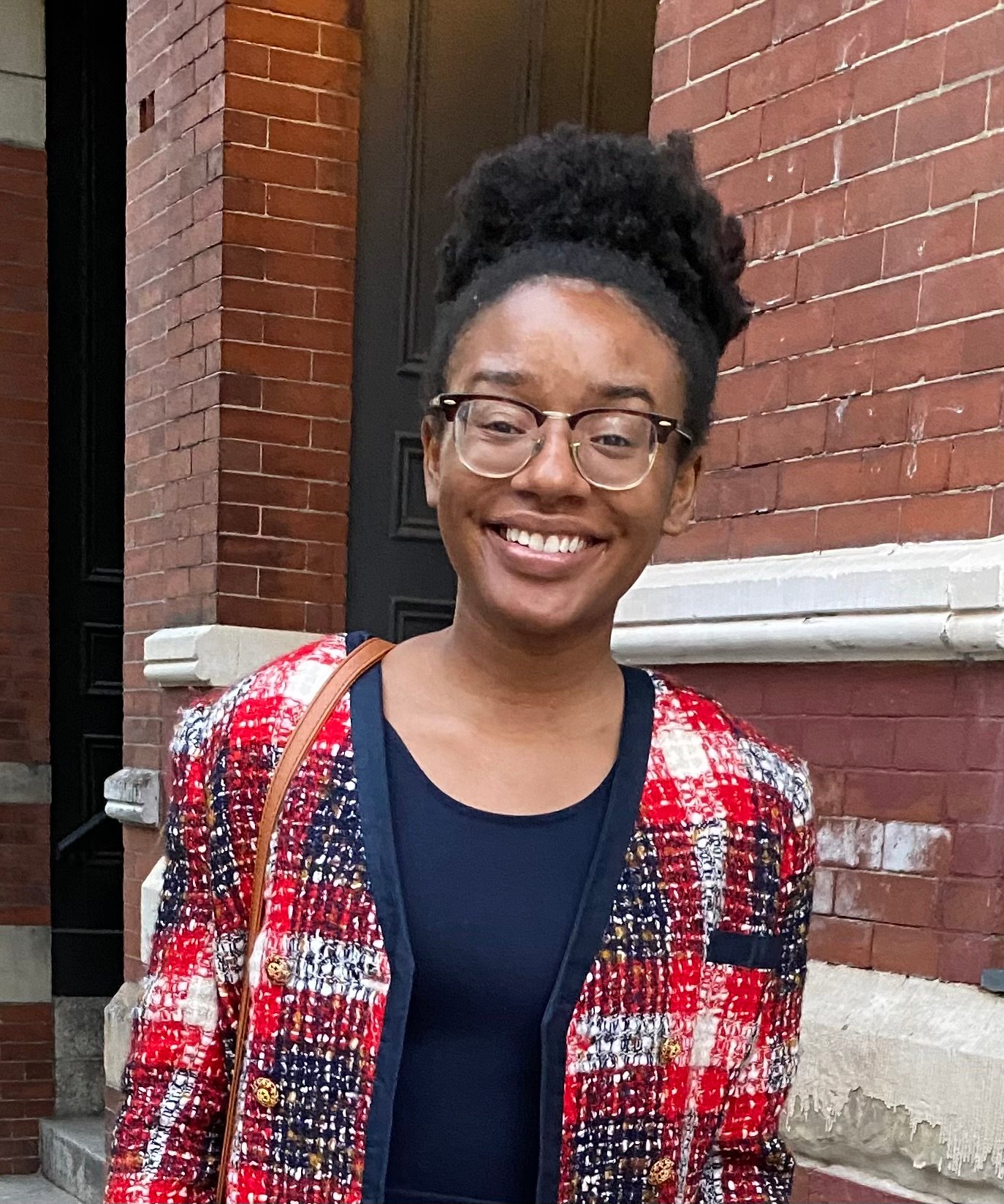
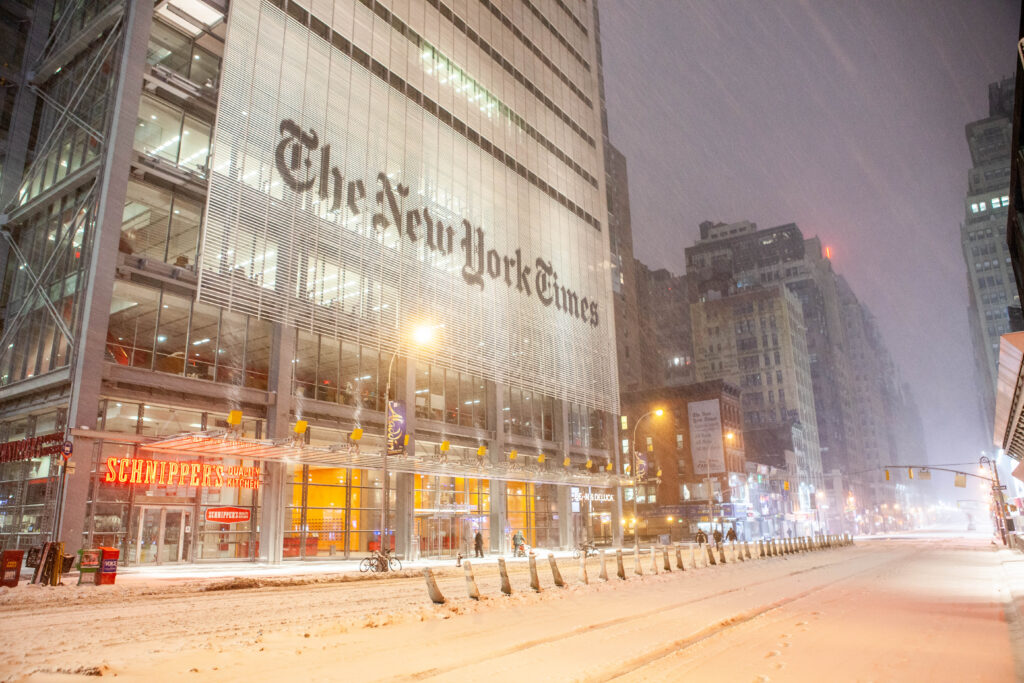
New York Times journalist and 1619 Project creator Nikole Hannah-Jones argued that paying reparations for slavery would require the United States to acknowledge that its entire history constitutes a crime, insisting such an admission is one of the primary reasons the issue remains politically contentious.
Speaking in an interview with The Meteor, Hannah-Jones discussed reparations, American history, and what she characterizes as the nation’s continued reluctance to fully confront the legacy of slavery.
“Paying reparations is an admission of the crime,” Hannah-Jones said. “But it’s not an admission of the crime of a handful of bad apples or a few years of bad policy. It is the crime of the entire existence of the United States.”
According to Hannah-Jones, much of the political resistance to reparations stems from an unwillingness to accept that slavery was foundational to the nation’s development rather than an isolated chapter in its history.
She pointed to recent cultural debates over Juneteenth, critical race theory, the teaching of American history, and her own 1619 Project as evidence that many Americans remain uncomfortable confronting the country’s past.
Hannah-Jones also argued that America’s historical legacy is physically embedded throughout the nation’s public spaces, making it impossible to separate the country’s achievements from its history of slavery.
“And so you can have reconciliation when you don’t have to look every day at the people that you visited these crimes upon. My God. But we’re right here in the country that did this to our ancestors,” she said.
She continued by noting that slavery predated the nation’s founding and suggested its legacy is reflected in countless monuments and memorials across the country.
“Slavery predates the founding of our country by 150 years. You could never knock down all the statues to enslavers, or you have to remove all the monuments on the Mall in Washington,” Hannah-Jones said.
The comments are likely to reignite debate surrounding Hannah-Jones and the 1619 Project.
Released by The New York Times Magazine in 2019, the project sought to reframe American history by arguing that the arrival of the first enslaved Africans in Virginia in 1619 should be viewed as the nation’s true founding. While supporters praised the project for elevating slavery’s role in American history, it also faced significant criticism from historians who challenged several of its claims.
One of the project’s most disputed assertions—that preserving slavery was a primary motivation behind the American Revolution—was later revised after significant backlash from historians. The New York Times altered language on its website without issuing a formal editor’s note, fueling additional criticism over the project’s historical accuracy and editorial process.
Hannah-Jones’ latest comments reflect a worldview that portrays the United States as fundamentally illegitimate because of slavery, despite its global practice. Many critics take issue with her premise, and contend that describing the country’s “entire existence” as criminal discounts the nation’s founding ideals, constitutional development, abolition of slavery, Civil War sacrifices, and subsequent civil rights progress.
READ NEXT: 1619 Project Author Attacks Youngkin’s Curriculum Proposals















I guess in the 1400 years of Islam, all the nations they conquered would be illegitimate. After all, Islam were the primary global slave traders. Plus most of Africa, the old Roman Empire, and the Middle East was trading in slaves for thousands of years. Even the indigenous people of Norh America had slaves. I guess the whole world is illegitimate.
Times is definitely in the toilet. Who hires anyone in the USA who hates the country? Times it seems! What a piece of trash they have become.
If this is the case ( slavery making the U.S. an ‘illegal’ nation ), most of the nations on this earth would have to be considered to be in the same circumstances.
And MANY Muslim nations have that problem EVEN TODAY since most of them STILL have slavery in one form or another.
Many African nations still have that problem too.
Almost everyone on earth has ancestors who were enslaved to one group or another at some time in history.
I have to wonder why anyone would think that I, who NEVER owned a slave, should pay ‘reparations’ to someone who never was a slave. No one in my family’s history has ever been a slave owner.
Three novel ideas, first she moves to a more wonderful country, two the democrat party acknowledges its history of being involved in the slave trade, the KKK and every other racial issue! Ending slavery was done by many people who fought to ensure that it ended, yet most seem to forget or refuse to remember that-many white people died fighting to end it! Three, the media actually becomes involved in telling the truth about that history! Fat chance of any of these ideas being followed through!
And are we expected to care what this blithering idiot thinks?
The U.S. is a ‘crime’?
This person’s thought processes are a crime!
If she doesn’t like it here, there are flights out of the U.S. many time a day.
Don’t let the door …. !