Photographer’s nod to controversial 1963 portrait fuels speculation.
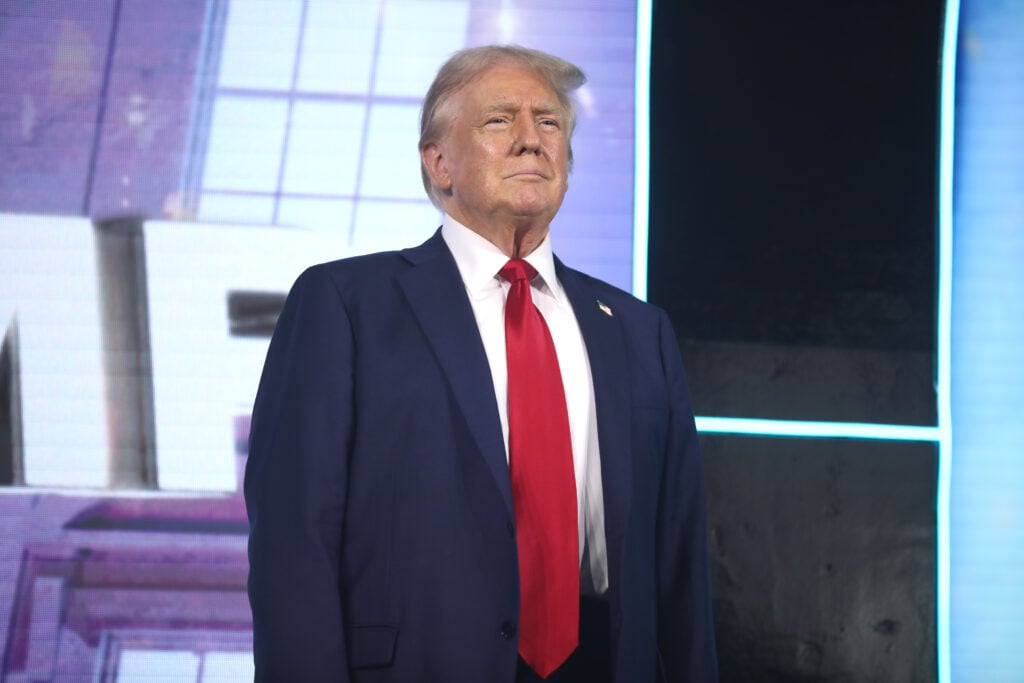
WASHINGTON — Time magazine is facing backlash over its latest cover photo of President Donald Trump, after online critics and media outlets pointed out a visual similarity to a portrait the magazine used 60 years ago featuring convicted Nazi industrialist Alfried Krupp.
The image, shot by photographer Stephen Voss, shows Trump looming over the Resolute Desk in the Oval Office, dramatically lit from below. According to a report by The Daily Beast, the composition bears a striking resemblance to a 1963 photo of Krupp taken by the Jewish photographer Arnold Newman — a photograph widely studied for its chilling and deliberate framing of a man convicted of facilitating some of history’s most heinous crimes.
The Historical Background
Alfried Krupp von Bohlen und Halbach inherited control of the Krupp industrial empire from his father, Gustav Krupp, who had supported Adolf Hitler and helped finance the Nazis’ rise to power. Under Alfried’s leadership during World War II, Krupp factories supplied the Third Reich with armaments and heavy machinery vital to its war efforts, including tanks, submarines, and artillery.

After Germany’s defeat, Krupp was tried by the U.S. Military Tribunal in the Nuremberg Krupp Trial (officially The United States of America vs. Alfried Krupp, et al.), which took place from 1947 to 1948.
He was convicted primarily for:
- Exploitation of Forced Labor: Krupp industries used 100,000 slave laborers and prisoners of war under brutal conditions. Many of these laborers were taken from occupied countries and concentration camps, forced to work long hours in unsafe factories.

- Plundering Occupied Territories: Krupp was found guilty of seizing industrial plants and raw materials from conquered nations to boost Nazi Germany’s armament production.

- Participation in Crimes Against Humanity: The tribunal held that Krupp’s active role in maintaining and expanding his war production empire made him complicit in Nazi crimes.

He was sentenced to 12 years in prison and had his property confiscated.
Newman’s portrait of Krupp is iconic in photographic circles. In the image, Krupp is seated at a desk under harsh lighting, his posture and setting portraying him as both powerful and ominous, reminiscent of a devil or a fiendish creature. Critics argue that Time’s Trump cover bears such a resemblance to Newman’s portrait that it cannot be a coincidence.
Photographer Reacts on Social Media
Voss, the photographer behind the Trump image, has not publicly commented on the comparison. However, he reportedly “liked” social media posts highlighting the resemblance — a move many interpret as a subtle acknowledgment of influence.
A spokesperson for Time magazine rejected the claims outright, telling The Daily Beast that “any suggestion of an intentional reference is completely untrue.”
Why This Matters
The controversy cuts across political and cultural lines:
- Visual symbolism: Referencing imagery linked to Nazi figures — even inadvertently — risks crossing ethical and historical boundaries.
- Editorial credibility: Time, known for its iconic covers, faces questions about whether such visual choices are neutral, intentional, or ideologically driven.
- Trump’s image control: As a media-savvy political figure, Trump is acutely aware of how visuals shape perception. Whether intentional or not, the cover’s tone could affect public interpretation.
What’s Still Unknown
- Was the similarity intentional? No direct evidence confirms that Voss or Time deliberately modeled the image after Newman’s Krupp portrait.
- Does intent matter? Critics argue that even unintentional parallels can carry meaning, especially given the historical weight of the reference.
- Will this have a lasting impact? It’s unclear, though likely, that the controversy will become another political flashpoint in media criticism.
A Larger Media Question
This episode adds fuel to a long-running debate over how the media portrays political leaders — especially those it opposes editorially. It also highlights the power images have in shaping public perception.
In an era when symbolism is parsed as carefully as language, even a magazine cover can carry profound consequences.
READ NEXT: Washington’s Immigration War May Finally End