Good morning.
The Supreme Court handed the Trump administration another major immigration victory, a federal judge blocked the White House’s latest election order ahead of the midterms, and the Justice Department is stepping into a closely watched legal battle over race-based reparations in Illinois.
Supreme Court Backs Trump on Border Asylum Policy
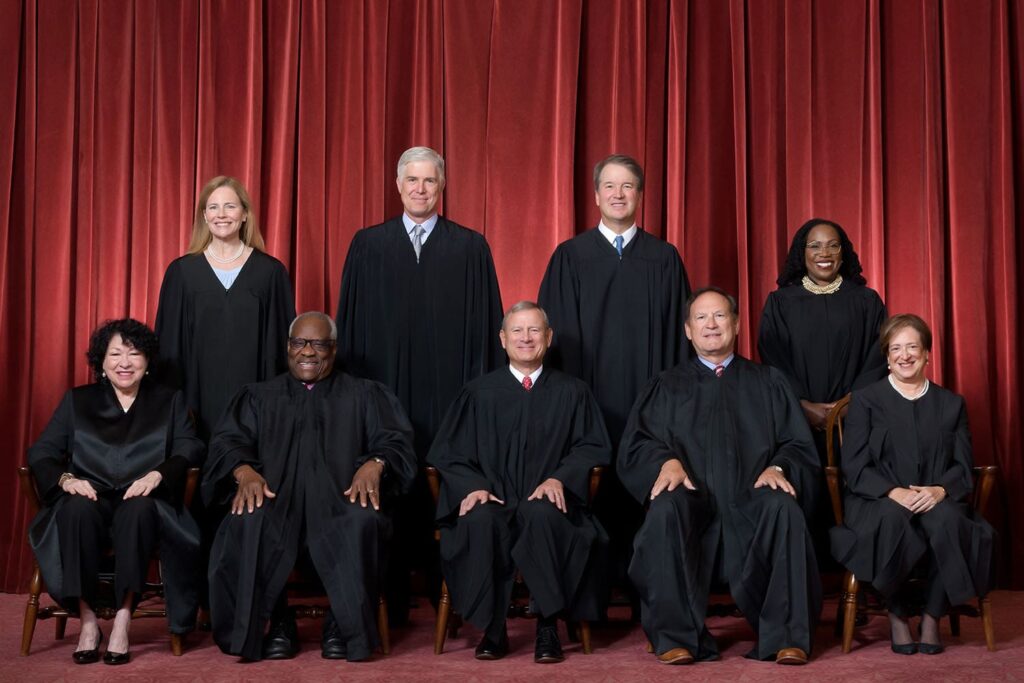
The Supreme Court ruled 6-3 that migrants who have not physically entered the United States are not legally considered to have “arrived” for purposes of claiming asylum, handing the Trump administration a significant win on border enforcement.
The decision clears the way for the administration to revive the practice known as “metering,” which allows border officials to limit or temporarily turn away asylum applicants at ports of entry before they step onto American soil.
Writing for the majority, Justice Samuel Alito concluded that immigration law does not treat someone standing in Mexico as having entered the United States simply because they are attempting to cross.
The ruling overturns a lower court decision that found the practice unlawful and gives the administration broad discretion to reinstate the policy during future migration surges.
The court’s liberal justices vehemently disagreed. Justice Sonia Sotomayor argued Congress intended asylum claims to be processed when migrants reach official ports of entry, insisting that the decision could leave vulnerable asylum-seekers stranded in dangerous conditions outside the country. Justice Ketanji Brown Jackson also dissented, arguing the Court should not have decided the case because the metering policy is not currently in effect.
The decision adds to a growing list of immigration victories for the Trump administration as several other border policies continue moving through the federal courts.
Federal Judge Blocks Trump Mail-In Voting Order
Just hours after the Supreme Court’s immigration ruling, another federal court dealt the administration a setback on election policy.
A federal judge in Boston temporarily blocked President Trump’s executive order tightening federal oversight of mail-in voting, ruling that the White House likely exceeded its constitutional authority.
The order, signed earlier this year, would have required the Department of Homeland Security to compile lists of confirmed U.S. citizens eligible to vote, directed the Postal Service to restrict delivery of mail ballots based on those records, and instructed the Justice Department to prioritize investigations involving alleged voting irregularities.
Twenty-three Democratic-led states and the District of Columbia challenged the directive, arguing that the Constitution gives states primary responsibility for administering elections. U.S. District Judge Indira Talwani agreed that the plaintiffs were likely to succeed and halted implementation while the case proceeds.
The ruling prevents the administration from enforcing the order before this year’s midterm elections, ensuring existing state election procedures remain in place while the broader legal challenge continues.
DOJ Joins Challenge to Evanston Reparations Program
The Justice Department is joining a constitutional challenge to Evanston, Illinois’ reparations program, adding federal weight to a lawsuit already brought by Judicial Watch.
The program provides $25,000 housing-related payments to eligible black residents and their descendants who were affected by discriminatory housing policies between 1919 and 1969.
In its proposed complaint, the Justice Department argues the program violates the Equal Protection Clause of the Fourteenth Amendment and the Fair Housing Act by limiting eligibility based on race.
Judicial Watch, which filed the lawsuit in 2024 on behalf of white plaintiffs, welcomed the federal government’s intervention after a judge previously ruled the plaintiffs have standing to pursue their constitutional claims.
Evanston officials maintain the program is a lawful effort to remedy documented historical discrimination and continue to defend it in court.
With the Justice Department now formally entering the case, the legal battle is poised to become a highest-profile test of race-conscious government reparations programs and could carry implications well beyond Illinois.
READ NEXT: House Democrats Reintroduce Reparations Bill