A covert telecom network was dismantled just miles from the United Nations. A jury has reached a verdict in the attempted assassination of Donald Trump. And a wave of Russian provocations is pushing NATO to the brink. All of this is unfolding in the shadow of global diplomacy in New York — with serious implications for national security, political stability, and the international balance of power.
Inside the Shadows of the U.N.: Feds Dismantle Massive Covert SIM Network Near General Assembly
Just miles from the U.N. General Assembly and under the noses of the world’s most powerful diplomats, the U.S. Secret Service quietly dismantled one of the most sophisticated underground telecom networks ever discovered on American soil.
The operation — involving over 300 SIM servers and more than 100,000 encrypted SIM cards — was capable of disrupting cellular infrastructure, disabling 911 systems, and coordinating secure communications for foreign intelligence or criminal enterprises. Officials confirmed the system had the capacity to send nationwide SMS floods in under 12 minutes and potentially cripple emergency services.
Federal investigators began tracking the operation months ago. What they’ve uncovered since is staggering: the infrastructure was embedded deep within the New York tri-state area, putting it squarely within striking distance of U.N. headquarters — just as global leaders began to arrive.
Authorities have not disclosed the national origin or affiliations of the network’s operators, but one thing is clear: the system wasn’t designed for prank calls or spam texts. It was an open backdoor into America’s digital nervous system.
“The potential for disruption… cannot be overstated,” said U.S. Secret Service Director Sean Curran.
The timing, sophistication, and silence around this story raise deeper questions.
How long was this system operational? Who funded it? And was this a dry run — or a failed attempt at something far more devastating?
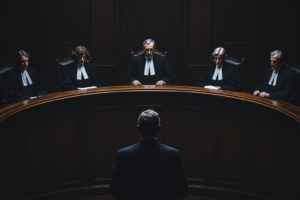
Guilty: Trump Assassination Attempt Ends With Shocking Courtroom Outburst
In Florida, Ryan Routh, the man accused of attempting to assassinate Donald Trump during his campaign last year, has been found guilty on all charges — including attempted assassination of a major presidential candidate and assault on a federal officer.
The verdict was read by Judge Aileen Cannon — herself the subject of controversy due to defense demands for recusal, which were denied. Moments after the decision, Routh attempted to stab himself in the neck with a pen, forcing multiple marshals to restrain and remove him from the courtroom.
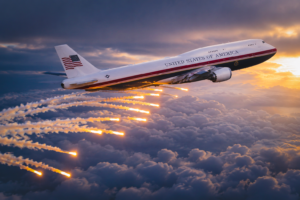
Prosecutors revealed disturbing evidence during the trial: Routh had staked out Trump’s golf course with a rifle, surveilled his aircraft, and sought anti-aircraft weapons in the weeks leading up to the attempt. A recovered letter confirmed his intent to kill Trump and expressed regret that he failed.
The trial, which drew limited mainstream coverage, is already sparking renewed debate over political violence and whether certain threats have been systematically downplayed.
Routh now faces life in federal prison.
Trump and Zelensky Stand United — As Russia Pushes NATO to the Brink
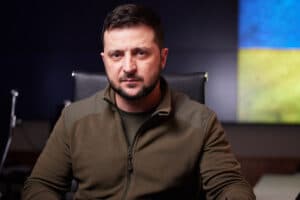
At the U.N., President Trump met privately with Ukrainian President Volodymyr Zelensky following a fiery General Assembly session. After months of strategic ambiguity, Trump emerged with one of his clearest statements to date.
“Ukraine can WIN all of its territory back — with NATO and Europe’s support.”
He added that NATO should be prepared to shoot down Russian aircraft violating allied airspace.
In just the last week:
- Estonia, Poland, Norway, and Sweden all reported Russian airspace violations.
- Denmark suffered a coordinated drone incursion, described by its prime minister as “the most serious attack on Danish infrastructure to date.”
- Lithuania passed a law authorizing its military to shoot down unauthorized drones immediately, without needing to assess intent.
Behind closed doors, frustration with Europe’s lingering energy dependence on Russia continues to simmer — despite public unity. Trump made a point to call out nations like Hungary and Slovakia, which still import large quantities of Russian oil.
READ NEXT: Secret Service Dismantles Covert Telecom Network Near UN Assembly Site