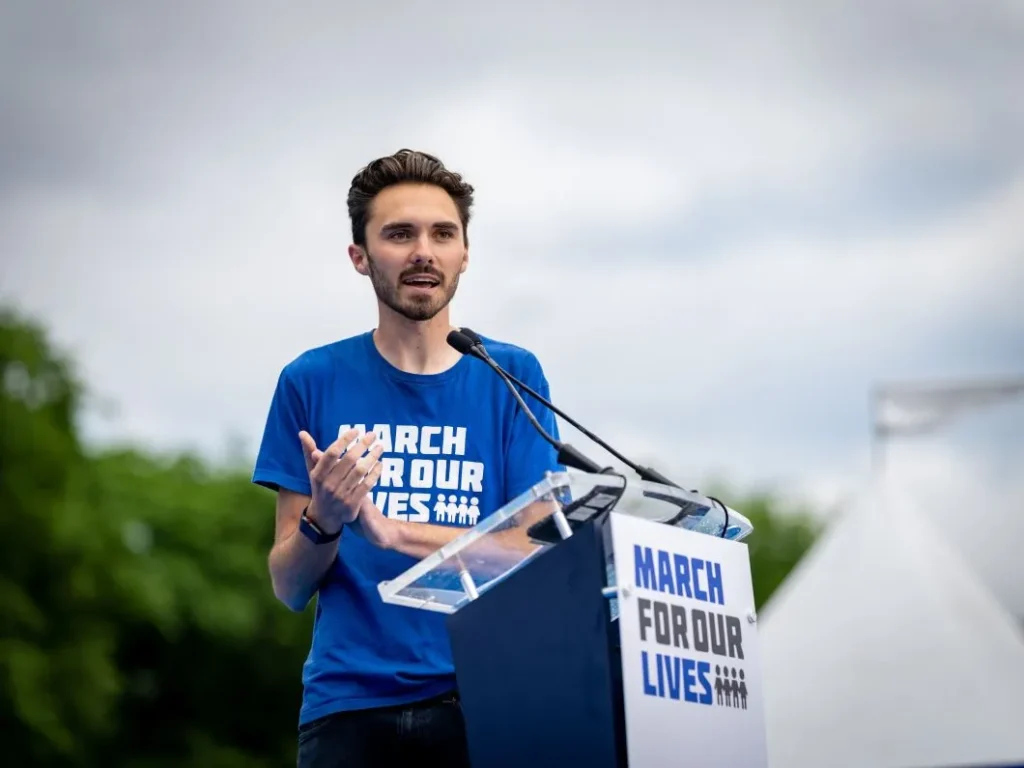
The Democratic National Committee is facing fresh internal strife after its vice chair, David Hogg, ignited a political firestorm by pledging to support primary challenges against “asleep-at-the-wheel” Democratic incumbents. His remarks, made during a series of Sunday political talk show appearances, have shaken party leadership and sparked widespread backlash among senior officials who view his comments as a direct threat to party unity.
Hogg, a prominent activist-turned-DNC official, didn’t mince words as he promised to root out “complacent” Democrats in 2026 — a warning that has been interpreted as a declaration of intra-party warfare. The fallout was immediate. Sources inside the DNC say his vow to back primary challengers has infuriated party veterans and put the organization’s long-standing (and already fragile) neutrality in primaries at risk.
“It’s a middle finger to the people who worked to rebuild trust in the DNC after 2016,” said one senior Democratic official, speaking anonymously. “We’ve got enough f**king problems right now. And now an elected officer of the DNC is creating new ones.”
The internal pushback has been swift and fierce. DNC Chair Ken Martin is expected to unveil a new policy this week that would mandate neutrality from all DNC officers in all primary races, expanding on the current rule that applies only to presidential contests. The policy aims to prevent future disruptions like Hogg’s initiative, which critics claim is undermining the party’s credibility and complicating efforts to present a unified front against Donald Trump.
Behind closed doors, some officials are reportedly considering whether Hogg should be asked to resign if he refuses to back down. “He either walks this back or walks away,” another official said.
Hogg, who rose to national prominence as a survivor of the 2018 Parkland school shooting and has since become a vocal progressive activist, has long positioned himself as a disruptor. His call to hold Democratic incumbents accountable may resonate with younger, more activist wings of the party — but for DNC leadership already grappling with an identity crisis, Hogg’s insurgent stance is seen as a liability.
The timing couldn’t be worse for Democrats. With no clear message or face of the party, the internal skirmish reflects a broader struggle over the soul and strategy of the Democratic Party, revealing a party in disarray.
Whether Hogg stands firm or folds under pressure could define not only his future in party leadership, but the tone of Democratic politics heading into a particularly high-stakes election cycle.
READ NEXT: David Hogg’s DNC Election Reflects Democrats’ Masculinity Problem