

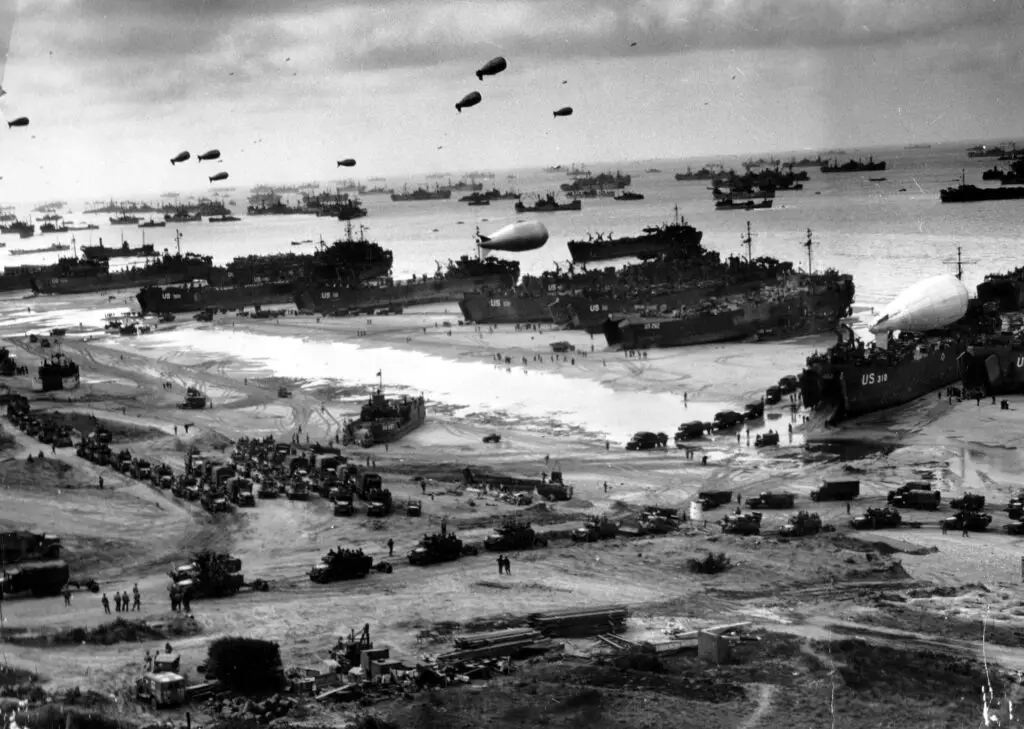
A generation answered the call — these stories prove why it mattered…
Today marks the 81st anniversary of D-Day. Despite being the most famous U.S. military operation of the Second World War, many aspects of history’s greatest amphibious invasion remain shrouded in mystery.
While World War II buffs can recite the names of the five landing sites — Utah, Omaha, Gold, Juno, and Sword — other significant details have been largely overlooked since the day 150,000 Allied troops stormed the beaches of Normandy in what Gen. Dwight D. Eisenhower called “the Great Crusade.”
Join us as we remember crucial facts about a date that changed our world, in honor of the men who served and the last surviving veterans before they fade into history.
A single meteorological prediction upends everything
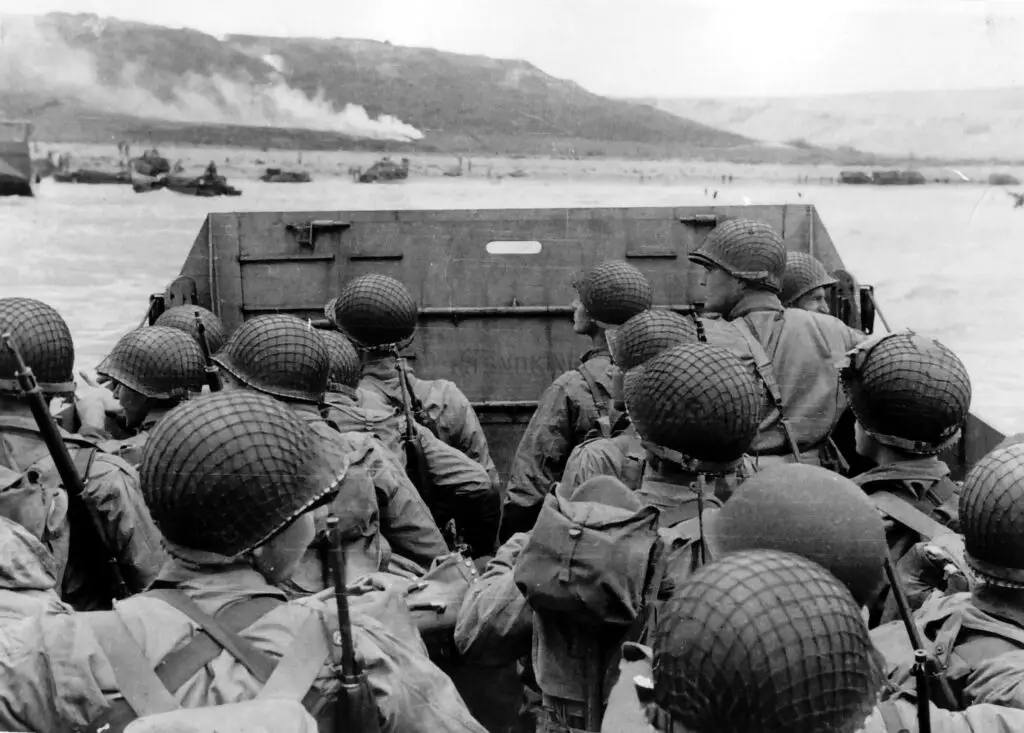
June 5, 1944, had originally been slated as the date for the Allied invasion. But stormy conditions across the English Channel forced planners to consider postponing Operation Overlord for two weeks until the next window with suitable tides and moonlight.
German commanders, confident the bad weather would continue, assumed no landing was imminent. However, British Capt. James Stagg, Gen. Dwight D. Eisenhower’s chief meteorologist, correctly forecasted a brief break in the storm — just enough time to launch the invasion. Eisenhower accepted the narrow window. The Germans did not, and the element of surprise was total.
Many top German officers, including Field Marshal Erwin Rommel, were away from their posts. Rommel wasn’t even in France — he had returned to Germany to celebrate his wife’s birthday. On June 6, he spent the day racing back to Normandy in his Mercedes-Benz staff car, unable to coordinate either of the two panzer divisions stationed nearby for a counterattack during the critical first 24 hours of the invasion.
The Atlantic Wall: fierce looking — but mostly for show
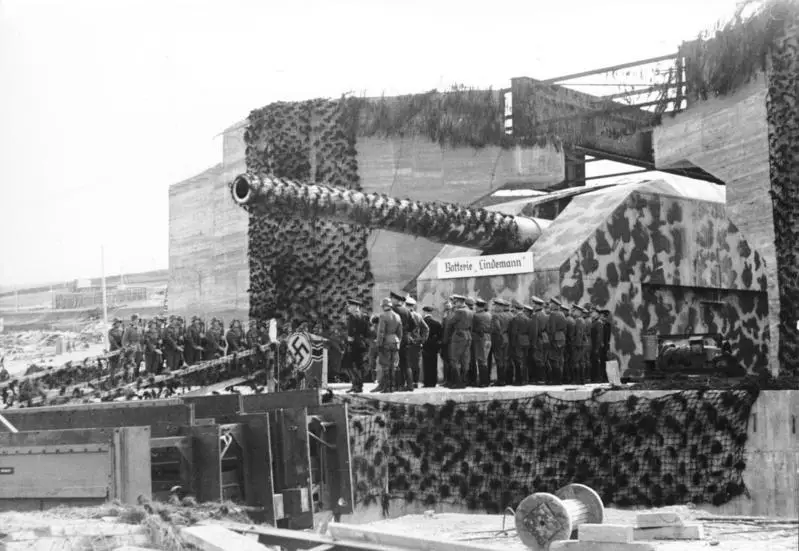
On paper, the Wehrmacht had amassed a formidable force to repel an Allied invasion of Western Europe: 58 divisions, or roughly 1.5 million men.
However, hundreds of thousands were second-rate conscripts, with most of the best remaining troops engaged in a grinding battle of attrition on the Eastern Front. Moreover, defenses outside the Pas de Calais and port cities like Le Havre and Cherbourg remained woefully inadequate.
Rommel expressed his dismay at the army’s lack of preparations after Hitler appointed him to inspect the so-called Atlantic Wall in December 1943. The 10 panzer divisions in northern France represented the biggest threat to Operation Overlord, two of which were stationed in Normandy. Unlike his superior, Field Marshal Gerd von Rundstedt, Rommel had experienced the devastating effects of Allied air supremacy in North Africa and knew his only hope was to strike a decisive blow while the enemy was at its weakest — on the beaches.
However, Hitler ordered a compromise between Rundstedt, who wanted a large force in reserve to strike once the Allies had landed, and Rommel, who believed strategically dispersing the panzers along the coast was the only way to mount an immediate armored counterattack.
In the end, neither commander was satisfied. Only Hitler could authorize the release of the armored divisions. Yet the German leader slept until midday on June 6, after a long night reminiscing with members of his inner circle at the Berghof. While commanders in Normandy pleaded for the release of precious armor in the cloudy early morning hours, Oberkommando der Wehrmacht Chief of Operations Gen. Alfred Jodl refused to wake Hitler, unwilling to incur the wrath of an exhausted führer.
German tanks reached the beaches on D-Day
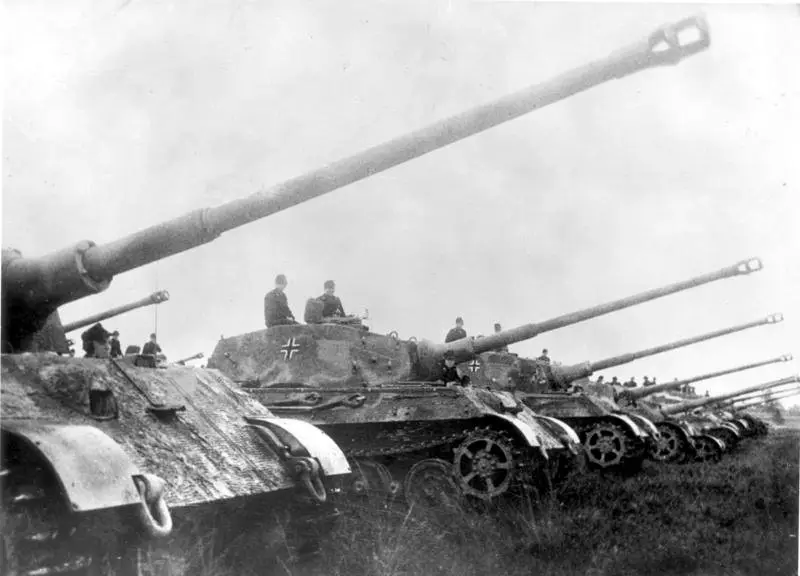
The 21st Panzer Division, under the command of Gen. Edgar Feuchtinger, was initially held in reserve 10 miles inland near Caen and was not permitted to move without Hitler’s direct order. When the division was finally allowed to counterattack, it was already late in the day. As the weather improved, tanks and auxiliary vehicles became easy prey for Allied ground-attack aircraft. Nevertheless, they launched a determined assault and managed to advance through the gap between Gold and Sword beaches, reaching the coast near the village of Luc-sur-Mer by the evening of June 6.
However, their position was precarious and isolated, with roughly 100 tanks facing the prospect of overwhelming Allied air and naval superiority. As a result, the 21st Panzer Division chose to withdraw under cover of darkness, failing to achieve a significant disruption of the Allied beachheads. The division’s counterattack, though notable for its penetration, ultimately did not alter the overall success of the D-Day landings.
A full-scale nighttime attack on the flanks of Gold or Sword beaches could have resulted in thousands of Allied casualties, but it would have led to the annihilation of the German Kampfgruppe. The force required to repel the invasion at that point — several hundred tanks with thousands of support vehicles, 88 mm anti-tank artillery, and panzergrenadiers — was simply not available.
Was the greatest war ever fought… already a foregone conclusion?
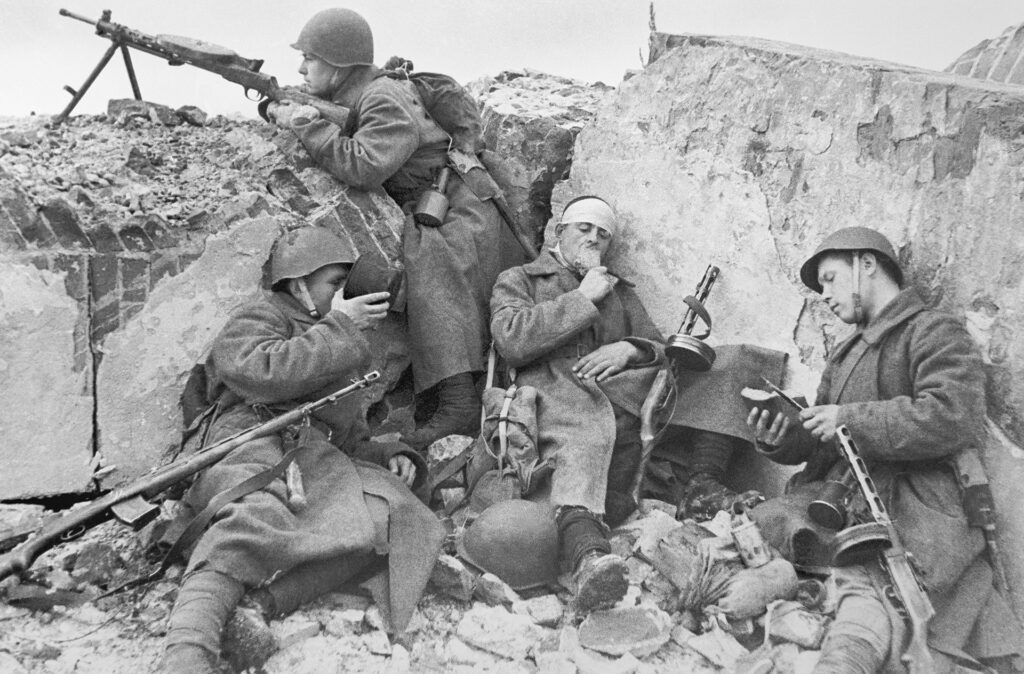
While D-Day was a crucial turning point in World War II, it was not the definitive moment that decided the outcome of the war. The greatest cataclysm in history was already being shaped by a series of pivotal events and battles across multiple fronts.
By June 6, 1944, the Soviet Union had already inflicted catastrophic defeats on the German army on the Eastern Front. The Wehrmacht’s failure to capture Moscow during Operation Typhoon in 1941 and the psychological turning point — the Battle of Stalingrad (1942–43) — were decisive blows from which Hitler never regained the strategic initiative.
Despite a horrendous cost in men and materiel, the Allied strategic bombing campaign gradually wore down German’s ability to wage warfare on the ground. Major cities and industrial centers were systematically targeted, weakening Germany’s ability to sustain its war effort. In northern France, Anglo-American bombing killed 20,000 French civilians, but it severed rail and road links to the coast, making a coordinated counteroffensive against the beaches exponentially more difficult.
The Western Allies had already achieved significant victories in North Africa, culminating in the surrender of 250,000 Axis troops in Tunisia in May 1943 — a material loss even greater than that at Stalingrad. The Anglo-Americans invaded the Italian Peninsula in September 1943. Though they were nearly driven into the sea, the campaign diverted German resources and attention from the Eastern Front, allowing Soviet offensives to continue one after another along a 1,500-mile front. Despite millions of Soviet casualties, these advances were made possible by the USSR’s vast manpower reserves and the delivery of 400,000 American military vehicles.
The combined pressures from all fronts made it increasingly difficult for Germany to continue fighting effectively — and nearly impossible to launch large-scale offensive operations. The war in Europe was still fiercely contested after D-Day, but the successful landings were crucial in opening the final chapter of the continent’s bloodiest conflict.
Without D-Day, the world we know might not exist
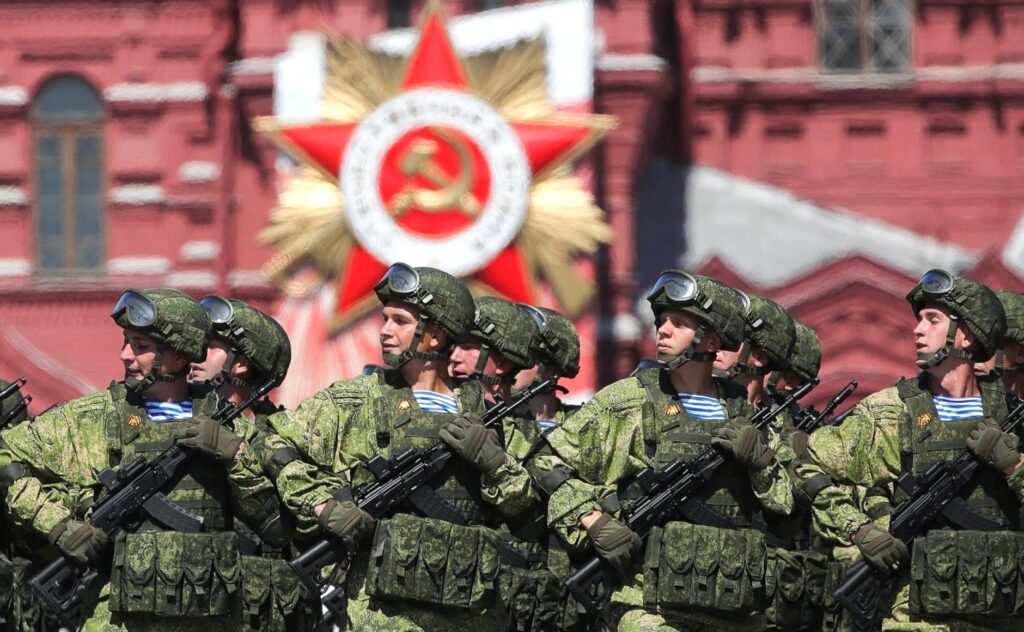
If D-Day had failed, it would have carried significant implications for the outcome of World War II. While it is unlikely that failure would have led to a German victory — or even peace on favorable terms — it would have prolonged the war and delivered substantial setbacks to the Allies, particularly the Western democracies.
An abrupt end to Operation Overlord likely would have enabled a deeper Soviet advance into Central Europe, though at the cost of millions more Red Army casualties. This scenario would have placed the West at a strategic disadvantage at the outset of the Cold War. However, it is improbable that the Red Army could have reached France. The combined efforts of the Western Allies, along with logistical challenges and broader strategic considerations, would likely have prevented such an extensive Soviet occupation of Western Europe.
It is also possible that the United States would have used atomic bombs against Germany had the war continued into the summer of 1945. As in the Pacific Theater, the objective would have been to bring about as rapid an end as possible to a conflict that had already extinguished some 70-85 million lives.
READ NEXT: Trump Issues Tough New Decree To Secure The Nation


















I was there I saw Omaha Utah Juno Peagaus Bridge Caen
Then drove from Normandy to Verdun
Verdun is very eerie vs sunny Normandy then
Area needs Gun Range for fee shooting WW2 guns, Jeep, LCVP , tank rides
Utah had awesome bunkers too
MUST see for Vets & History buffs