


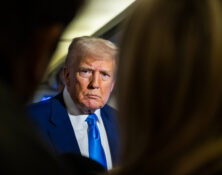

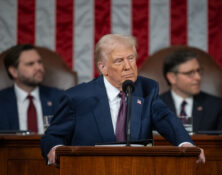

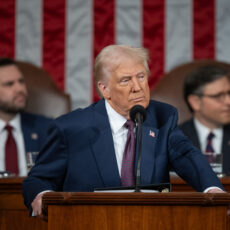
President Donald Trump revealed Thursday night that the United States is prepared to escalate its fight against powerful drug cartels.
In an interview with Fox News host Sean Hannity, Trump said the U.S. is “going to start now hitting land” in response to what he described as cartel domination of Mexico and a devastating toll from fentanyl and other illicit drugs flowing across the southern border.
“We are going to start now hitting land with regard to the cartels,” Trump said. “The cartels are running Mexico; it’s very sad to watch, to see what’s happening to that country. They’re killing 250,000–300,000 people in our country every single year. It’s horrible.”
JUST IN: President Trump says the United States will be conducting land strikes against the cartels.
— Collin Rugg (@CollinRugg) January 9, 2026
"We are gonna start now hitting land, with regard to the cartels. The cartels are running Mexico."
"It's very, very sad to watch and see what's happened to that country, but… pic.twitter.com/uWnw0nQ76r
The remarks point to a potential expansion of the administration’s counter-narcotics strategy, which has so far focused heavily on maritime operations aimed at stopping drug shipments before they reach U.S. soil. Moving “to land,” as Trump described it, would mark a more aggressive phase — one aligned with his longstanding view that the border crisis is fundamentally a national security threat.
Trump and his allies have repeatedly argued that drug cartels operate as paramilitary organizations, controlling territory, trafficking humans and narcotics, and destabilizing both Mexico and U.S. border communities. Republicans have increasingly framed fentanyl trafficking as a form of asymmetric warfare, citing its outsized impact on working-class Americans and veterans.
Critics warn that any U.S. military action targeting cartels inside Mexico could raise serious questions about sovereignty, congressional authorization, and regional stability. Some analysts argue such actions could provoke retaliation, increase displacement, or worsen migration pressures at the southern border.
Supporters counter that Mexico’s government has struggled — or refused — to dismantle cartel networks, leaving the U.S. with limited options to defend its own population. Trump has repeatedly argued that allowing cartel operations to continue unchecked amounts to a failure of leadership.
The president’s comments also arrive amid a broader debate over how drug-related deaths are measured and communicated. While Trump cited an annual death toll of “250,000–300,000,” public health data suggests a lower — but still historically severe — number. Preliminary Centers for Disease Control and Prevention data cited by the Associated Press estimate roughly 76,516 overdose deaths in the 12-month period ending in April 2025, a figure that represents a nearly 25% decline from the previous year.
Republicans note, however, that overdose statistics do not fully capture the broader damage of cartel activity, including crime, addiction, broken families, overwhelmed hospitals, and the long-term economic costs borne by communities nationwide.
The “hitting land” language is not entirely new. In November, Trump said the U.S. would “very soon” begin stopping suspected drug traffickers “by land,” following high-profile maritime seizures of suspected cartel-linked vessels.
In August, Trump signed a directive ordering the U.S. military to target drug cartels and other groups designated as Foreign Terrorist Organizations, a move praised by many conservatives as long overdue and criticized by others as an expansion of executive power.
READ NEXT: Trump Pursues Seven Figure Reimbursement From Office Of Longtime Foe












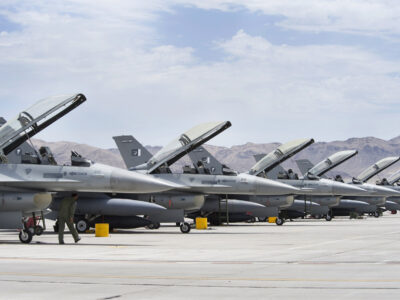


There is precedent (1917) for going into Mexico to hunt criminals.