

The position of the United States Secret Service (USSS) Director is not just a desk job—it’s a solemn, demanding role that requires a leader with an unwavering grip on composure, discernment and above all, a steadfast commitment to safeguarding the lives of the nation’s leaders. Sadly, recent events demonstrate that Acting Director Ronald Rowe may be spectacularly unfit for such a critical responsibility.
At the Trump assassination hearing, chaos erupts after Rep. Pat Fallon asks Secret Service Director Ronald Rowe about his appearing as a dignitary, rather than for security at a 9/11 memorial event pic.twitter.com/52EX8C46I5
— Tom Elliott (@tomselliott) December 5, 2024
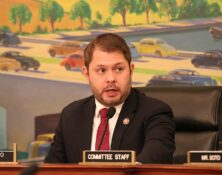
In what can only be described as an embarrassing total loss of control, Rowe recently found himself in a shouting match with Representative Pat Fallon (R-Texas). The altercation occurred during a congressional hearing focused on the attempted assassination of President Trump. Fallon had directed pointed questions about Rowe’s role on September 11 of this year, when he was seen prominently in a photo at Ground Zero alongside President Biden and President-elect Trump. Fallon—raising a valid concern—wanted to know why Rowe was in that particular spot, seemingly sidelining other Secret Service agents whose primary duty was ensuring the safety of the nation’s leaders. This isn’t a mere squabble over seating arrangements; it’s about adherence to protocol, especially when the stakes are sky-high.
Rowe, rather than addressing the question rationally, decided instead to invoke his involvement with the cleanup at Ground Zero—an honorable task, no doubt, but irrelevant to the question at hand. What we witnessed wasn’t the dignified response of a protector of the Republic; it was an attempt to hide behind the emotional weight of 9/11 to evade accountability. It wasn’t about protecting the memory of those lost that day—it was about shielding himself from scrutiny.
When pressed on whether he had compromised the security of both President Biden and President-elect Trump by placing himself in the spotlight, Rowe’s answer was anything but reassuring. Instead of a calm and reasoned explanation, we were met with vitriol and deflection—qualities completely unsuited to the man tasked with safeguarding the president of the United States. Fallon had every right to ask whether Rowe was armed or carrying a radio at the event—the basic essentials of any protective posture—but instead of clarity, we got hostility and accusations.
The role of the Secret Service is not about being in the limelight. It isn’t about ego or optics—it’s about duty, vigilance and the quiet heroism of those who operate in the shadows to protect the nation’s most important figures. By positioning himself prominently in that key location at the 9/11 memorial, Rowe not only undermined standard operating procedure, he also disrupted the delicate choreography of protection, one carefully crafted to guard against any potential threat. Standard protocol dictates that the special agent in charge of the president’s detail should be closest to him—the one most operationally prepared, trained and familiar with the president’s security needs. For Rowe to push that agent out of the way is more than hubris—it’s recklessness.
And it is no wonder that Fallon’s questions seemed to strike a nerve. This latest incident was no isolated flare-up; it forms part of a larger pattern of troubling decision-making. The attempted assassination of President Trump last summer still hangs over the Secret Service, an event that saw Rowe, then deputy director, drag his feet when it came to visiting the site and supporting the agents on the ground. It was a delay that spoke volumes about his priorities and his capability—or lack thereof—as a leader.
Rep. Fallon’s central question—a question that anyone concerned with the integrity of the agency must ask—is why, in moments of such gravity, did Rowe think it appropriate to make himself the focal point? Even if invited to the memorial as a dignitary, there was no operational justification for pushing himself into a protective role. Sources from within the Secret Service have expressed frustration, and it is easy to understand why. In an agency that prides itself on professionalism, Rowe’s actions are viewed as the epitome of self-serving behavior. His conduct has sown division within the ranks, a sign that he may lack both the humility and the respect necessary to lead an elite institution effectively.
The debacle during the congressional hearing makes one thing painfully clear: Rowe does not appear to have the temperament required for a role as demanding as director of the United States Secret Service. The agency’s core mission—to protect the President and other top officials without fanfare or distraction—is simply too vital to be entrusted to someone whose emotions so easily get the better of him. This mission cannot be compromised by a leader prone to angry outbursts or someone more interested in the optics of a photo-op than in the protocols designed to keep our nation’s leaders safe.
Ronald Rowe’s behavior makes it difficult to view him as fit for this critical post. The head of the Secret Service must embody the highest ideals of service: poise under pressure, impartiality and an unwavering dedication to the mission. There is no room for ego, and there is certainly no room for outbursts and theatrics. On every count, Ronald Rowe has proven himself wanting. And at a time when threats to national security are both real and immediate, the United States cannot afford a leader who lacks the discipline, the humility, and the judgment to do the job.
President Biden, President-elect Trump, and indeed the American people deserve better. The country needs someone at the helm of the Secret Service who prioritizes the mission over personal recognition, who understands that protecting the president is not a task one does for glory but a duty one fulfills for the love of country. Rowe’s actions—his anger, his deflections, his disregard for protocol—betray a lack of understanding of what the role demands. And that makes him not just unfit, but dangerous, for a position of such immense responsibility.
Sponsored by the John Milton Freedom Foundation, a nonprofit dedicated to helping independent journalists overcome formidable challenges in today’s media landscape and bring crucial stories to you.
READ NEXT: Huge Court Ruling Could Free TRILLIONS For Trump






Rowe is so full of hate you can see the venom when he speaks. Bureaucrats like him are exactly what is wrong in our government today. The hate clouds their judgement, their vision and their ability to be impartial and non partisan. He can’t answer without yelling and trying to intimidate because he knows the facts are against what he is spewing.
Trump should be extra careful with an asshat like Rowe in charge of his security people. This guy is unstable and so full of hate . Bureaucrats like him are destroying America. This trip to France and their unstable government situation seems like a dream scenario for the CIA, Secret Service and deep state to stop Trump. Extra caution is necessary. The secret service will know his planned appearances and routing to and from.
Get Don B in there Now