






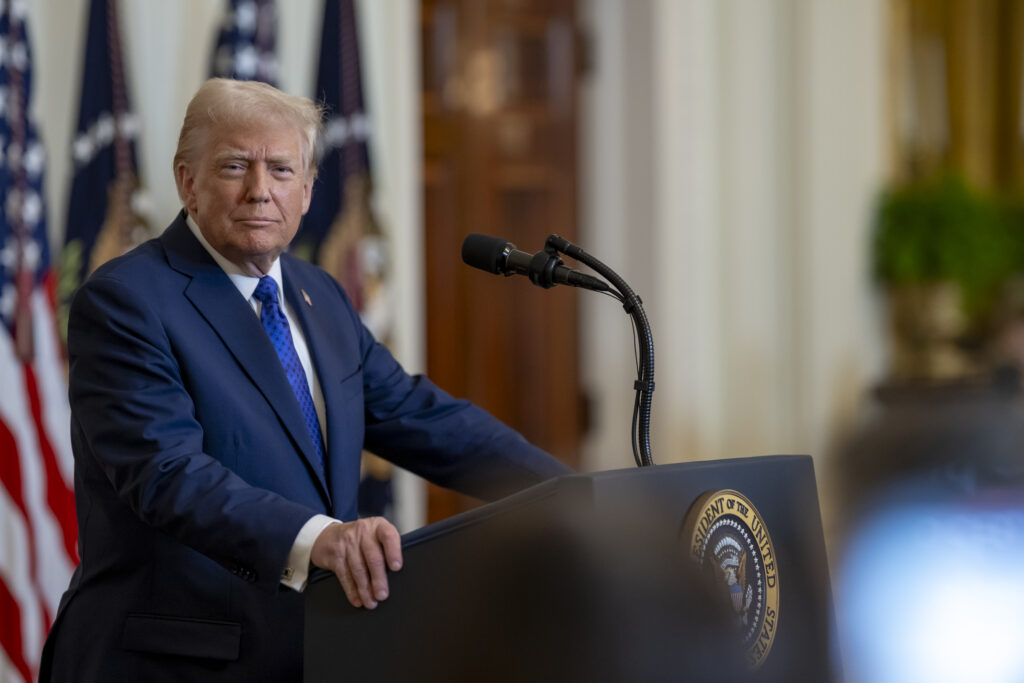
WASHINGTON, D.C. — President Donald Trump announced that new tariffs on imported agricultural products will take effect on April 2, signaling a renewed push to bolster domestic farming by making foreign goods more expensive.
Taking to Truth Social, Trump wrote, “To the Great Farmers of the United States: Get ready to start making a lot of agricultural products to be sold inside of the United States. Tariffs will go on external product on April 2nd. Have fun!”
🚨 #BREAKING: Trump announces new farm tariffs are taking effect APRIL 2ND.
— Eric Daugherty (@EricLDaugh) March 3, 2025
"To the Great Farmers of the United States: Get ready to start making a lot of agricultural product to be sold INSIDE of the United States. Tariffs will go on external product on April 2nd. Have fun!" pic.twitter.com/lgl0JLKlAK
A Boost for American Farmers
The policy aims to encourage U.S. farmers to ramp up production by reducing competition from lower-cost imports. It aligns with Trump’s broader economic strategy of trade protectionism, which was a hallmark of his first term. His administration previously imposed tariffs on Chinese goods, prompting retaliatory measures that impacted U.S. agriculture, particularly soybean exports.
During his first term (2017–2021), Trump’s agricultural policies were defined by a combination of tariffs, deregulation and financial relief programs. These measures had significant effects on the farming sector, with both opportunities and challenges emerging for American producers.
Trade Wars and Farmer Relief
One of Trump’s most consequential trade policies involved tariffs on Chinese imports, which led to Beijing imposing countermeasures on U.S. agricultural exports. American farmers, especially those in the soybean, pork and dairy industries, bore the brunt of these retaliatory tariffs. In response, the Trump administration rolled out a $28 billion aid package over two years, including direct payments to farmers, government commodity purchases and efforts to open new export markets.
Deregulation and the Farm Bill
Beyond tariffs and trade interventions, Trump prioritized deregulation to ease the regulatory burden on farmers. One of the key initiatives was revising the controversial “Waters of the United States” (WOTUS) rule under the Clean Water Rule, reducing federal oversight of certain water bodies and making compliance easier for agricultural producers.
In 2018, Trump signed the Agriculture Improvement Act, commonly known as the Farm Bill, which reauthorized critical agricultural and nutrition programs. The bill preserved funding for crop insurance and commodity support while also expanding conservation efforts aimed at promoting sustainable farming practices.
Now, with Trump set to hit Canada, Mexico and China with tariffs tomorrow, Beijing is already threatening retaliation—with Chinese state media signaling that U.S. agricultural products could be the first target.
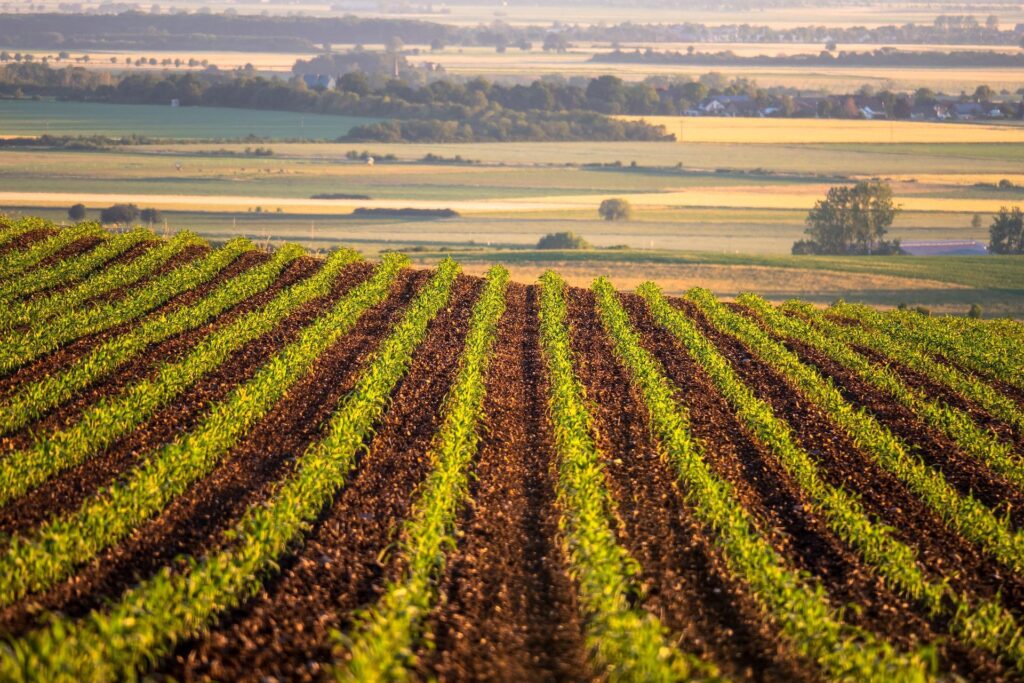
As Newsweek reports:
China, a major source of ingredients used to manufacture fentanyl in North America, maintains it has cracked down on the industry and criticized Washington, D.C., for “shifting the blame” rather than solving its own drug problems.
“If the U.S. insists on imposing unilateral tariffs and formally announces relevant measures, China will definitely carry out strong, powerful countermeasures,” the Chinese Ministry of Commerce said Friday.
This response is likely to include tariffs and other measures, with farm and food products “most likely” to be listed, according to the Global Times, a daily newspaper owned by the Chinese Communist Party, on Monday. The newspaper cited a source familiar with the matter who spoke on the condition of anonymity.
A reduction in Chinese imports of U.S. agricultural goods could lead to falling revenues for farmers, affecting the broader agricultural economy.
Looking Ahead: Second-Term Agricultural Agenda
As Trump’s second term agenda solidifies, his administration’s approach to agriculture appears to focus on trade-related recovery efforts. His nomination of Brooke Rollins as secretary of agriculture underscores this direction. Rollins has indicated she is open to implementing direct payment programs for farmers affected by trade disputes, mirroring strategies from Trump’s first term.
What’s Next?
The new farm tariffs set to take effect on April 2 are expected to trigger reactions from both domestic producers and international trade partners. While U.S. farmers may benefit from reduced competition, the long-term impact of these tariffs on global trade and American agriculture remains to be seen.
READ NEXT: Why Holding Back Judgment On THIS Trump Nominee Is Essential





















The Waters of the United States (WOTUS) rules affected everyone, not just farmers. It allowed the EPA to control how you handled the runoff from your roof in the cities. Very few writers seem to realize this. President Trump helped pretty much every American by doing away with it.