


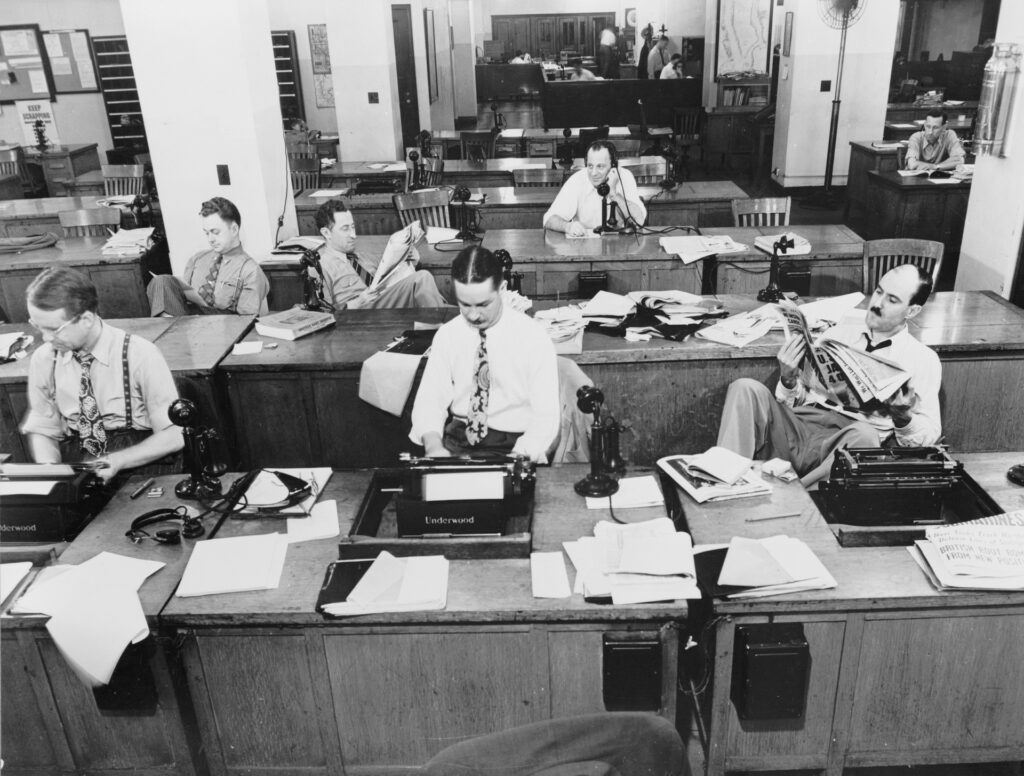
Over the years, the media landscape in the United States has undergone a significant shift, with many outlets increasingly leaning to the left, both in their editorials and in their coverage of political events. Following recent revelations about USAID (U.S. Agency for International Development) spending, some argue that it may be connected to government involvement. USAID has been a major funder of media outlets worldwide, supporting thousands of journalists and news organizations. While its stated goal is to promote free press and support independent media, the growing influence of Washington raises questions. Can a media outlet truly maintain independence when it’s financially reliant on government funds? And, more troublingly, is the leftward tilt of the media in part a consequence of this government influence? As the role of government in funding media continues to expand, so too does the potential for bias and conflicts of interest, undermining the very foundation of journalistic integrity.
According to a report from Reporters Without Borders (RSF), USAID has funded over 6,200 journalists, 707 media outlets, and 279 media NGOs. Among these beneficiaries are prominent news organizations such as Politico, the Associated Press, Reuters, the New York Times and the BBC. Notably, USAID is responsible for funding 90 percent of the reporting coming out of Ukraine, giving the agency substantial influence over global media narratives.
In a hearing on the issue, Congresswoman Marjorie Taylor Greene said, “What we have learned is that USAID has been used by Democrats to brainwash the world with globalist propaganda to force regime change around world.”
Between 2023 and 2024, USAID was the second-largest donor to the BBC, following only the UK’s Foreign, Commonwealth, and Development Office. This significant financial backing raises further concerns, particularly given the long-standing allegations of the BBC’s left-wing bias. As a state-funded entity in the UK, the BBC has been under fire for years for its editorial slant. The additional support from USAID, an arm of the U.S. government, could further exacerbate these concerns.
When the Trump administration announced cuts to USAID, the New York Times swiftly decried the decision with sensational and emotional rhetoric. The outlet warned that these cuts could lead to dire consequences, going so far as to create a visual depicting the millions of individuals that would die of HIV/AIDS without treatment provided USAID. However, what the New York Times failed to mention was its own benefit from USAID’s funding programs. The paper, along with other major media outlets, has long received financial backing from USAID, particularly in the form of grants. By neglecting to disclose its own financial ties, the New York Times missed an opportunity for full transparency, instead using the crisis to emotionally manipulate the public while remaining silent on its own participation in the system it was covering. This omission raises further questions about the ethical implications of media outlets benefiting from government funds.
Politico, a prominent outlet known for its left-leaning coverage, has been a significant beneficiary of U.S. government funding, raising further concerns about media independence. Not only did Politico receive $8 million from USAID, but independent journalist Jack Posobiec revealed that the outlet had actually received over $34 million from the U.S. government through a staggering 1,349 transactions. This extensive financial support from government agencies raises serious questions about the potential for political influence over the media’s narrative — especially considering a recent survey revealing that almost 70% of federal employees donated to Democrats in the last election. With such large sums flowing from government sources, it becomes increasingly difficult to separate Politico’s editorial stance from the interests of government employees, casting doubt on the outlet’s credibility.
When news broke that the Trump administration had cut federally funded subscriptions to Politico, the outlet widely recognized as leaning to the left suddenly shifted, offering praise for the administration’s policies—a gesture many believed signaled a willingness to change its coverage in exchange for financial support.
The funding of media outlets by the government raises serious ethical and legal concerns, particularly when these outlets depend on taxpayer dollars. The fundamental question is: can any media outlet remain truly independent when it is financially tethered to a government entity? When governments fund media outlets, they hold significant sway over how stories are told, which stories are told, and which perspectives are highlighted. This results in a direct conflict of interest that compromises the objective, unbiased reporting that a free press is supposed to provide.
The very purpose of a free press is to act as a check on government power, to hold those in power accountable, and to provide citizens with unbiased information. When the government funds the media, it undermines this essential role.
The U.S. Constitution, particularly the First Amendment, enshrines the importance of a free press as a cornerstone of American democracy. The founders understood that an independent press is essential to the functioning of a free society. They did not envision a scenario where the government would directly fund media organizations, nor did they intend for taxpayer dollars to be used to shape media narratives to align with political agendas.
Compounding these concerns is the fact that a staggering 97% of political contributions from USAID employees have gone to Democrats, according to campaign finance data. This overwhelming bias raises serious questions about the potential for USAID’s funding to influence media outlets in a partisan direction. If government employees align themselves overwhelmingly with one party, it’s reasonable to wonder how these preferences might trickle down into the media organizations and journalists they choose to fund. The possibility of taxpayer dollars being used to support coverage that favors one political ideology over another adds an additional layer of skepticism to the notion of a neutral, independent press. This situation creates an ethical dilemma, as media organizations could become increasingly incentivized to align with the political preferences of their benefactors, rather than adhering to unbiased reporting standards. Given the vast sums of money flowing through these programs, such a shift in media coverage could have far-reaching consequences for the integrity of public discourse.
Concerns about partisanship in USAID’s media funding are further exacerbated by the fact that so far, no right-leaning media outlets have been identified as recipients of their funding. This imbalance raises red flags about potential bias in the allocation of taxpayer money, as it appears that government-backed funding is disproportionately flowing to outlets that parrot progressive narratives. The absence of right-wing media outlets in the funding pool fuels suspicions that USAID may be intentionally supporting a particular ideological viewpoint, further entrenching partisan divides within the media landscape and undercutting public trust.
Media outlets like the Associated Press, Politico, Reuters, and NPR have vehemently denied these findings, dismissing the allegations as “conspiracy theories.” However, many remain skeptical, drawing parallels to the media’s handling of COVID-19 coverage, where numerous early warnings and criticisms were similarly dismissed as “misinformation” or conspiratorial, only to be later substantiated as true. As trust in the media continues to erode, the public is left to wonder whether these outlets are truly independent, or if government funding has, in fact, played a role in steering their coverage.
According to Pew Research, trust in the media has reached its lowest point since they began surveying public opinion on the subject in the 1960s. The steady decline in media trust reflects widespread skepticism about journalistic integrity, with many Americans believing that news outlets are either biased or driven by agendas other than the pursuit of objective truth. Recent revelations about USAID funding will likely only add fuel to the fire, with the public perceiving that these institutions prioritize serving the political and financial interests of their funders over the delivery of impartial news. With public faith in the media continuing to wane, the need for truly independent journalism has never been more critical.
READ NEXT: How USAID And Internews Orchestrate Global Media Control
















Excellent and inciteful reporting!
Thank you Seijah Drake!