






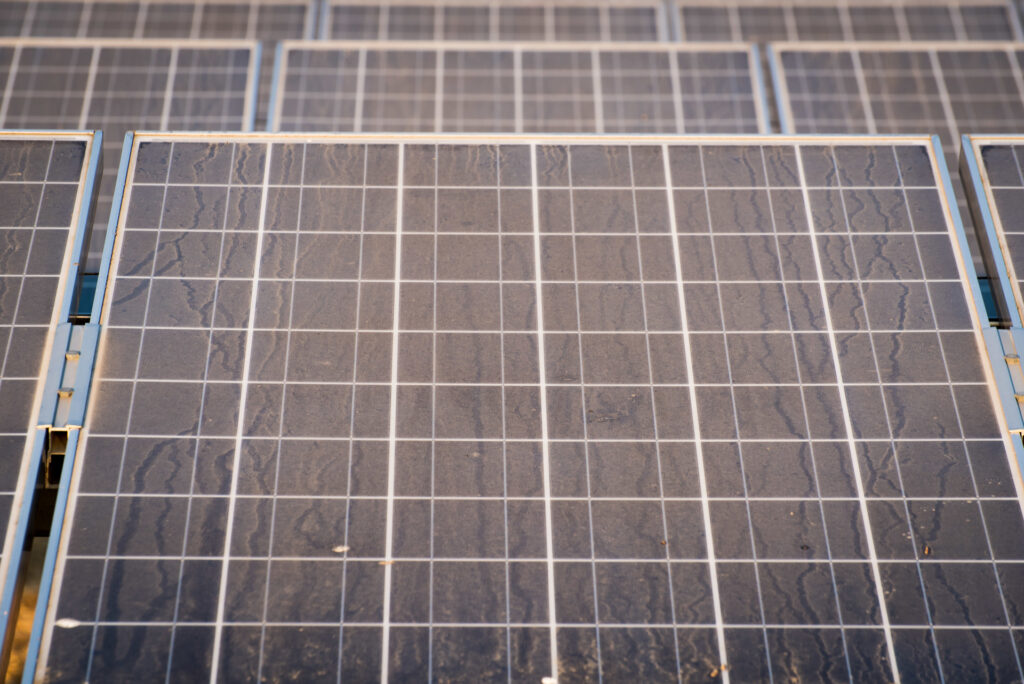
It is not easy to say a technology with such future promise is, for now, a terrible investment. But that is the case with residential solar power installations in 2025. Let me state, without equivocation, that solar energy will, in the near future, play a crucial role in decentralizing power generation, reducing grid strain, and delivering cheap electricity to millions of Americans. By 2030, solar may become not just viable, but necessary. However, for the vast majority of homeowners today, particularly those who must finance a solar system through the consumer market, installing rooftop solar is economically indefensible.
— @amuse (@amuse) June 2, 2025
This judgment is not based on hostility toward green technology or skepticism of renewable energy. It is based on facts: hard financial data, the structure of the solar financing industry, and the simple arithmetic of homeownership in the United States. Even if solar prices continue to decline and incentives remain, the current solar market is riddled with predatory lending, inflated pricing, and false promises. Worse, it often leaves homeowners financially worse off than they began.
Start with a common scenario. A homeowner is approached by a solar salesperson. The pitch is familiar: zero-down financing, savings on electric bills, and the prestige of going green. What is left unsaid or buried in fine print is what transforms this deal from investment to trap. First, the true cost. A system that costs $20,000 in parts and labor is routinely financed at $30,000 or more. The extra $10,000 is a dealer fee, a euphemism for sales commission. These fees are not merely high, they are obscene, and worse, they are hidden. The Consumer Financial Protection Bureau has documented widespread use of undisclosed markups, sometimes raising the effective interest rate on a solar loan by 50 to 100 percent.
Second, consider how these systems are financed. The loans are long-term, often 20 to 25 years. Some include balloon payments triggered when a homeowner fails to apply a 30 percent federal tax credit to the balance within a specific time frame. If a family fails to receive the credit or cannot use it fully due to income limitations, they are punished with recalculated monthly payments, often hundreds of dollars more. Worse still, if the homeowner sells the house before claiming the credit, they forfeit it entirely. The credit does not transfer with the home, nor can it be retroactively claimed by the seller post-sale. The predictable result is financial distress. Many customers report higher combined electricity and loan payments than before installation. They were sold on savings, but are now paying for both power and debt.
Third, most homeowners move every six to ten years. This is not a flaw in their character, it is a function of life. Jobs change, children grow, opportunities shift. But the solar loan does not move. It is a personal loan, not a mortgage rider. This means the seller must pay it off at closing. Whatever benefit the panels might provide the new buyer, the seller sees none of it. The home’s value may not increase in proportion to the loan balance, leaving the seller underwater. Moreover, the panels may complicate the sale due to liens on the property or buyer aversion to assuming a complex energy agreement.
Why do companies persist in selling a product that so often fails to deliver value? Because they are not selling electricity, they are selling debt. The solar industry, in its current residential form, resembles the subprime mortgage boom more than it does the utility sector. Salespeople earn thousands in commissions for each install, paid up front by the lender who collects interest for decades. Homeowners are baited with teaser rates and tax credit fantasies, only to be trapped in loans they barely understand. Elderly homeowners, veterans, non-English speakers, and low-income families are especially targeted, as state attorneys general in Texas, New Mexico, and Connecticut have documented in ongoing investigations.
Consider the case of a 91-year-old man who was signed into a $50,000 solar loan on a home he owned free and clear. His signature was forged, his email faked, and a lien placed on his house. When he discovered the fraud, he was told that default would result in foreclosure. This is not an isolated incident. It is the predictable outcome of a system designed to harvest home equity through deceptive practices.
Even in less dramatic cases, the economics do not support installation. A household that spends $1,500 a year on electricity may save $1,000 after going solar. If the system cost $30,000 (including financing costs), the breakeven is thirty years. But panel performance degrades, inverters fail, and roofs require maintenance. The real payback period is either never, or longer than the system’s lifespan.
Battery storage, often marketed alongside solar, only worsens the arithmetic. Adding a battery doubles the cost. The benefit is modest, power during outages and limited time-of-use savings. Batteries do not generate revenue. They are a convenience, not an investment. Unless one lives off-grid, they rarely make economic sense.
Another obstacle is regulatory instability. Net metering, the policy that allows solar customers to sell excess electricity back to the grid, is under assault. California’s 2024 reforms reduced the credit from 30 cents per kilowatt-hour to about 5 cents. This changed the payback period for many installations from six to twelve years. The solar industry itself acknowledged this. Similar reforms are spreading. Utilities are lobbying to end subsidies, and they are succeeding. The economic premise behind many solar installations is, therefore, vanishing in real time.
Now, let us anticipate an objection: that solar prices are falling, and installation is a hedge against future grid failures or rising rates. Both points are fair in theory, but false in present application. While panel prices have declined, soft costs, permits, labor, overhead, and financing, have remained stubbornly high. And while it is true that grid reliability is worsening, the better hedge for most households is insulation, energy efficiency, and a gas generator. Solar is not a resilience tool unless paired with expensive battery storage, which, as we have seen, adds cost without improving return.
What, then, should be done? First, the FTC and state attorneys general must act decisively. Deceptive lending should be prosecuted. Solar salespeople who forge documents, misrepresent tax credits, or fail to disclose dealer fees should be treated as financial predators. Second, Congress should mandate full truth-in-lending for all clean energy loans. The APR must reflect all fees, including dealer compensation. Consumers should know precisely what they are buying, and how much it will cost over the life of the loan.
Finally, we must acknowledge that distributed solar is vital, but not yet. By 2030, panel efficiency will be higher, battery prices lower, and financing structures more transparent. At that point, many homeowners may find that solar offers genuine savings, especially in high-cost electricity markets. Until then, patience is not Luddism. It is prudence.
Solar is a promising technology. It is not the problem. The problem is the financing, the sales tactics, and the false economics. For now, 99 percent of consumers are better off waiting.
If you enjoy my work, please consider subscribing: https://x.com/amuse.
Sponsored by the John Milton Freedom Foundation, a nonprofit dedicated to helping independent journalists overcome formidable challenges in today’s media landscape and bring crucial stories to you.
READ NEXT: Court Finds Blue City Guilty Of Constitutional Abuse
Sponsored
























Need Nuclear ASAP
You should have been holding off on this for the last 20 years. Unless you’re in the backwoods with no power connection solar still makes no sense at this time. I have strong background in electronics and electricity as well as an MBA. So I can figure cost and ROI. If solar would pay for itself I’d have it instantly. Not even close.
Our utility c ompany outright lied to all its customers, telling them that locations with solar were being subsidized by non-solar homes. Pure bullshit. But, people believed it and successfully xonvincxed the state government to to ak the voters to ban solar insentives. They successfully shut down many solar providors in the state.
Then the truth came out and solar is back, stonger than ever, but..the days of selling your power back too the utilities is over. In fact, solar powered homes now must pay a ‘penaqlty’ fee to the utilities, due to loss of income. A rip off.
Oh well….